A good brief does not have to contain every creative decision yet. It should make clear which problem the production is meant to solve. The clearer the aim, the uses and the constraints, the more reliable the concept, the schedule and the quote become.
I work for companies, hotel groups, agencies and associations. More than 200 clients and around 337 published productions cover very different requirements. Even so, a workable request almost always starts with the same information.
Aim and audience
What is the material for, and who is meant to see it? Internal documentation needs different subjects than a recruiting campaign or a public commercial.
Planned outputs
Website, social media, press, print and events should be named. Aspect ratios, resolution, free space in the frame, subtitles and possible short versions all follow from that.
Scope and priorities
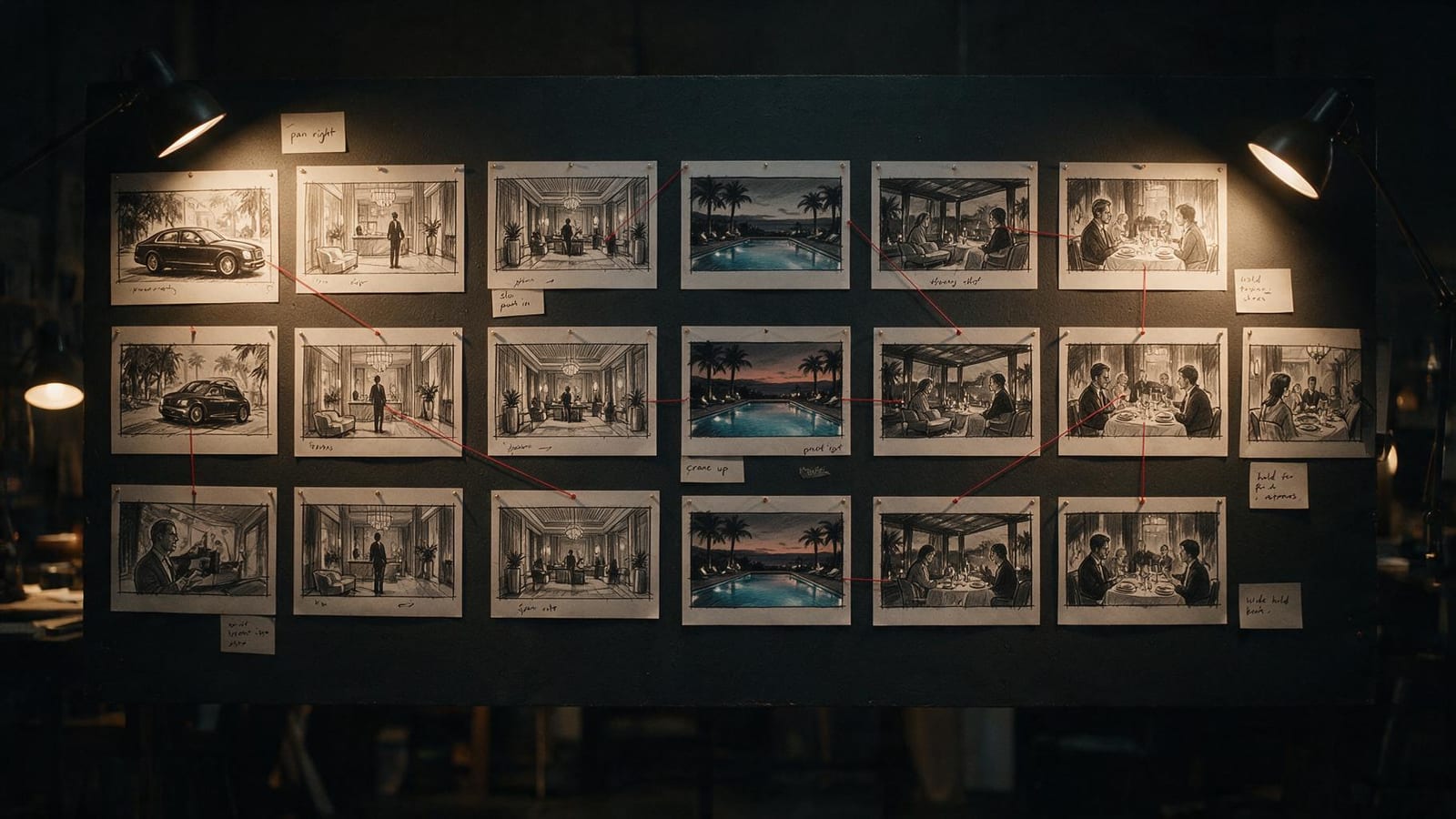
A shot list should separate what is indispensable from what is optional. For film, the central message, the intended length, the interview partners and the locations help.
Brand and approvals
Existing design guidelines, colors, logos and references belong in the brief. Just as important is who makes the final decision. Feedback gathered in one place avoids contradictory corrections.
Date and logistics
The date, the place, the available rooms, the people involved and any restrictions are needed. With several locations or parallel sessions, the logistics directly affect the effort a production takes.
Budget range
My inquiry forms ask about scope, intended use and budget range. The request stays non-binding. Anything still open we settle by phone, by e-mail or, for larger productions, in person. Scope, services and price are in writing before the date becomes binding.
The right form is under inquiries, the rates by area of production under prices.
Does your film need a concept?
Scope and price are fixed before anything is photographed or filmed. The inquiry commits you to nothing.