A shooting day is the most expensive day of a film: crew, equipment, location and the people on camera all come together at once. Whatever is only decided on that day costs time — and is missing from the edit later.
So every shoot of mine starts from a concept you have seen and approved. You know in advance what the film says, how it looks and which shots will be filmed.
01
A clear goal
What should the viewer know, feel or do afterwards?
02
Approval before the shoot
Changes cost nothing on paper and half a day on set.
03
A shooting day without idle time
Every shot has its place in the plan, every person their time slot.
02 · The building blocks
From the first conversation to the shooting schedule
Which building blocks a film needs depends on the film: an event trailer needs no voice-over script, a commercial no scouting of a conference center. We take what your film needs.
01 / 07
Briefing & goal
It starts with a conversation: who should the film reach, where will it run — website, social media, trade fair, event — and what should happen afterwards? That becomes a briefing we can both refer back to.
Audience and key message
Channels and formats
Length, date, scope
02 / 07
Idea, treatment & script
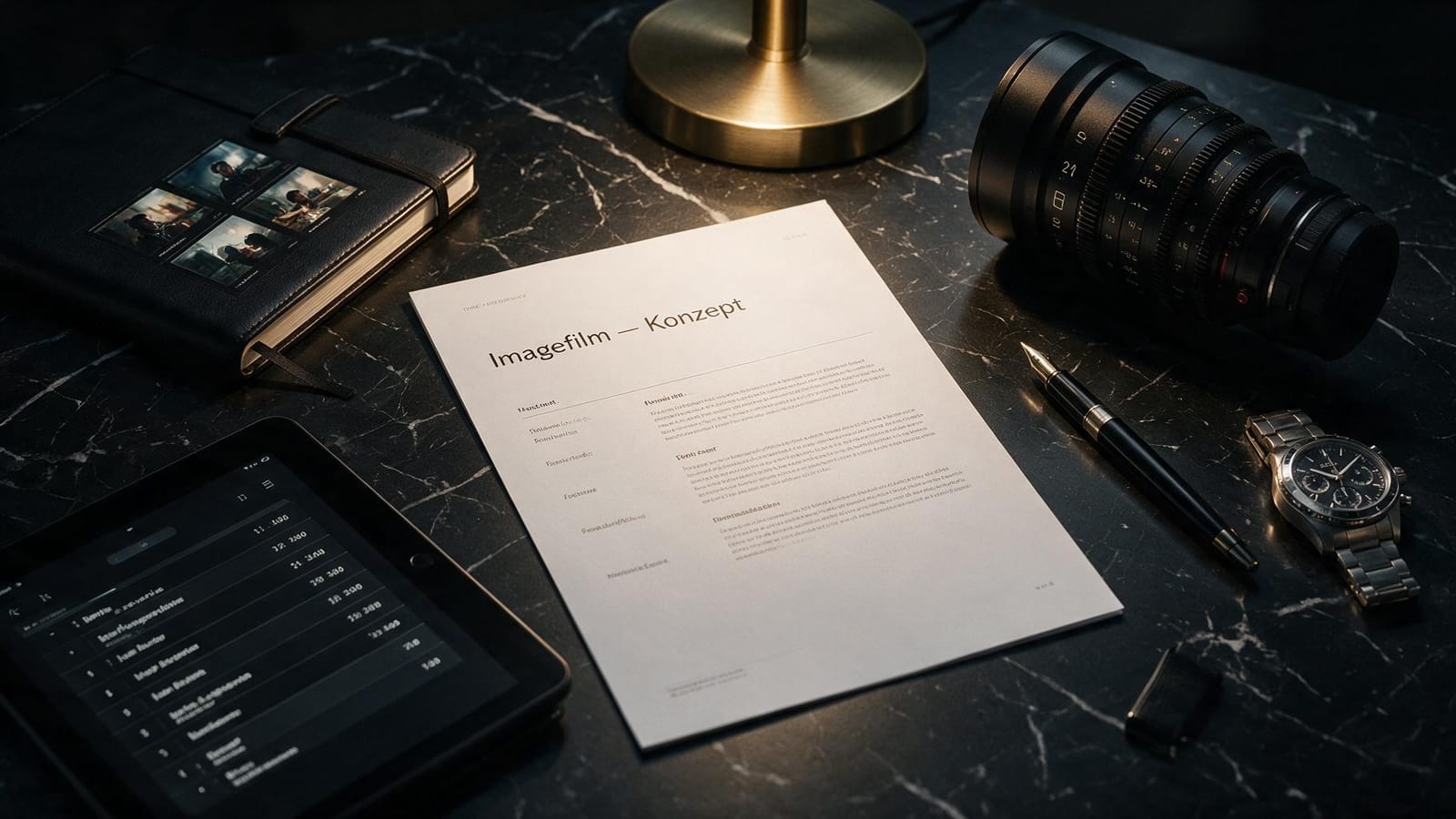
From the briefing I develop the idea of the film and write it up as a treatment: what you see, what you hear, in which order. Where people speak, a script, interview questions or a voice-over follow.
Treatment as a PDF
Script or voice-over
Interview guide
03 / 07
Moodboard & visual language
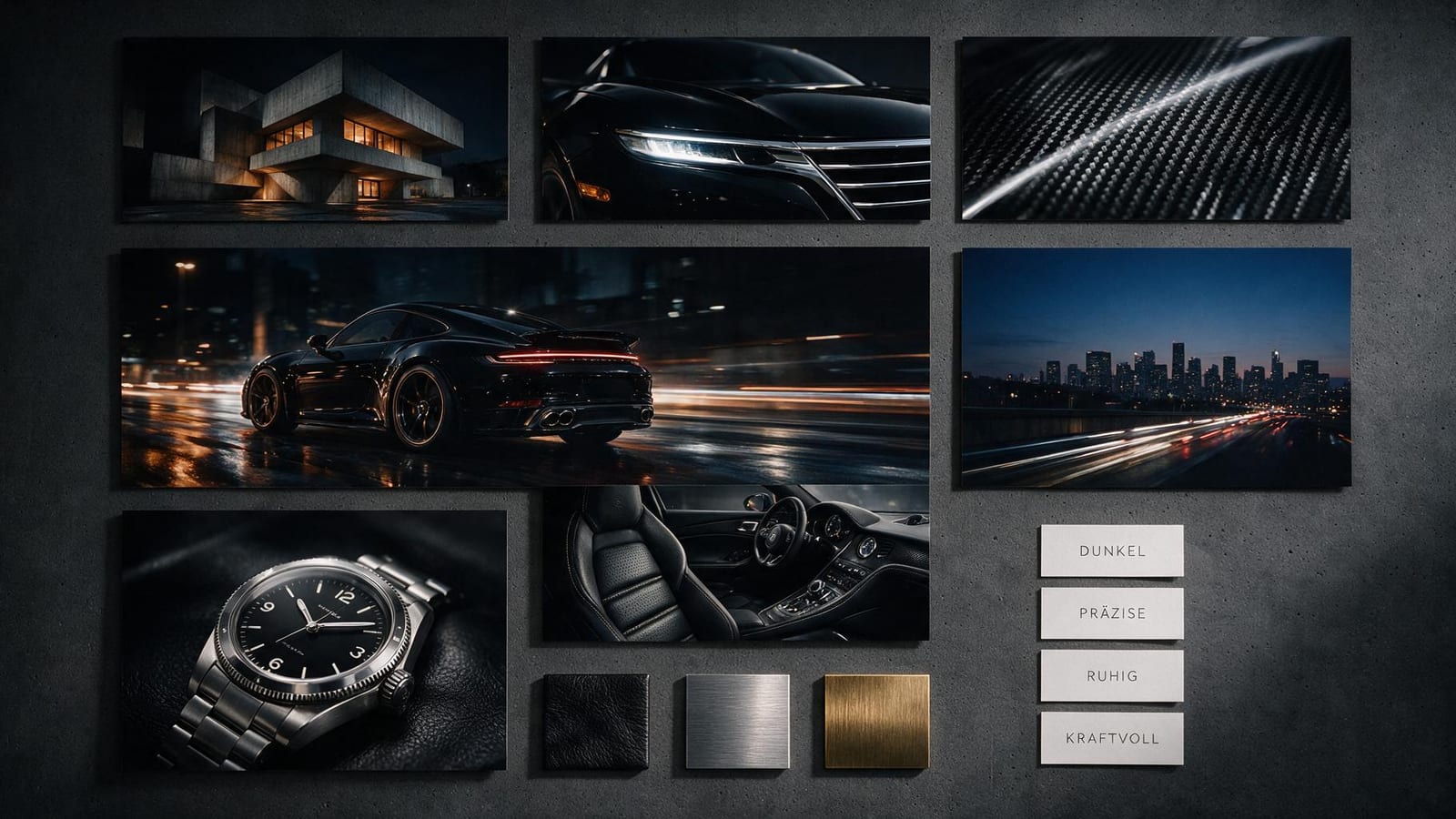
How should the film look? Light, colors, pace, wardrobe, places — the moodboard shows it before anything is filmed. It is the quickest way to get everyone seeing the same picture.
Moodboard with references
Color and lighting mood
Look for wardrobe and set
04 / 07
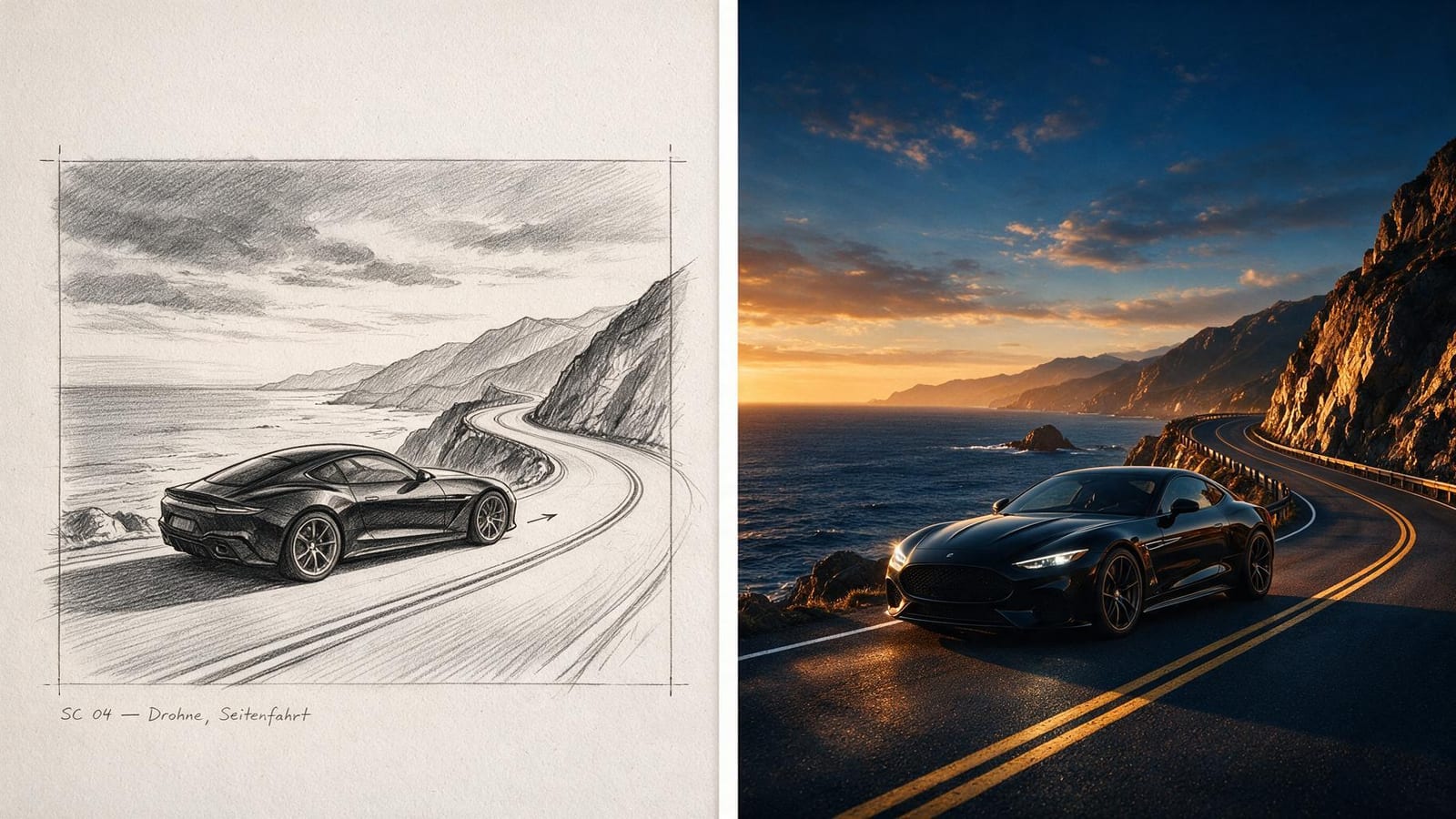
Storyboard
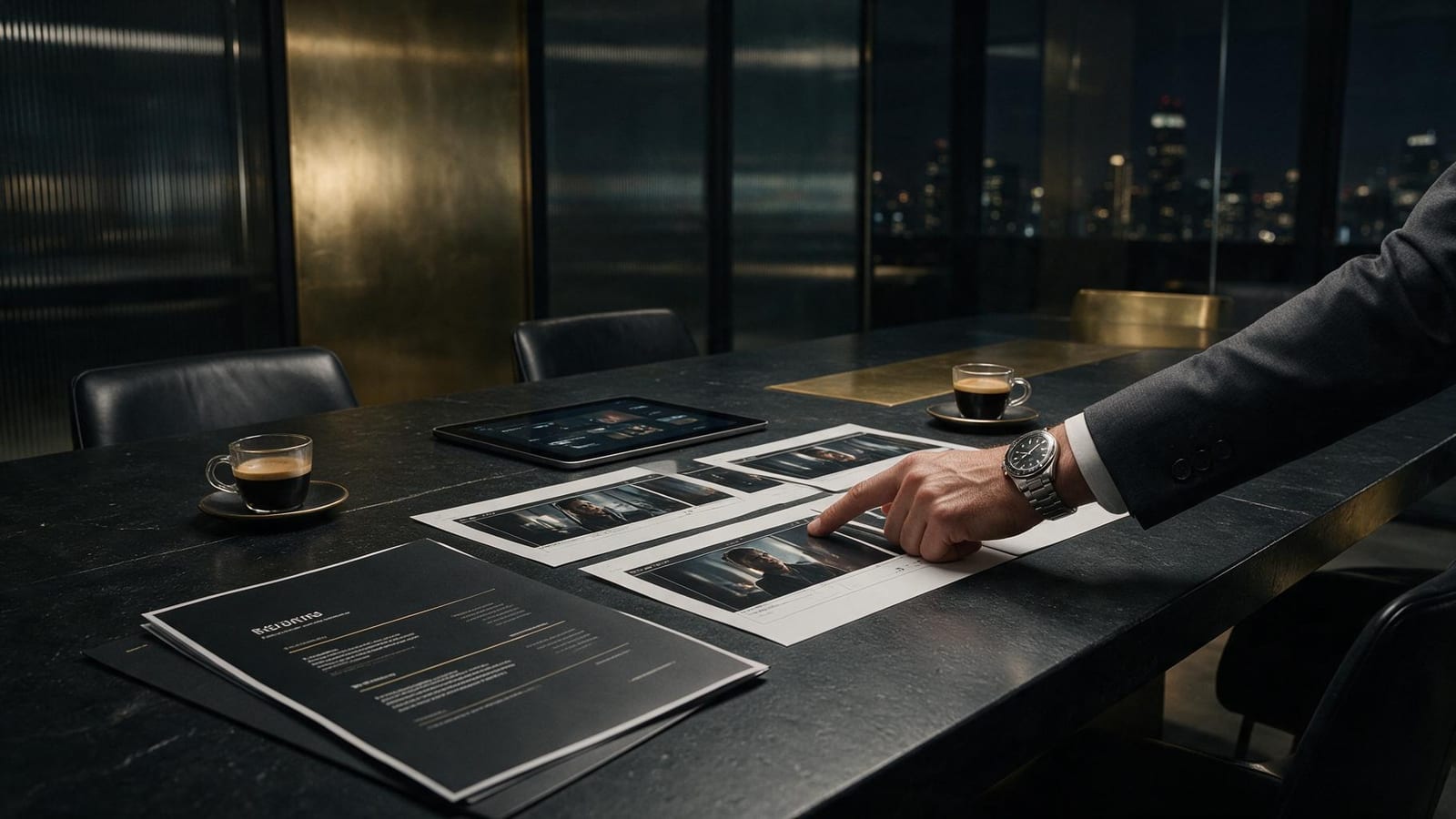
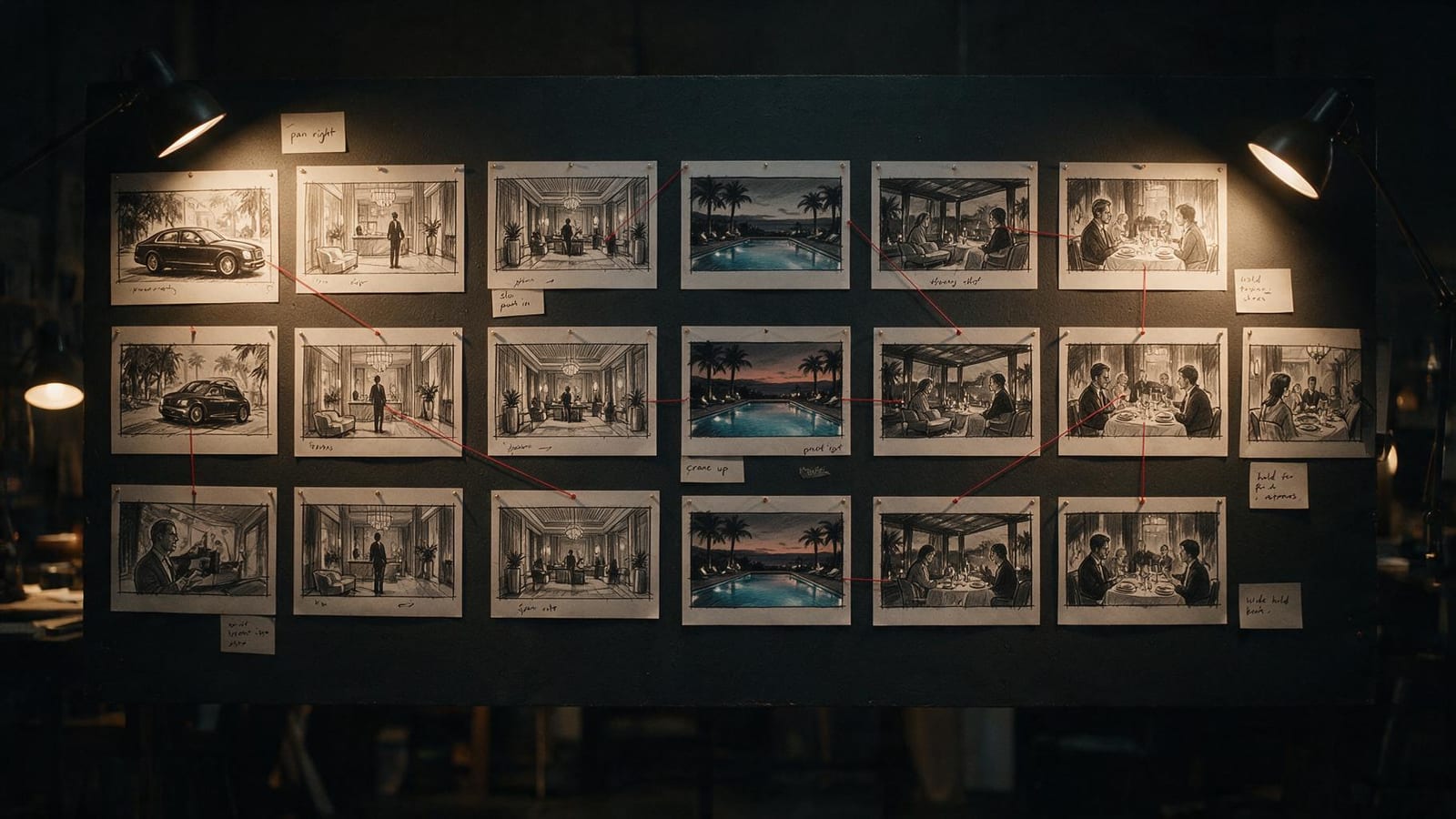
The storyboard breaks the film down into pictures: shot by shot, with the camera’s angle and movement. It is where you see the film for the first time — and can still change everything.
Drawn storyboard
Camera movement per shot
Order of the scenes
05 / 07
Shot list, camera plan & schedule
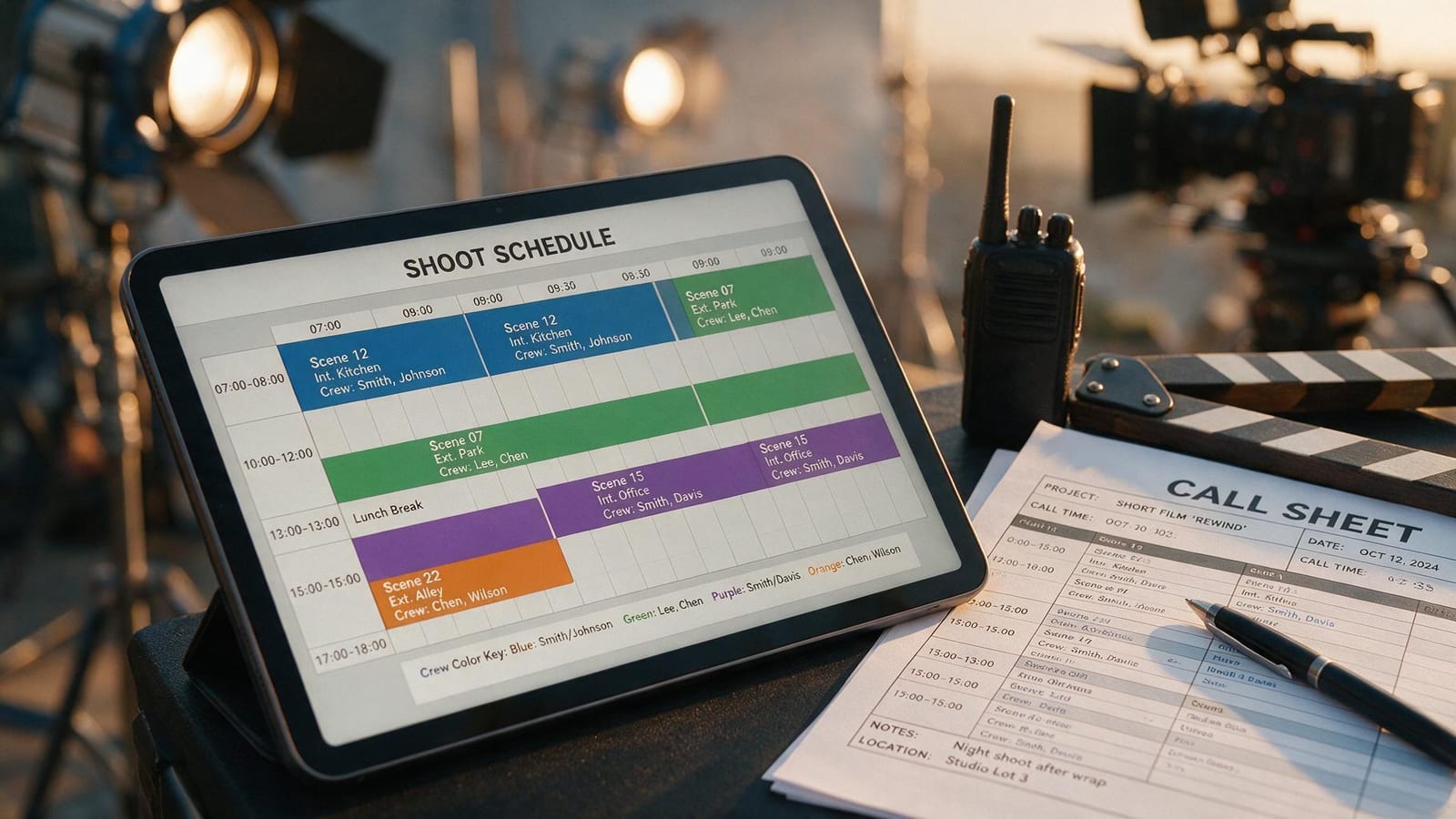
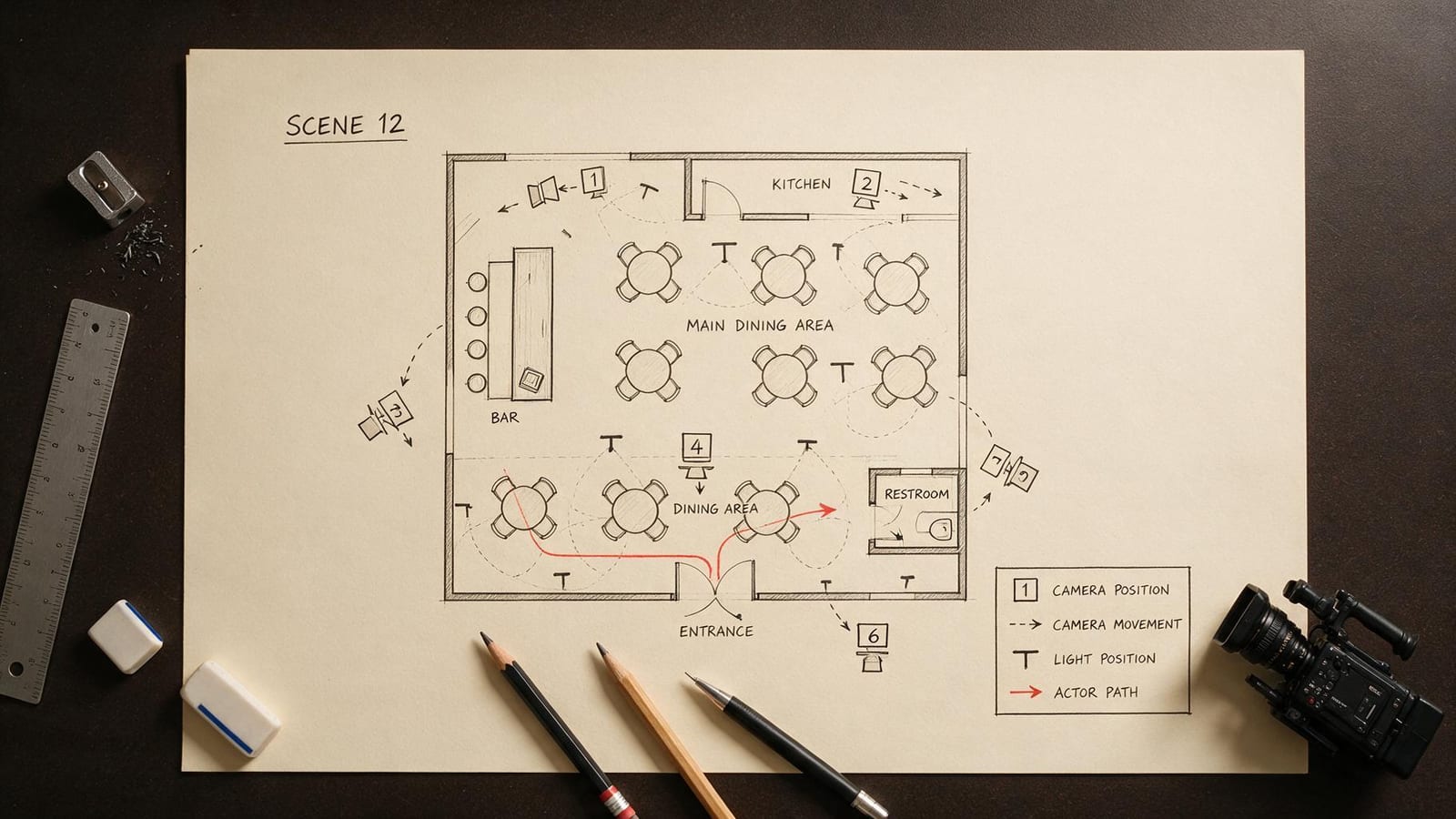
The storyboard turns into a plan for the shooting day: which shot is filmed where, where camera and lights stand, who is needed when. With the schedule, everyone involved knows when to be where.
Shot list
Camera and lighting plan
Schedule and call sheet
06 / 07
Location, casting & organization
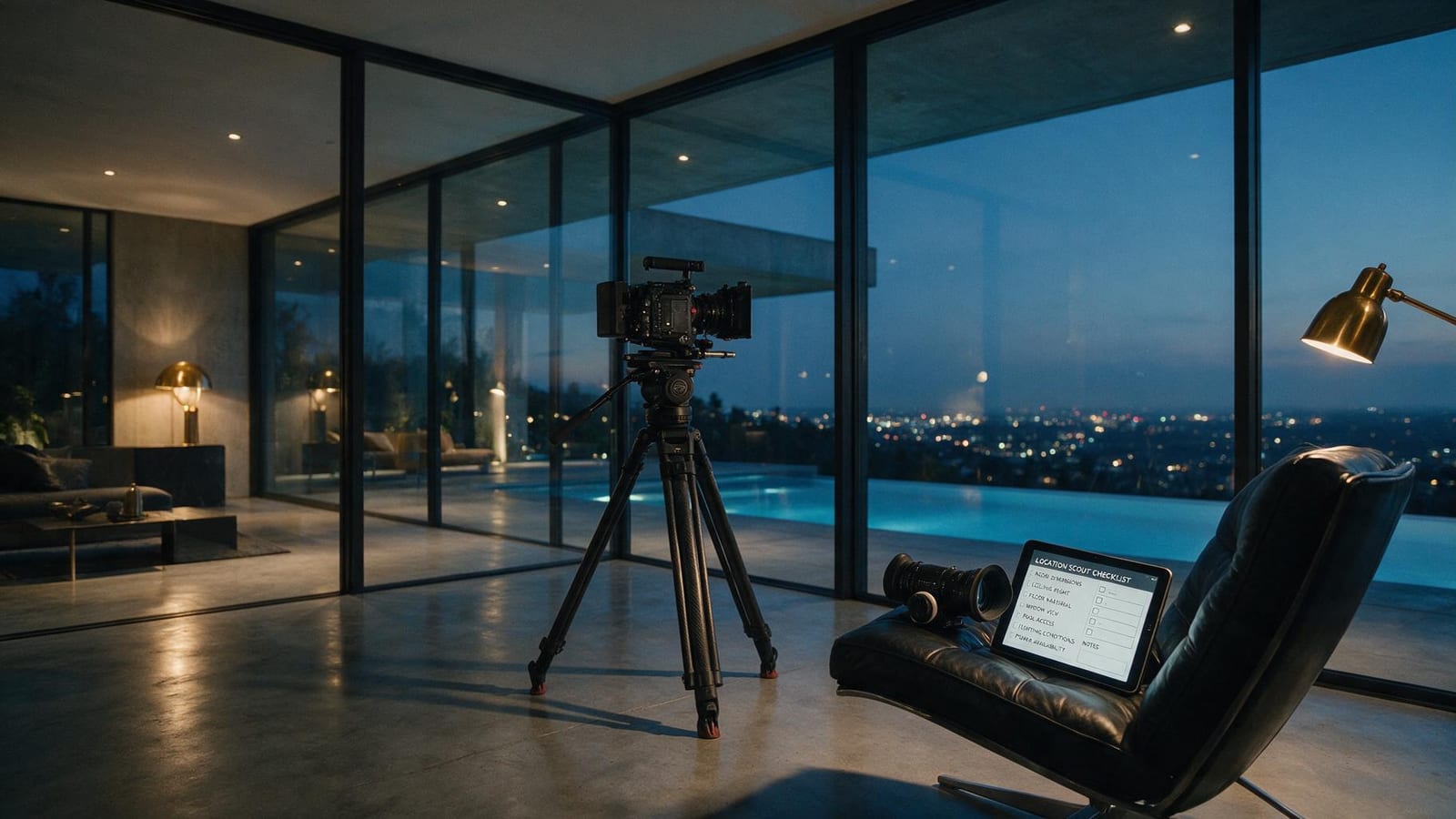
I look at the locations before the shoot — how the light falls at the planned time, where there is power, where it gets loud. Then come cast, wardrobe, props and the coordination with the hotel, restaurant or organizer.
Location check with photos
Cast and props
Coordination with the venue
07 / 07
Music & sound
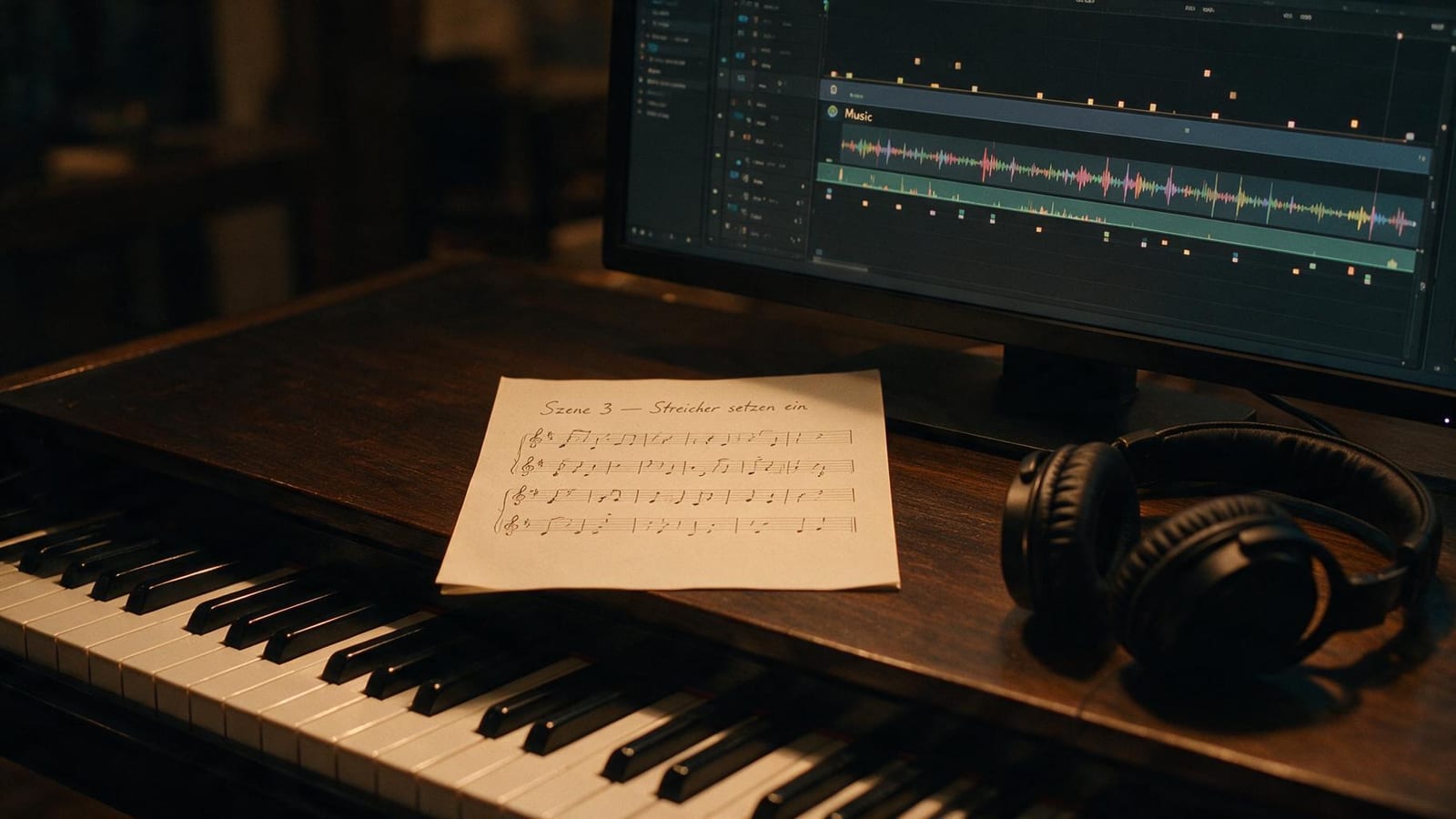
With me, music is not laid underneath at the end but planned along: where does it come in, where does it go quiet, where does the original sound carry? On request I compose the soundtrack myself, built on the edit.
That is the point of planning: on the day, what was decided beforehand gets made. Spontaneous shots still happen — but in addition to the planned ones, not instead of them.
03 · How it runs
Four steps to the shooting day
01
Conversation
You tell me what you have in mind. I ask until the goal is clear.
02
Concept proposal
You receive the idea as a treatment, with a moodboard and an offer.
03
Review & approval
We refine it until it fits. Only then does the detailed planning start.
04
Detailed planning
Storyboard, shot list, schedule and organization — ready for the shoot.
What I plan for
Brand film
Hotel film
Commercial
Event trailer
Recruiting film
Interview film
Social media clips
Music video
Wedding film
04 · Two ways
With the shoot or without
Concept and production
The usual case: I plan the film, shoot it and edit it. Whoever wrote the concept is also behind the camera — nothing gets lost in a hand-over.
For agencies and marketing teams who shoot themselves or have a crew: you get the concept and the planning as finished documents and produce them with your own team.
Yes. Concept and planning can be booked on their own, even single building blocks such as the storyboard or the schedule. You receive the documents as PDFs and produce them with your own team.
What the film should achieve, whom it should speak to and where it will run. Plus the preferred date and, if available, material such as your logo, style guide or films you like. The rest we settle in conversation.
That depends on the film: an event trailer needs less planning than a brand film with a script and several locations. After our conversation you receive an offer with a fixed scope and price.
Yes. Where people speak in the film, I write the script, the voice-over or the interview questions — matched to the pictures filmed for them.
On request, yes. I compose the soundtrack myself, built on the edit. Alternatively we choose licensed music together.
Tell me what the film should achieve and whether I shoot it as well or your own team does. Then you get a concept proposal with an offer that fixes scope and price. The inquiry commits you to nothing.