Kaffeehaus Goldene Waage: color, history and patisserie
Published
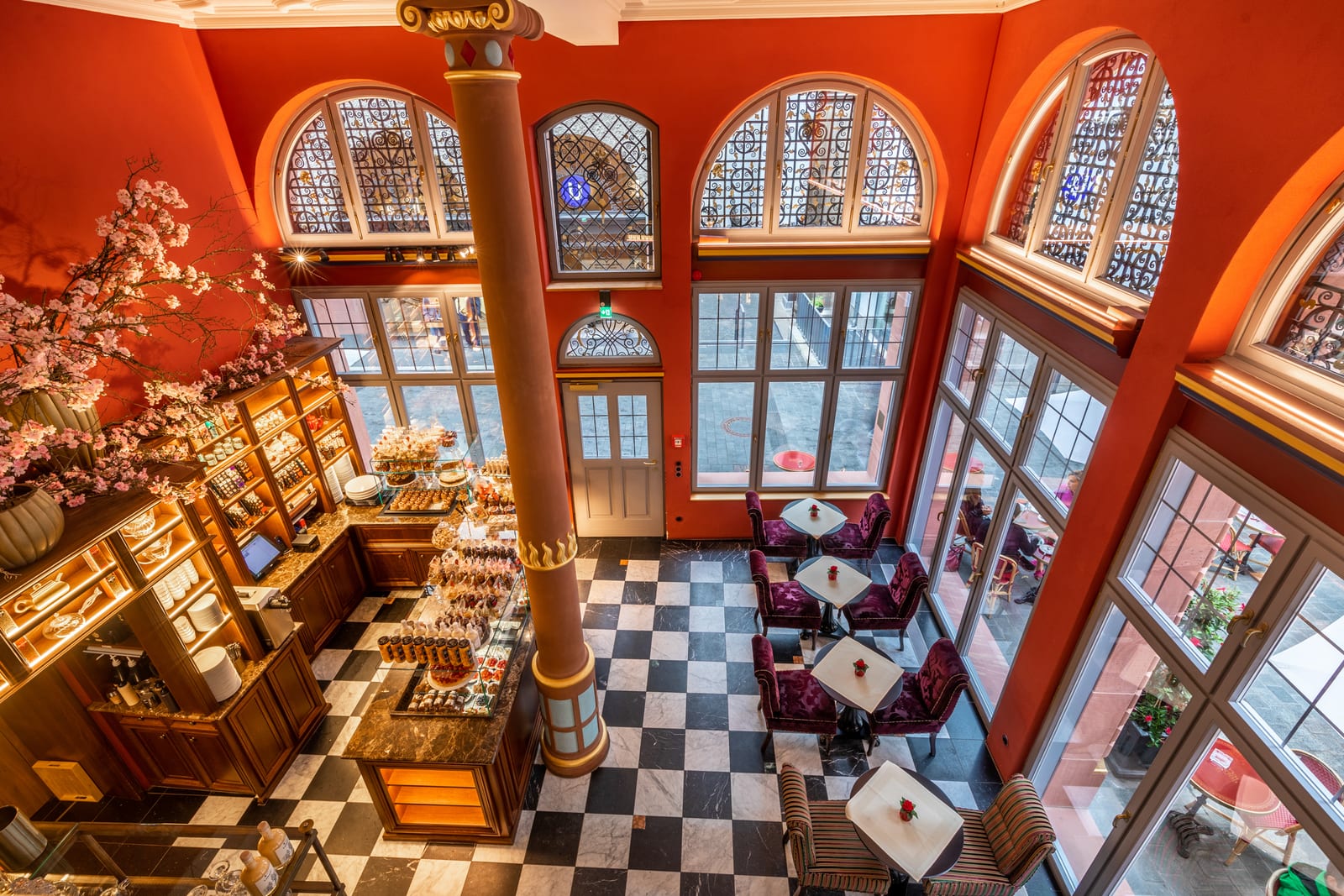
The Kaffeehaus Goldene Waage in Frankfurt’s reconstructed old town is a room that cannot be photographed neutrally. Red walls, leaded windows, turned black columns, a checkerboard floor and a gallery running through two floors — every surface here carries a decision.
The series shows both: the architecture and what stands on the table. They belong together, because either one alone explains half the house.
From the gallery the room becomes readable
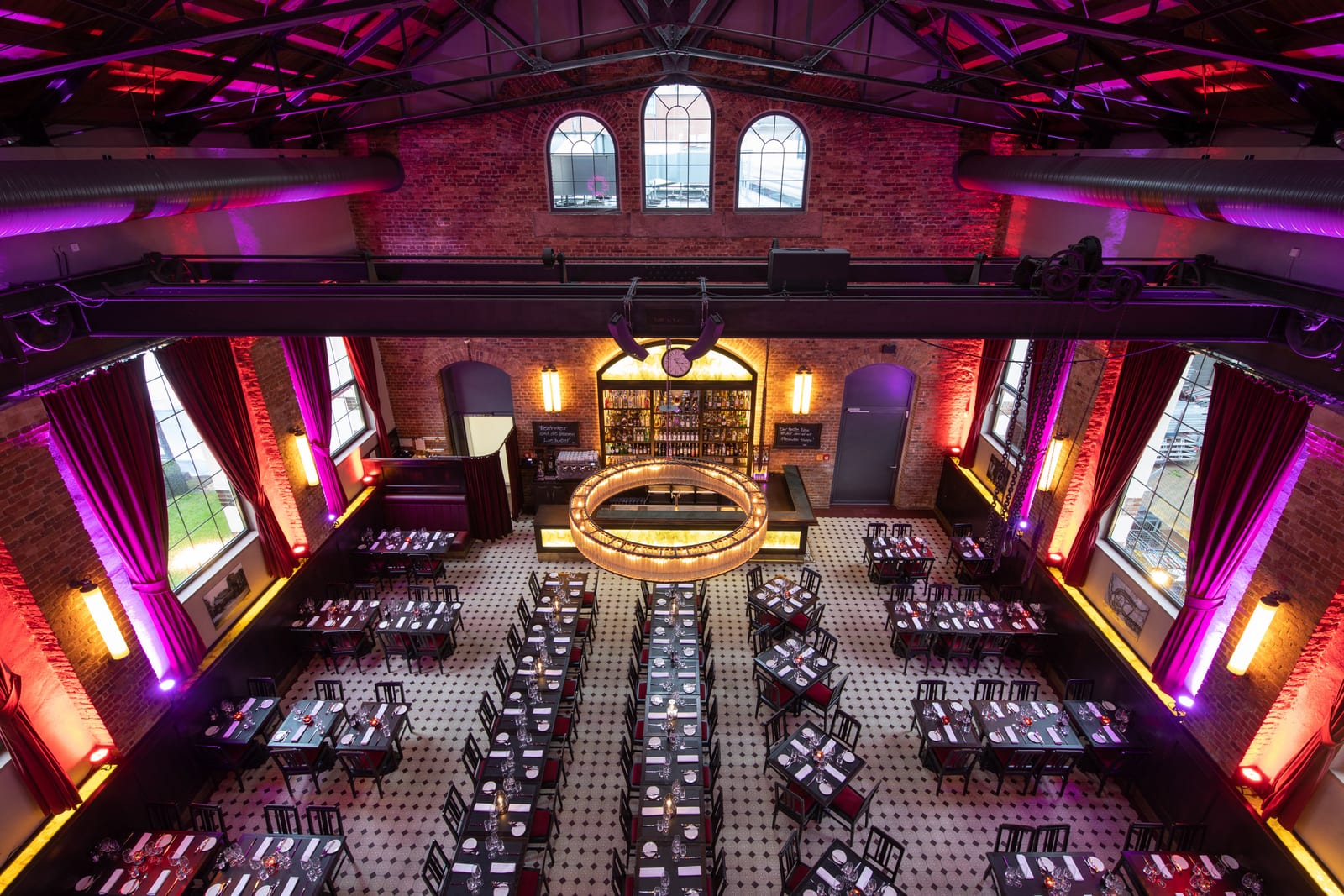
From the floor there is no way to show the height and the plan of this room at once. The windows run through several floors, and looking up loses the floor.
From the gallery both fall into one frame: the pattern of the checkerboard floor, the arrangement of the tables, the columns and the windows at full height. It is the view that explains how the room is built.
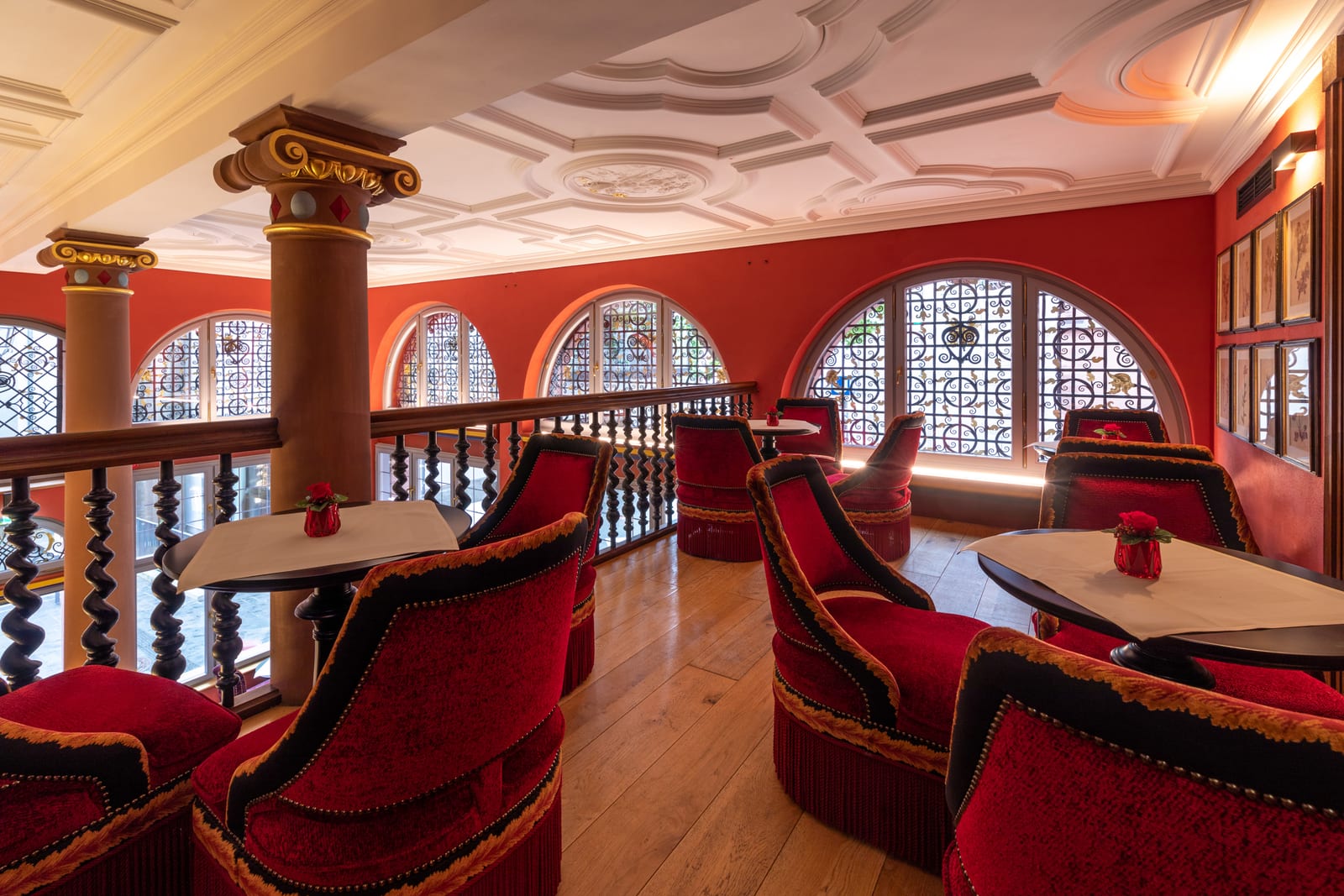
Beside it stands a frame made on the gallery itself — the red armchairs, the railing and a column in the foreground. It shows what sitting up there is like, which is a different piece of information from the view looking down.
Available light, unevenly spread
Most of it was photographed with the light coming through the windows. That keeps the differences in brightness that give the room its depth: bright zones by the glass, half-dark ones between, single highlights on metal and glass.
A hall lit evenly would be easier to expose and duller to look at. The dark areas here are not a fault; they are the reason the red walls do not read as flat.
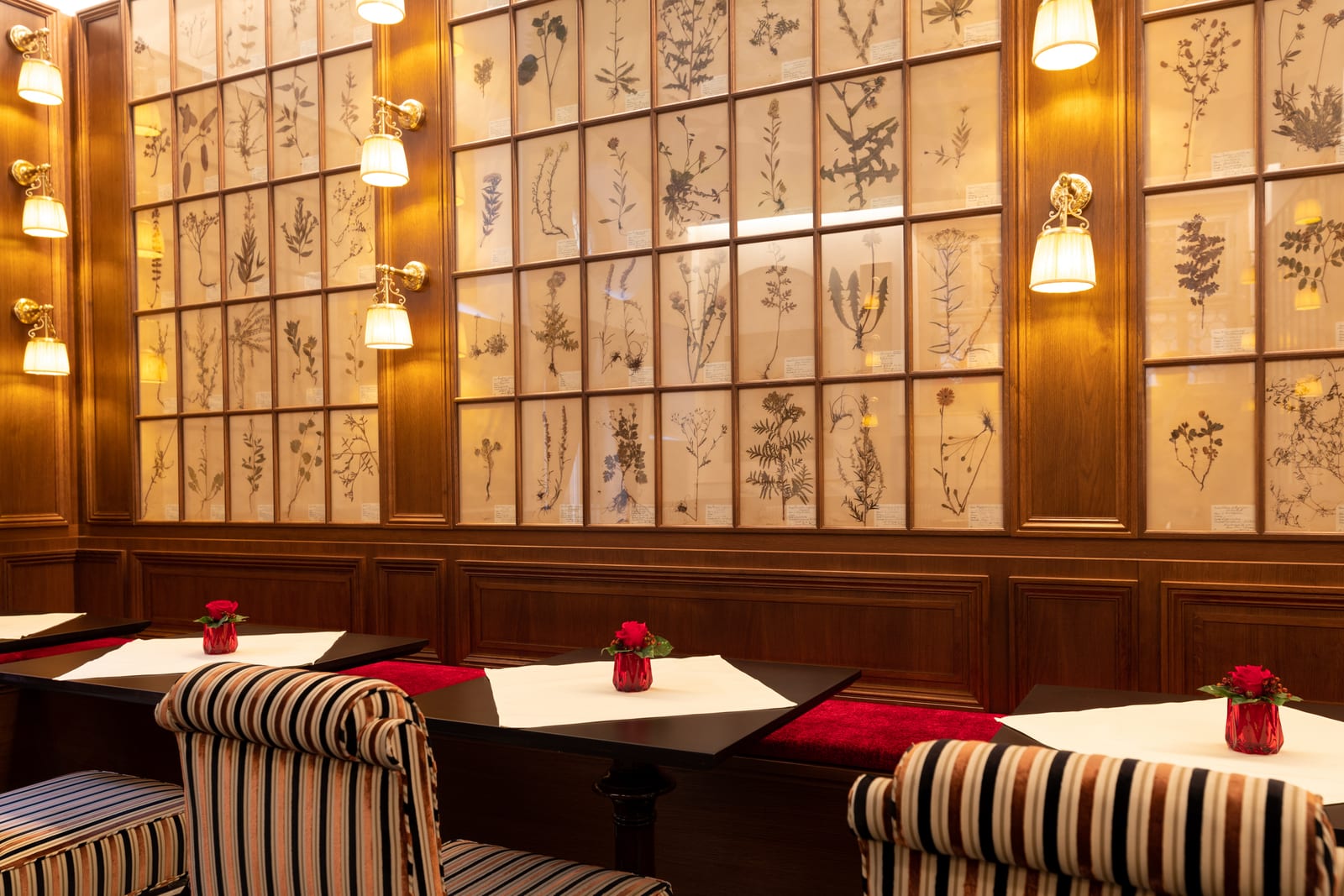
On the walls of framed botanical prints the wall lamp takes over as the main light. It picks out the frames one by one instead of raising the whole wall to one level.
Cake in the room, not in a studio
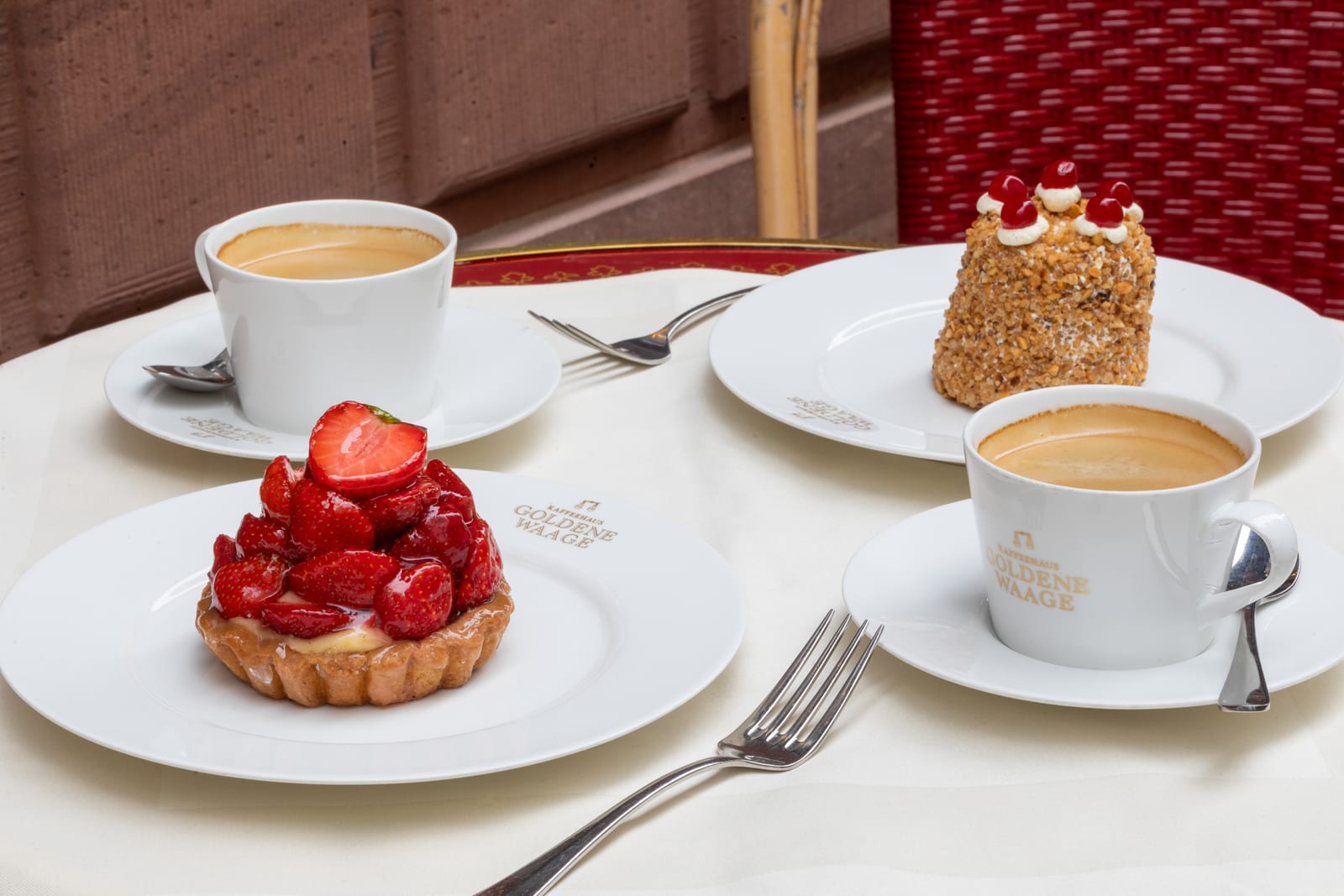
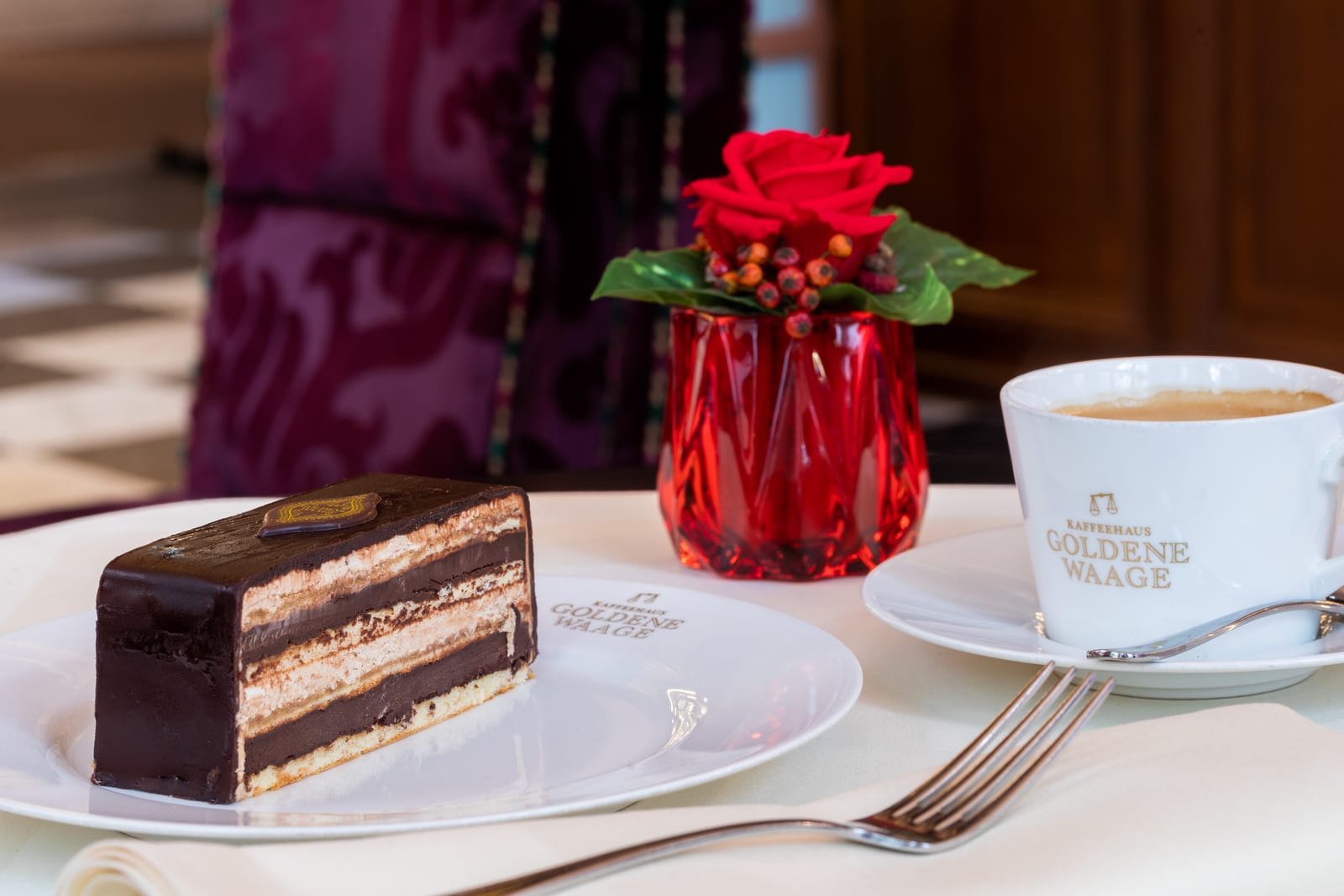
Strawberry tarts, Frankfurter Kranz and chocolate torte stand on the china of the house, on its tables, in its light. A piece of wall or curtain stays visible behind them.
That makes every one of these pictures a picture of the coffee house as well. A studio frame would have shown the patisserie more cleanly and lost the tie to the place — and with a house like this the tie is the actual value.
In practice: a smaller aperture when the plate is the subject, a wide one when the room comes along, and in both cases a cup or a glass as a second plane.
More frames from the house
A room that carries the patisserie
A tart against a white background is a product photograph. The same tart on the china of the house, with the red walls cut into the frame, is a picture of this coffee house.
The difference costs nothing but the decision to stay in the room instead of turning a table by the window into a studio. It is the reason this series is not interchangeable with any other pâtisserie.
Is your property due for new photographs?
Scope and price are fixed before anything is photographed or filmed. The inquiry commits you to nothing.