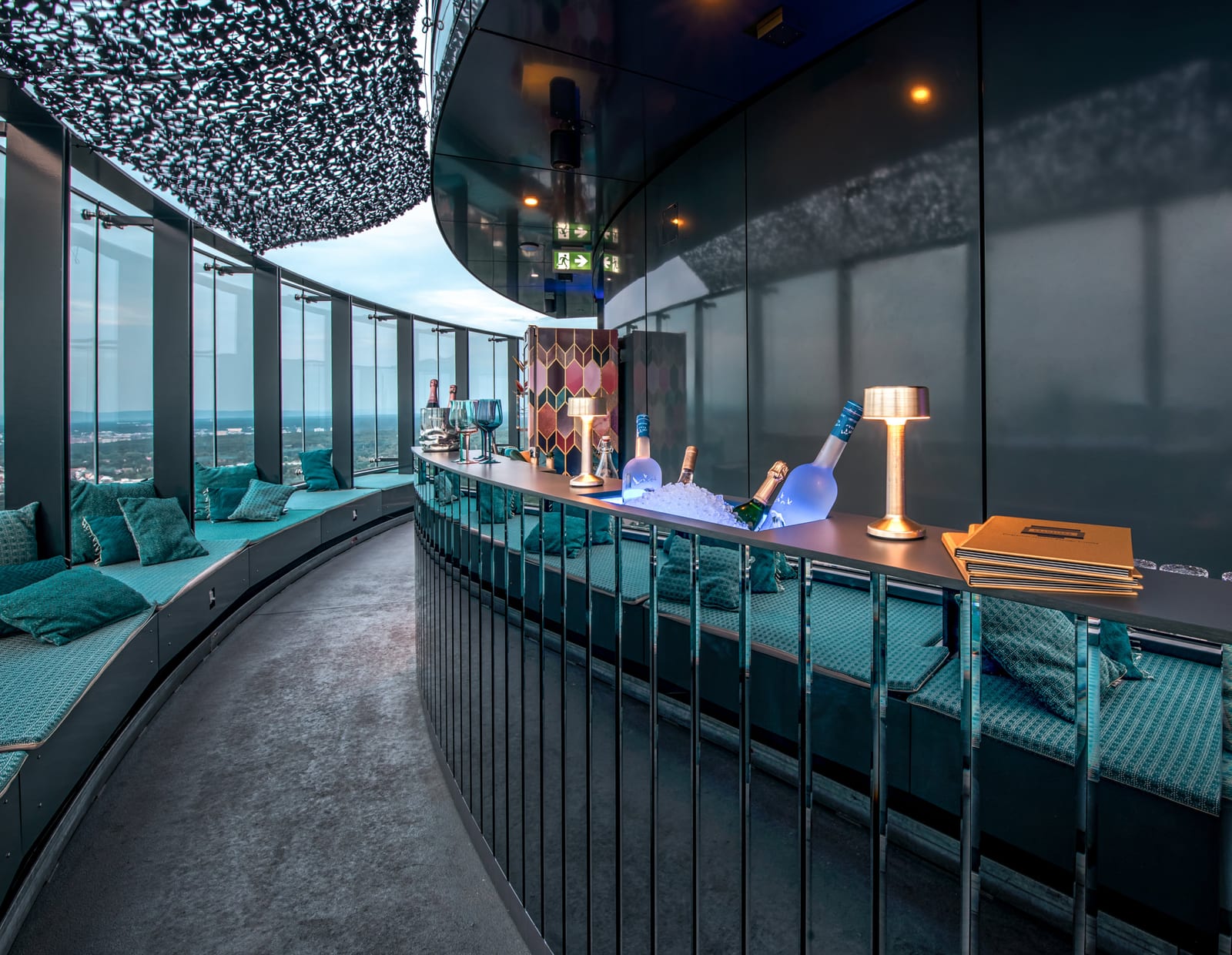
A view is a selling point that is easily lost in a photograph. Expose for the interior and the window burns out. Expose the landscape correctly and the room stays too dark.
Three houses in the archive stand for three versions of that problem: a bar above the city, a hotel room behind a window wall, and a terrace above a valley.
Three houses, one difficulty
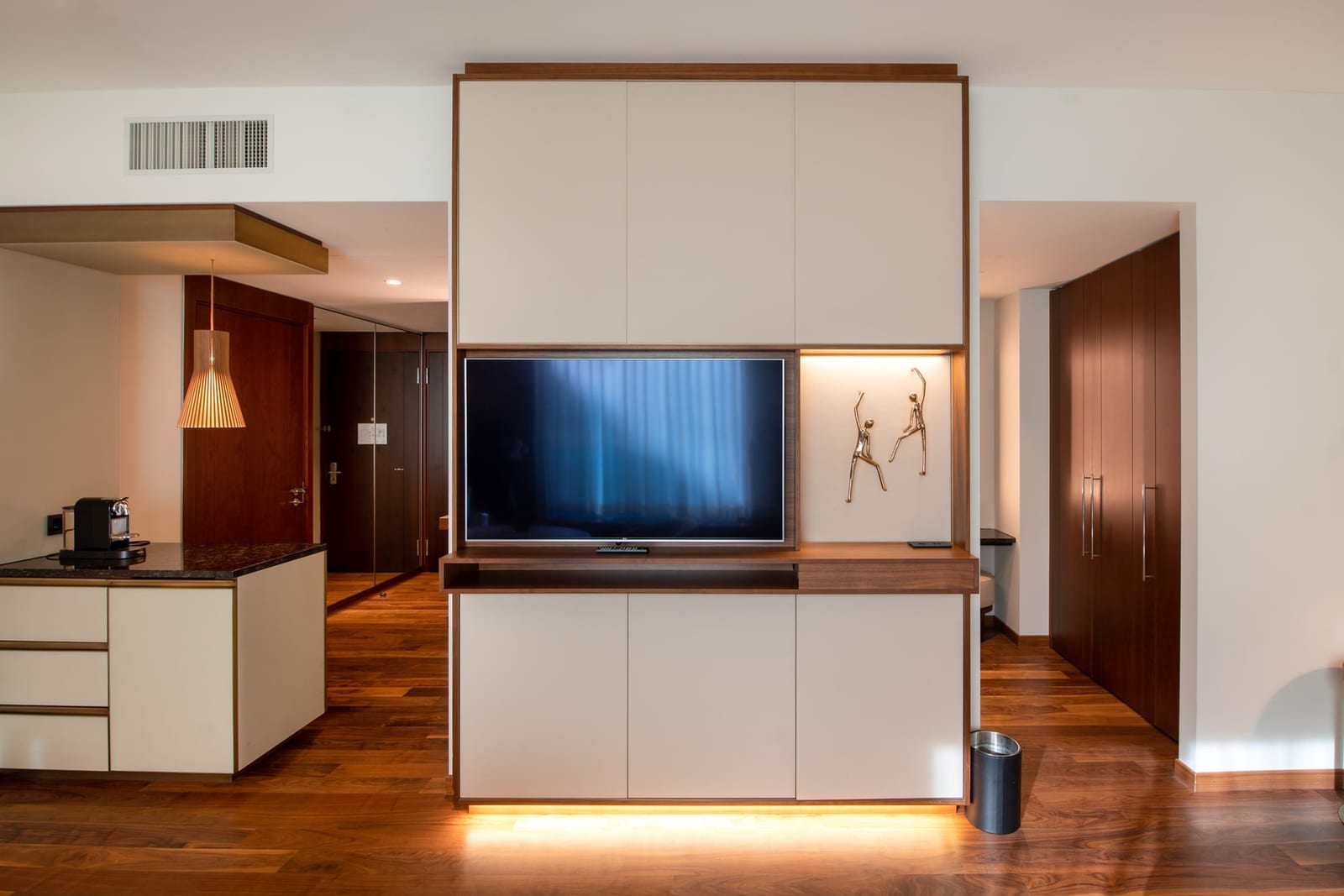
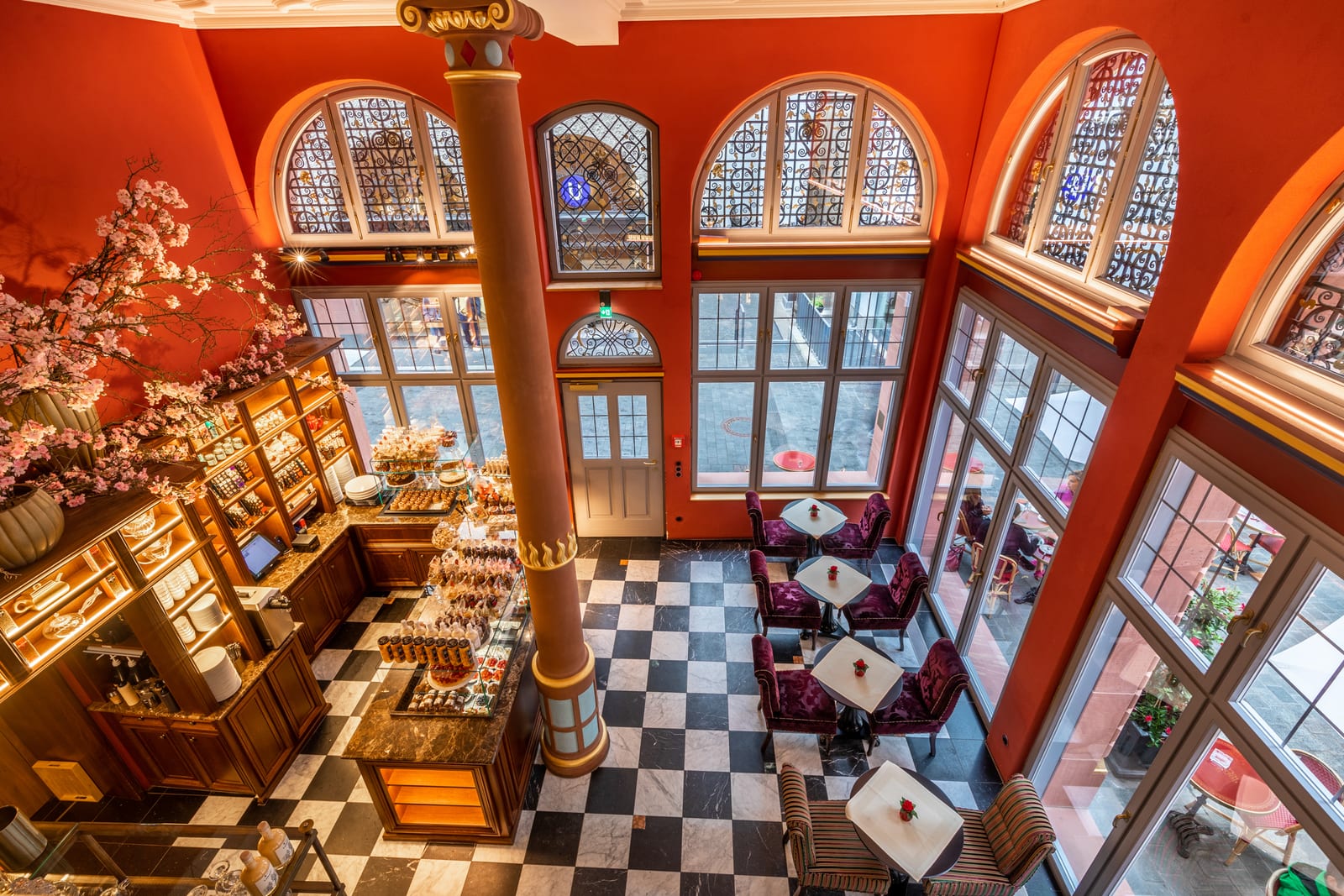
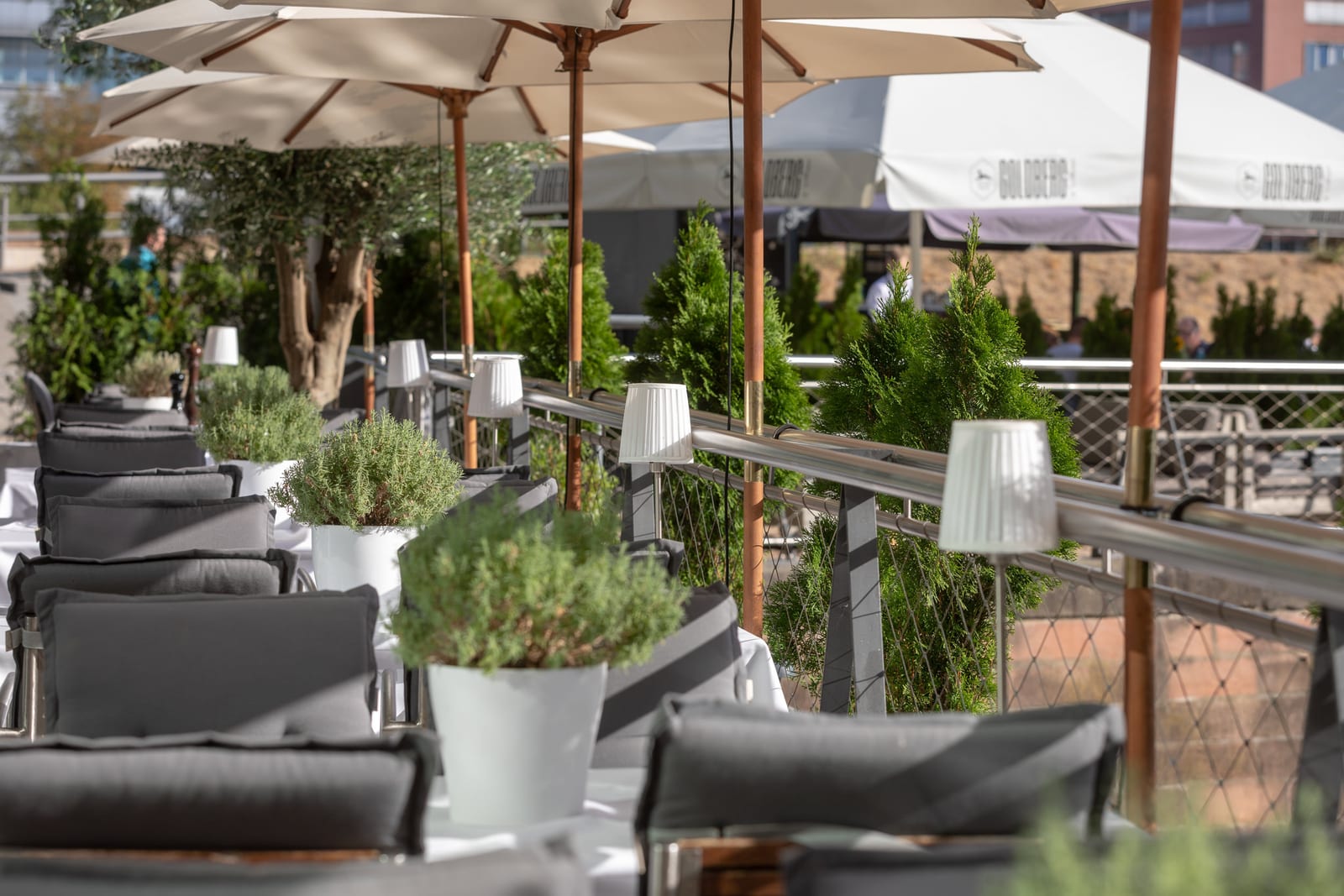
At the Franziska the skyline was part of the curved architecture. At the Radisson Blu Stuttgart the city behind the window wall had to stay as visible as the room itself. Das Rebenhaus connects its terrace and its guest rooms with the Rhine valley.
Timing beats extra light
The answer usually lies in the timing rather than in additional light. Blue hour, an overcast sky or light filtered through a canopy of vines all reduce the difference between inside and outside. The viewpoint then makes sure the view does not read like a picture pinned to the wall.
In practice that means the appointment follows the window, not the calendar. A facade facing west and one facing east need different hours, and for a room with a panoramic window an overcast day is often a better booking than bright sunshine.
Why the viewpoint decides the effect
A window shot head-on and dead center looks like wallpaper. As soon as an edge of the room runs along with it, a piece of furniture points into the depth, or the camera drops a little lower, the view subordinates itself to the room and becomes part of it.
Rooms with a view then become legible as a whole: the guest does not only look out but experiences the interior and its surroundings at once. More examples are under interior and hotel photography and hotel photography in the archive.
Is your property due for new photographs?
Scope and price are fixed before anything is photographed or filmed. The inquiry commits you to nothing.