Das Rebenhaus in Rüdesheim: dining above the Rhine valley
Published
Das Rebenhaus stands on a slope above Rüdesheim and combines a restaurant, rooms to stay in and a landscape at one address. A series showing only the plates would leave out what the place is.
So the pictures cover the terrace under its canopy of vines, laid tables, the food, the guest rooms, the vineyards and the view across the river — together with one frame from the air that explains how all of it fits together.
The view is not a backdrop
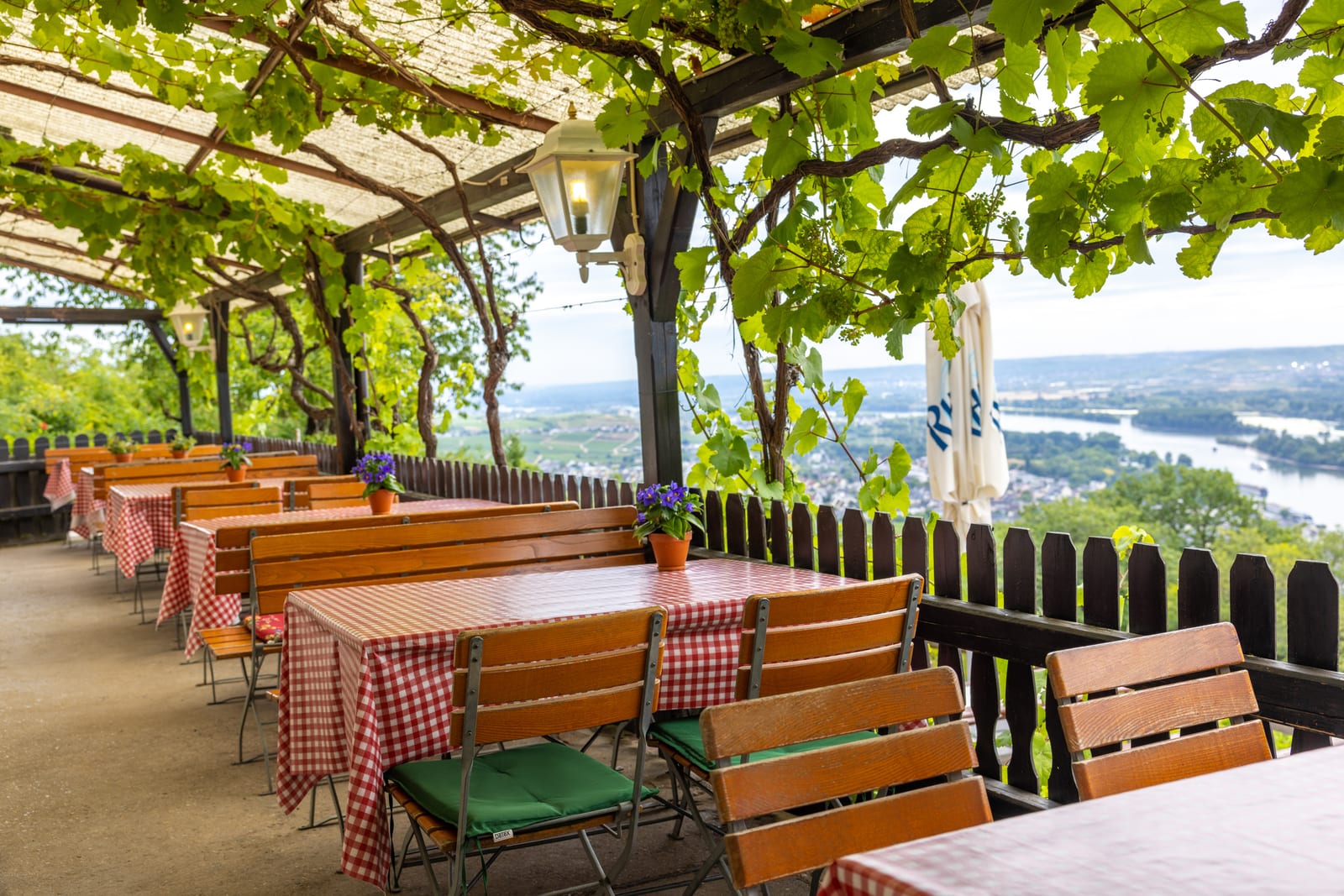
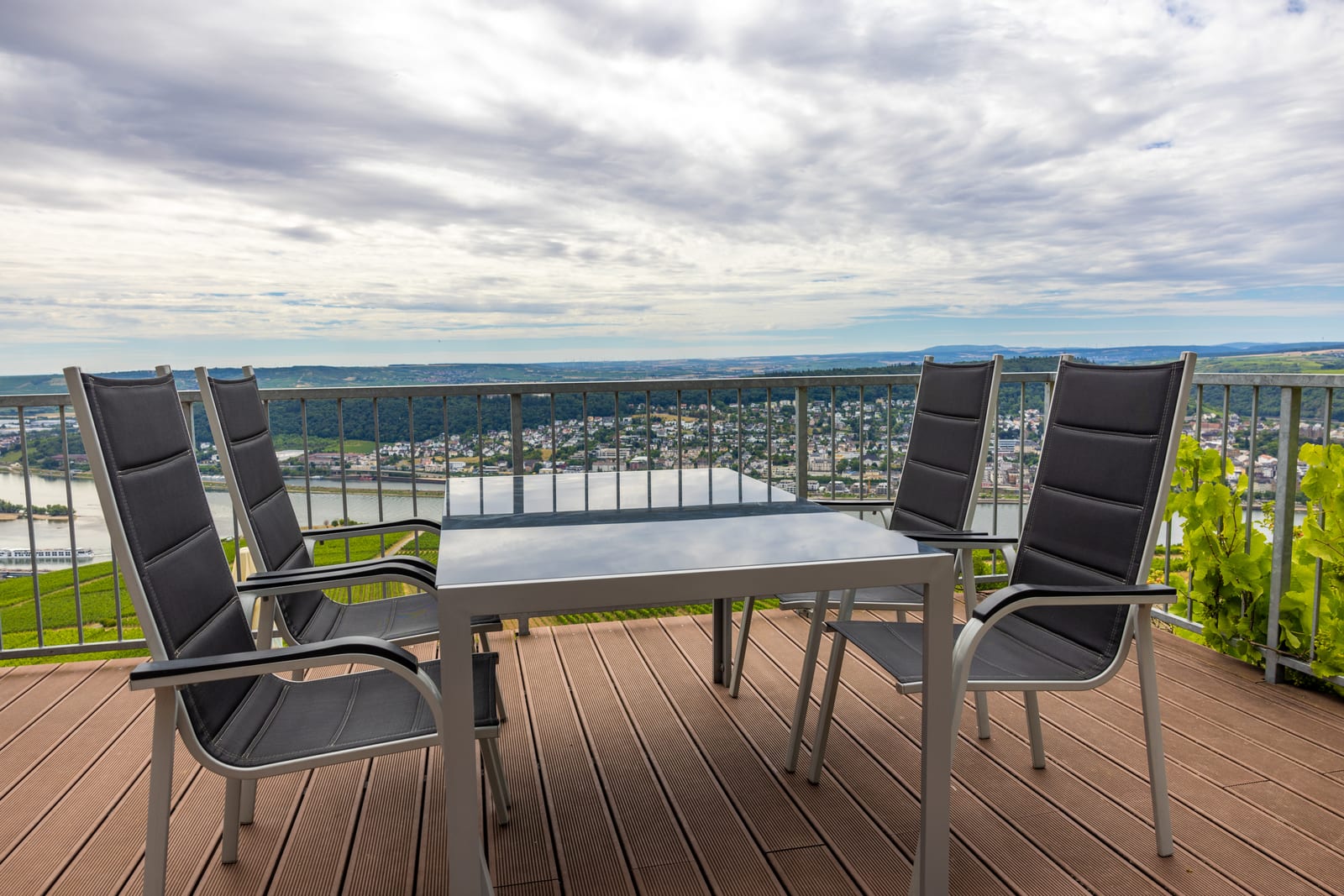
In the terrace pictures the Rhine valley does not sit behind the scene, it sits inside it. The camera stands so that table, railing, slope and river are stacked in one line: the eye runs from the place setting over the parapet and into the valley.
That is a matter of standpoint, not of lens. One step back and the parapet cuts the valley off; one step sideways and the table stands in front of an empty field.
The canopy makes the light
Vines grow over the terrace. They filter the sun, throw moving shadows across the checked cloths and tint the light faintly green.
That light is not neutral, and neutralizing it would be the wrong move. It is the only evidence that the picture was really made under this canopy rather than on some terrace or other.
What it does demand is attention to contrast: several stops separate a patch of sun on the tablecloth from the shade beside it. The hour of the shoot decides whether both can be held at once.

Rooms that share the same view
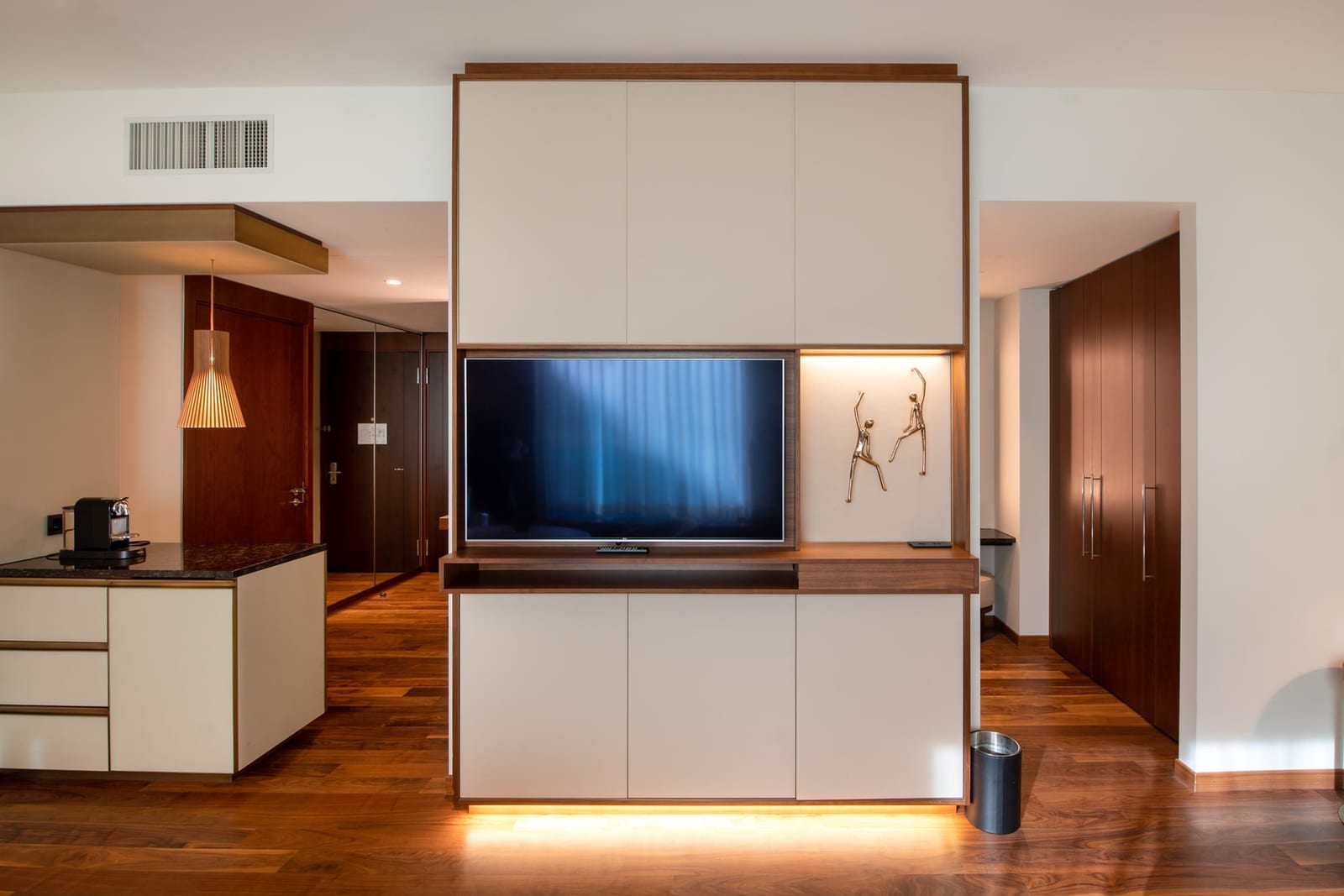
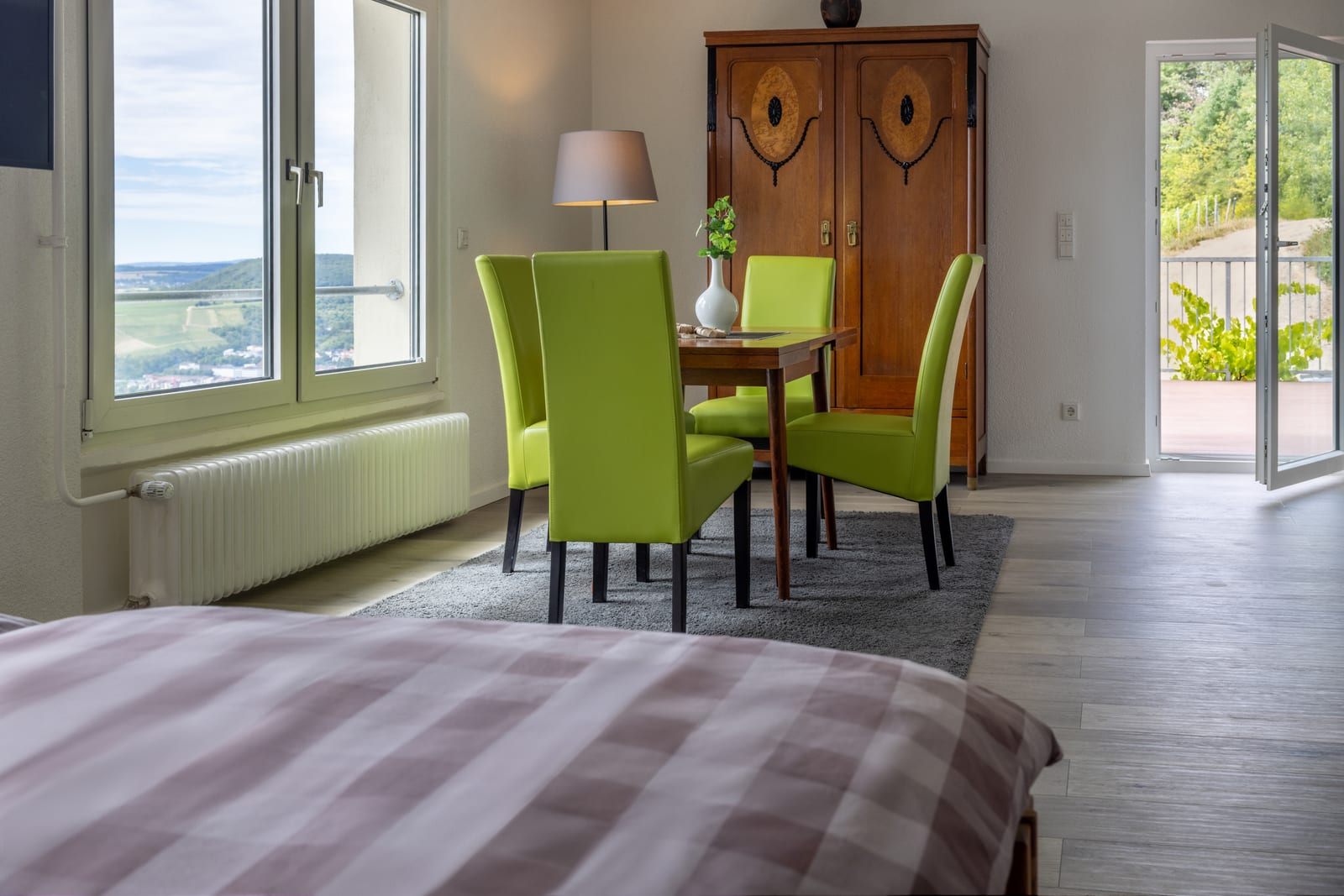
Alongside the restaurant the guest rooms were photographed: bright spaces with simple furniture whose windows face the same way as the terrace.
In a room shot the decision is made at the window. Expose for the room and the view burns out white; expose for the view and the room goes dark. Holding both at once is the real work — and it is worth it here, because that view is the whole difference between this room and any other.
One frame from the air explains the position
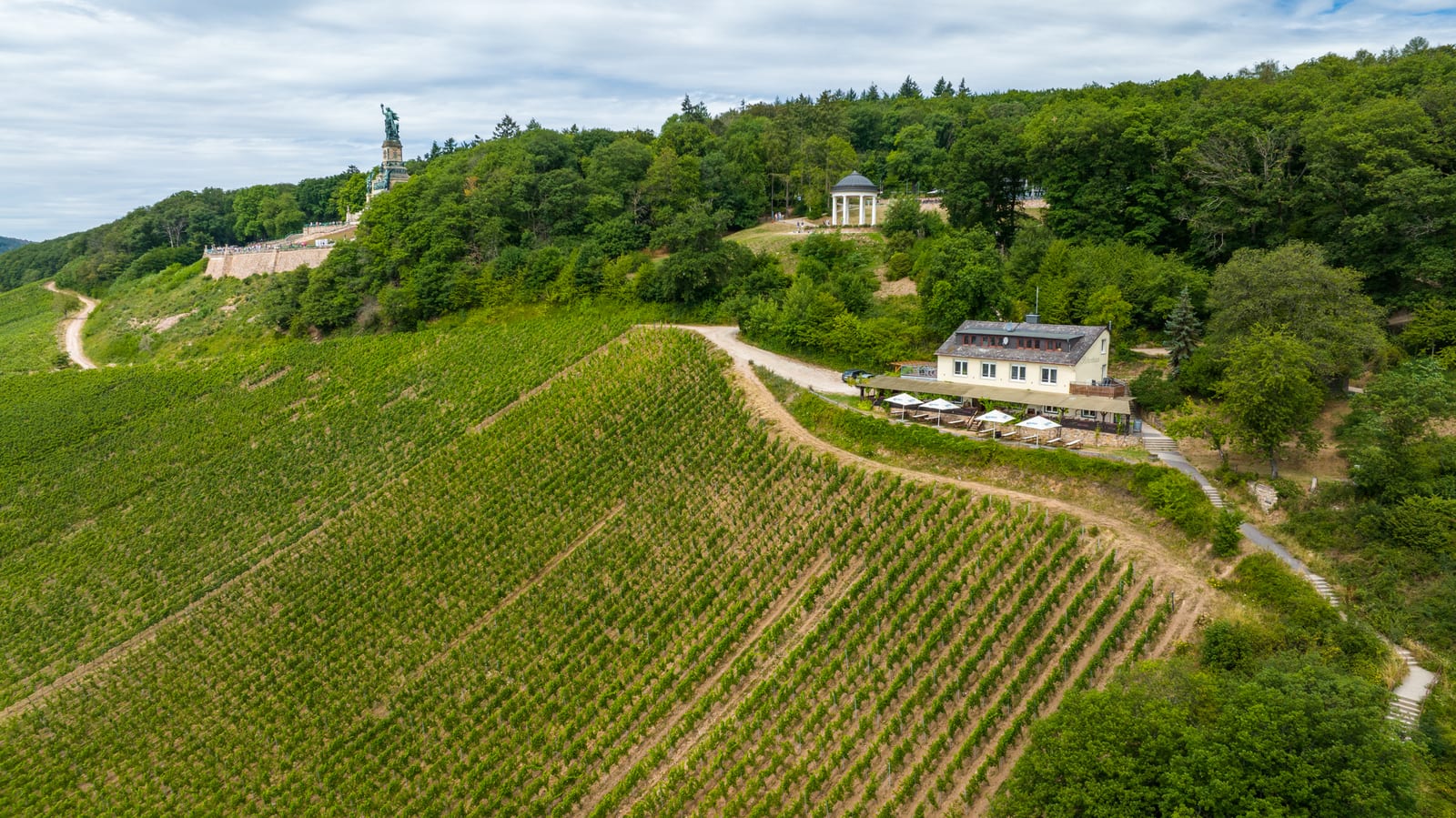
From the ground there is no way to show how the house sits between rows of vines, slope and river. The aerial frame does it in a single picture: vineyards, the building on the hillside, the Rhine behind.
It replaces none of the close-up frames, but it places them. Having seen it, you know where you are looking in the next terrace shot.
More frames from the house

When the landscape is part of the business
A house like this cannot be told through its menu. The view is not an addition; it is the reason anyone drives up the hill.
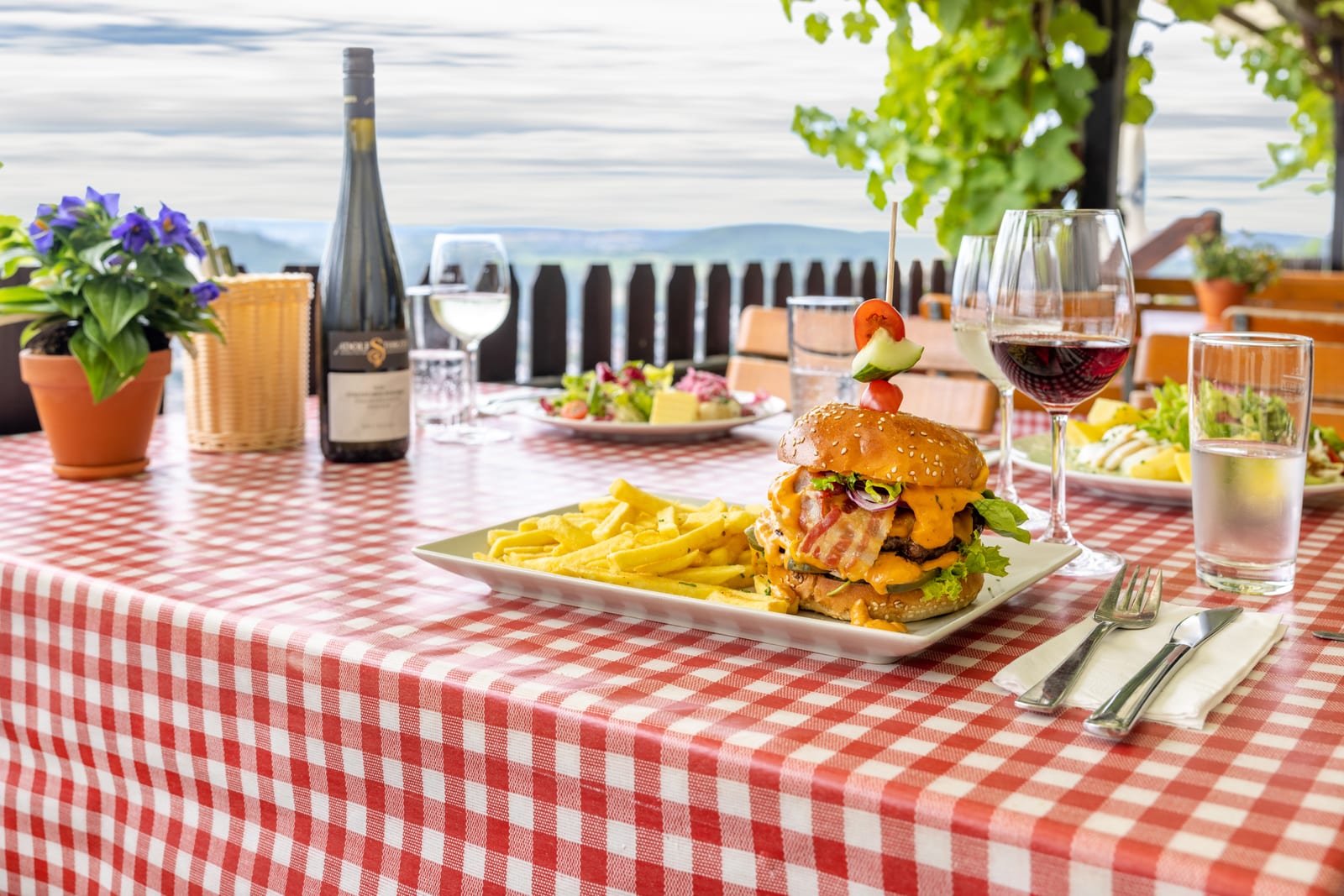
For the series that means every frame carries a piece of the place: the plate carries the checked cloth, the cloth carries the leaf canopy, the canopy carries the river behind it. Anyone who reaches the end of the row knows where they have been.
Is your property due for new photographs?
Scope and price are fixed before anything is photographed or filmed. The inquiry commits you to nothing.