Druckwasserwerk Frankfurt: dining in an industrial hall
Published
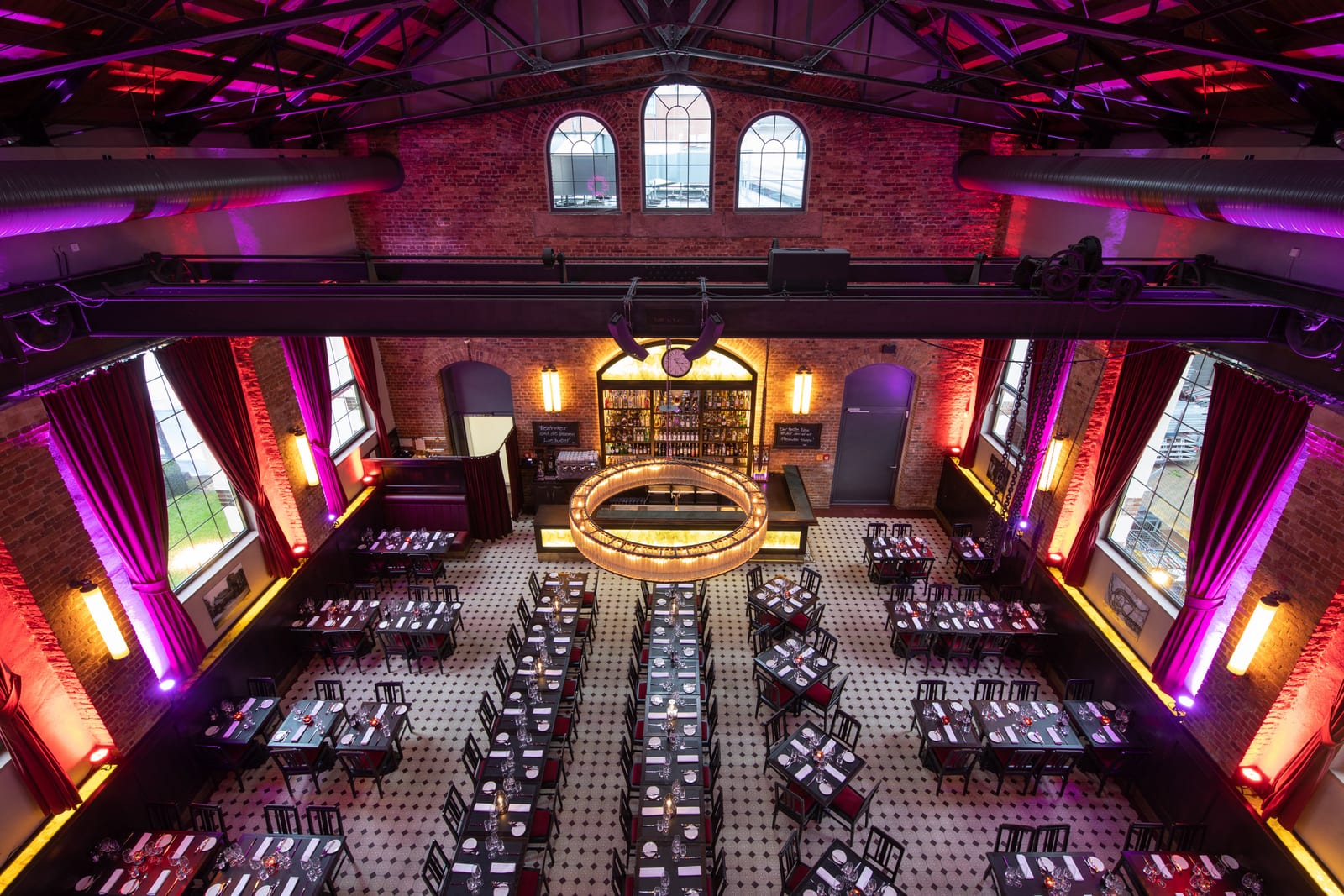
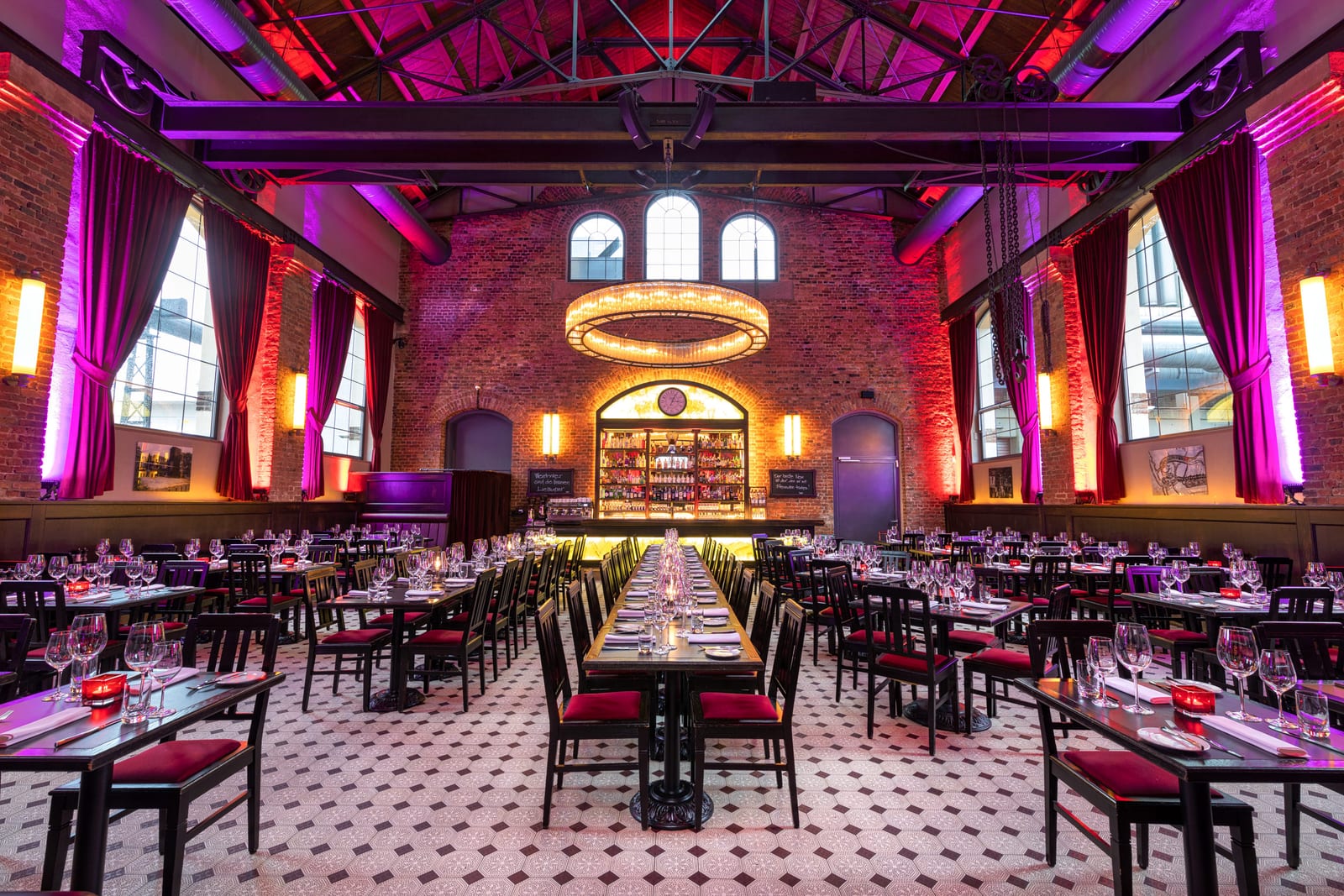
The historic Druckwasserwerk at the Frankfurt Westhafen is a machine hall people now eat in. Brick, tall round arches, steel beams and an oval bar in the middle give the room a height no standard dining room has.
Three sets of pictures exist for the house: the rooms themselves, a seasonal menu, and a content package for social media. They show the same building from three distances — the hall, the table, the single plate.
The gallery is the right standpoint
From the floor the hall is hard to take in: the tables hide one another, and the height is lost the moment the camera tilts up.
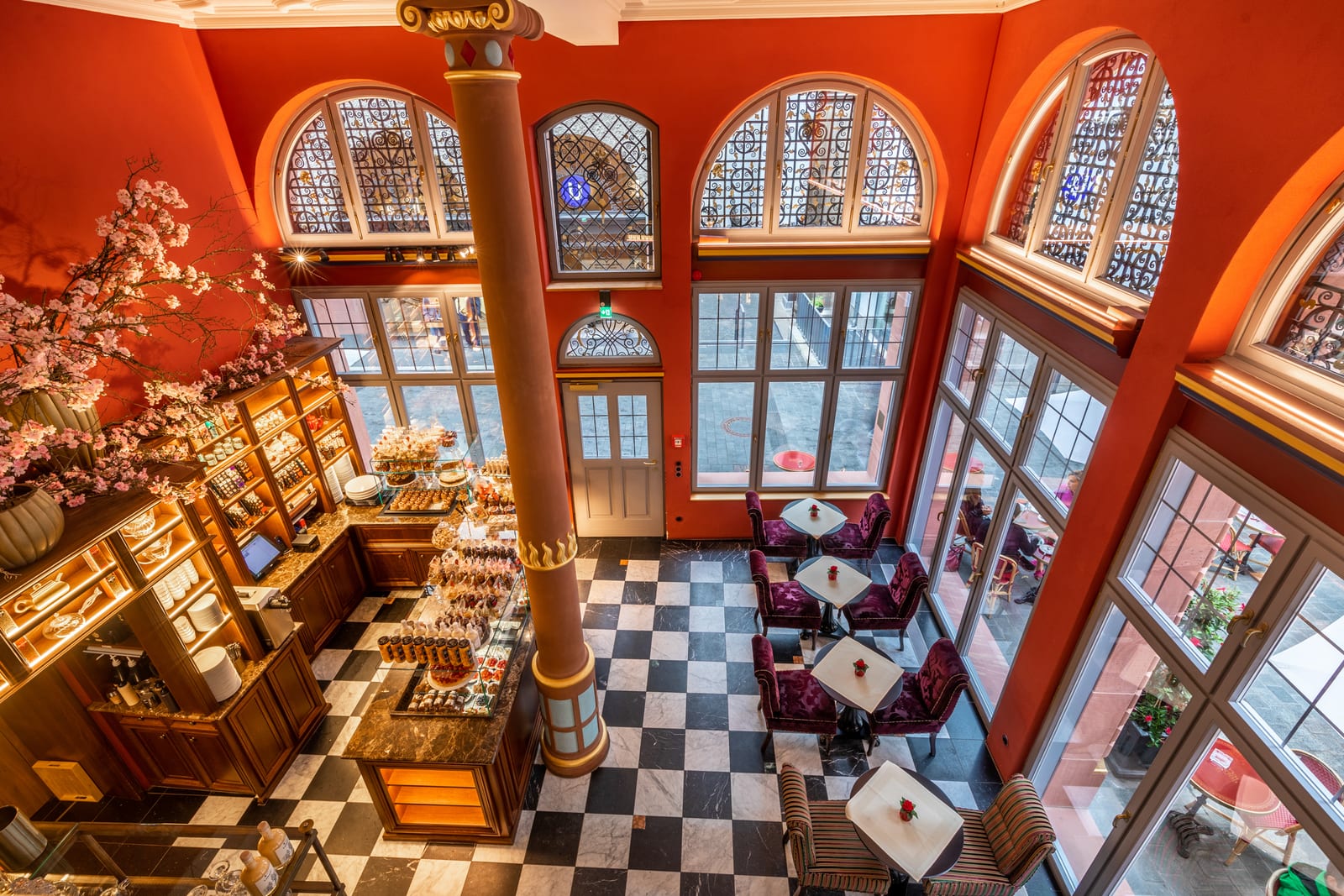
From the gallery everything sits in the frame at once — the arched windows, the arrangement of the long tables, the checkerboard floor and the bar in the middle. It is the only position from which the room explains itself.
The violet accents stay. They are the house lighting, and without them the hall would be one continuous orange brick box; with them it has a second color for the eye to navigate by.
The bar under the arch
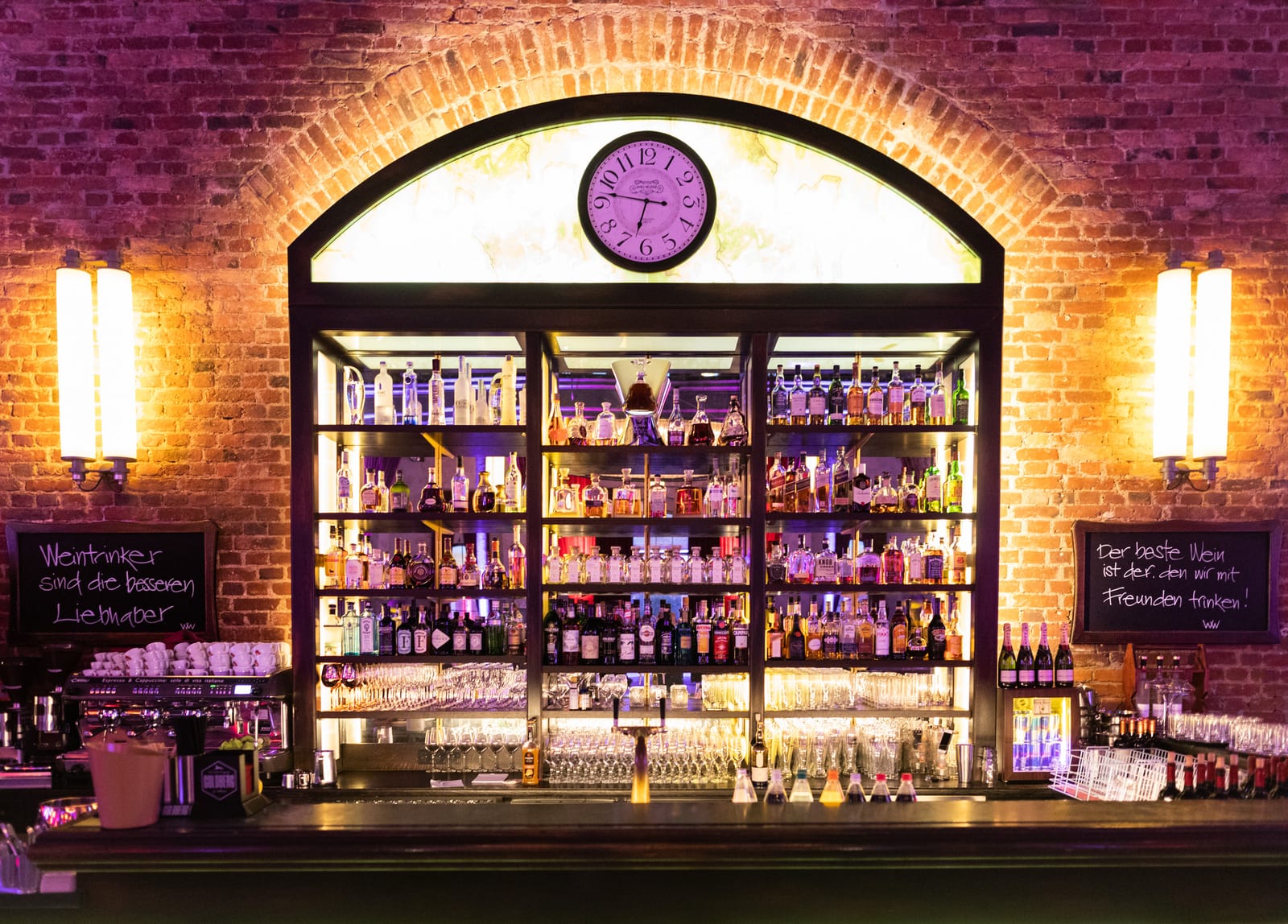
The second thing that makes this house is the bar: a backlit bottle shelf set into a brick arch, with a clock above it.
The arch supplies the frame for free. It is symmetrical, so the camera stands centered and at the height of the arch — any other position would have broken the symmetry without gaining anything.
Because the shelf is lit from behind it is the brightest point in the picture. The exposure follows it; the brick around it is allowed to stay dark, as it is in the room.
A menu, course by course
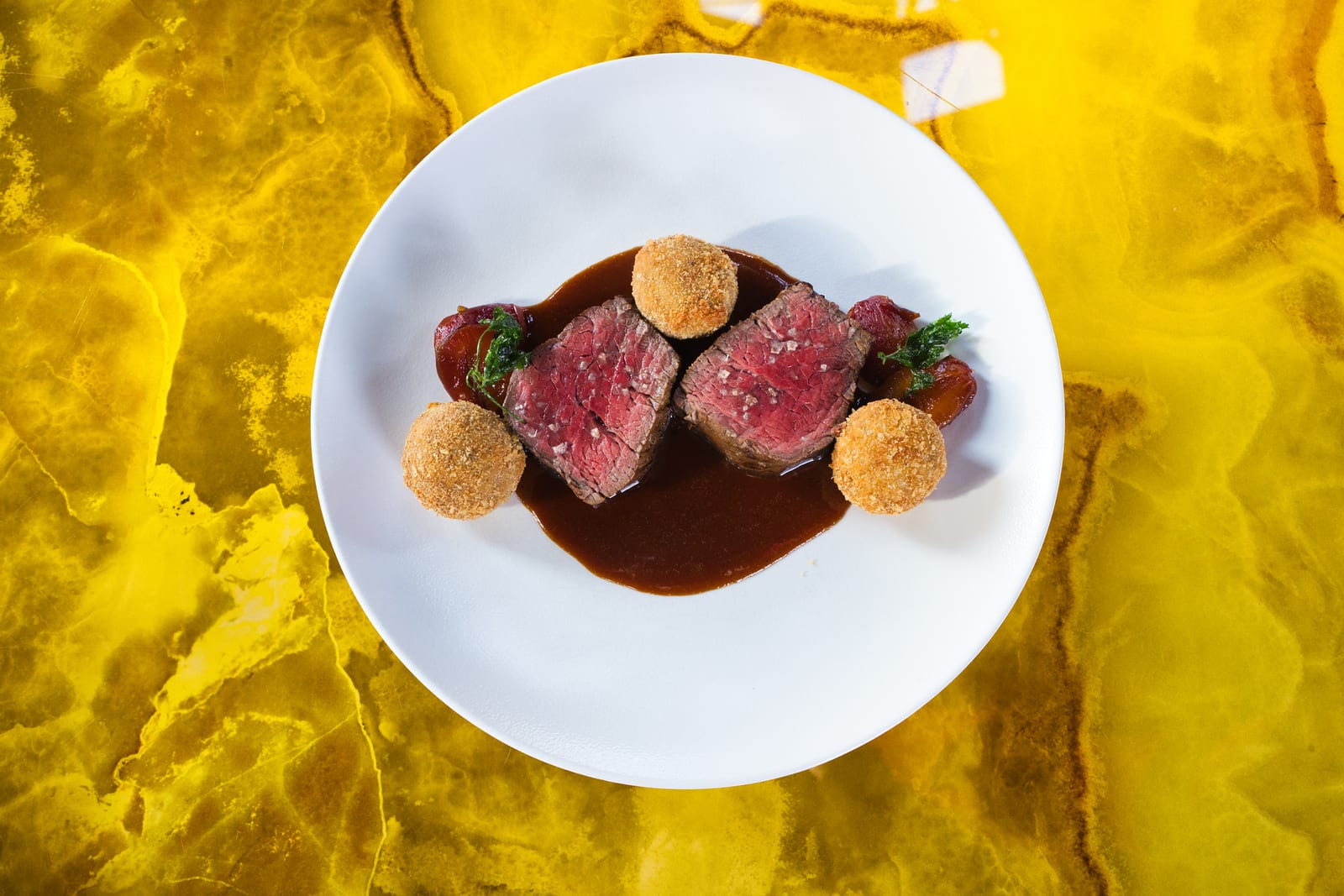
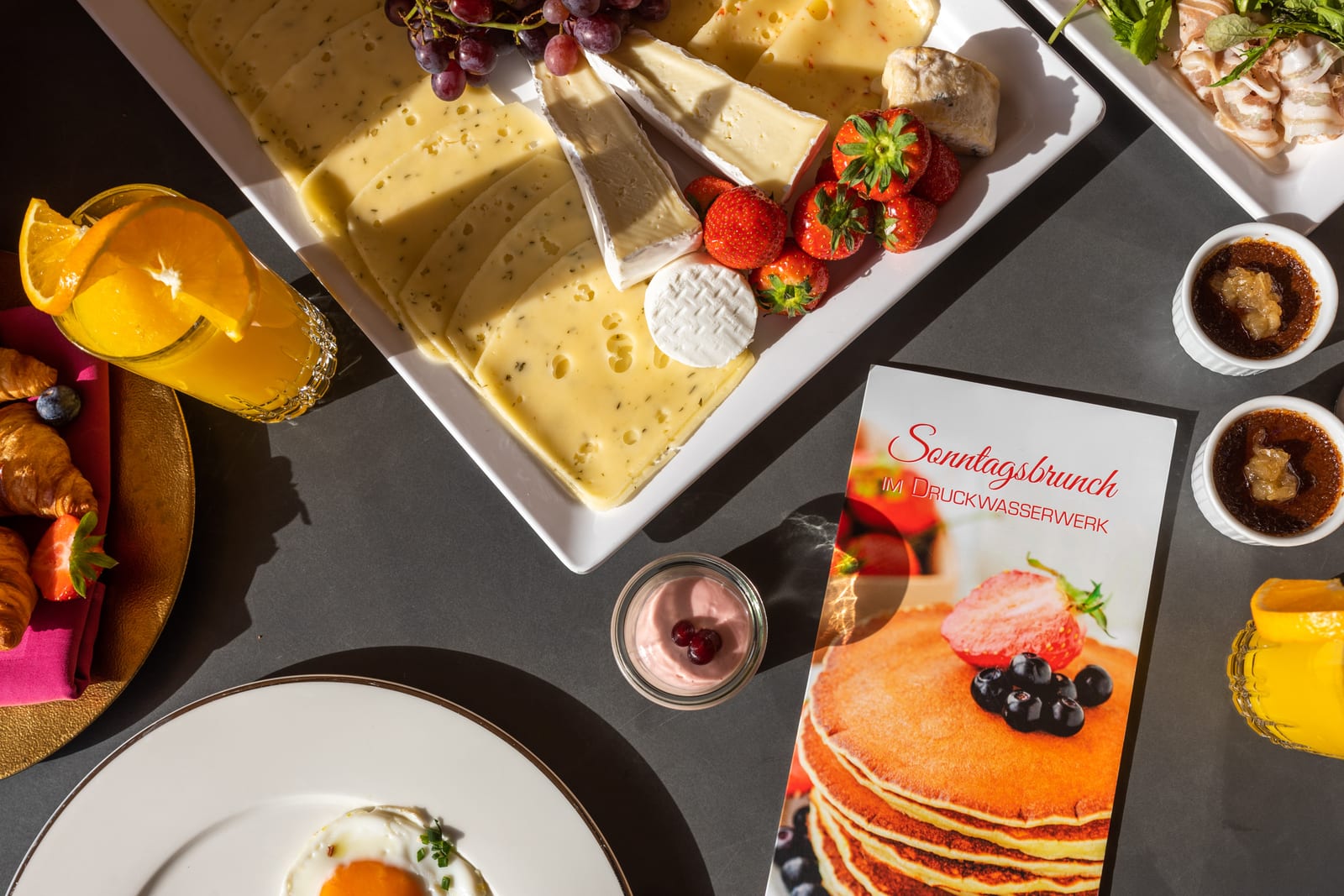
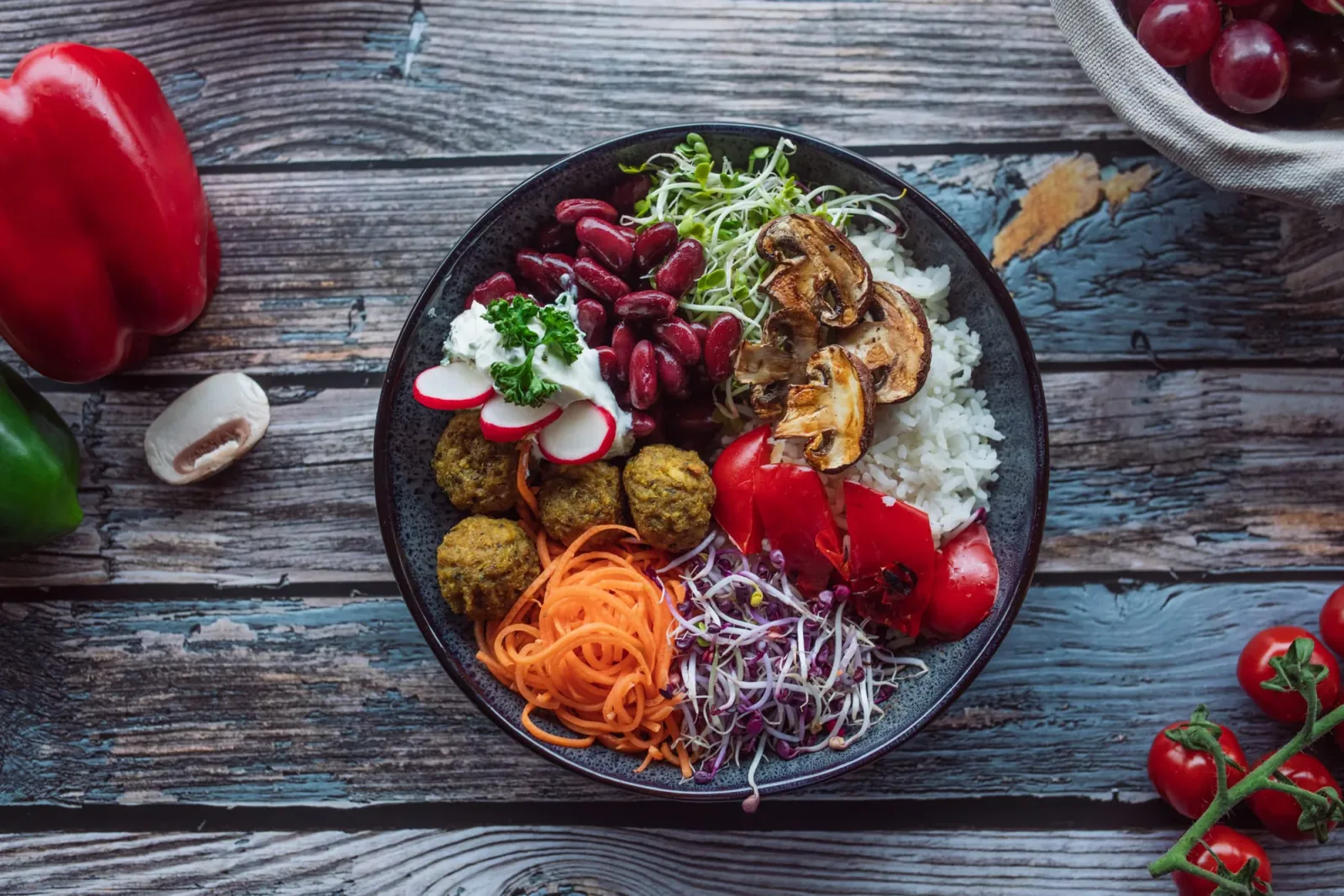
For the seasonal menu every course was photographed on its own, with a changing surface and a changing angle: tartare from above on pale porcelain, starters on dark blue stoneware against yellow marble, fish on a black plate, dessert back on white.
That is not decoration for its own sake. Six courses, all from above and all on the same ground, produce a row in which the third picture looks like the fifth. The variation keeps the series readable.
What stays constant is the lighting. It holds the courses together as one series while the plates and the angles keep them apart.
From the three shoots
A room that carries the pictures
In most restaurants a set of pictures has to create an atmosphere. Here it already exists, and the task shifts: the job is not to destroy it.
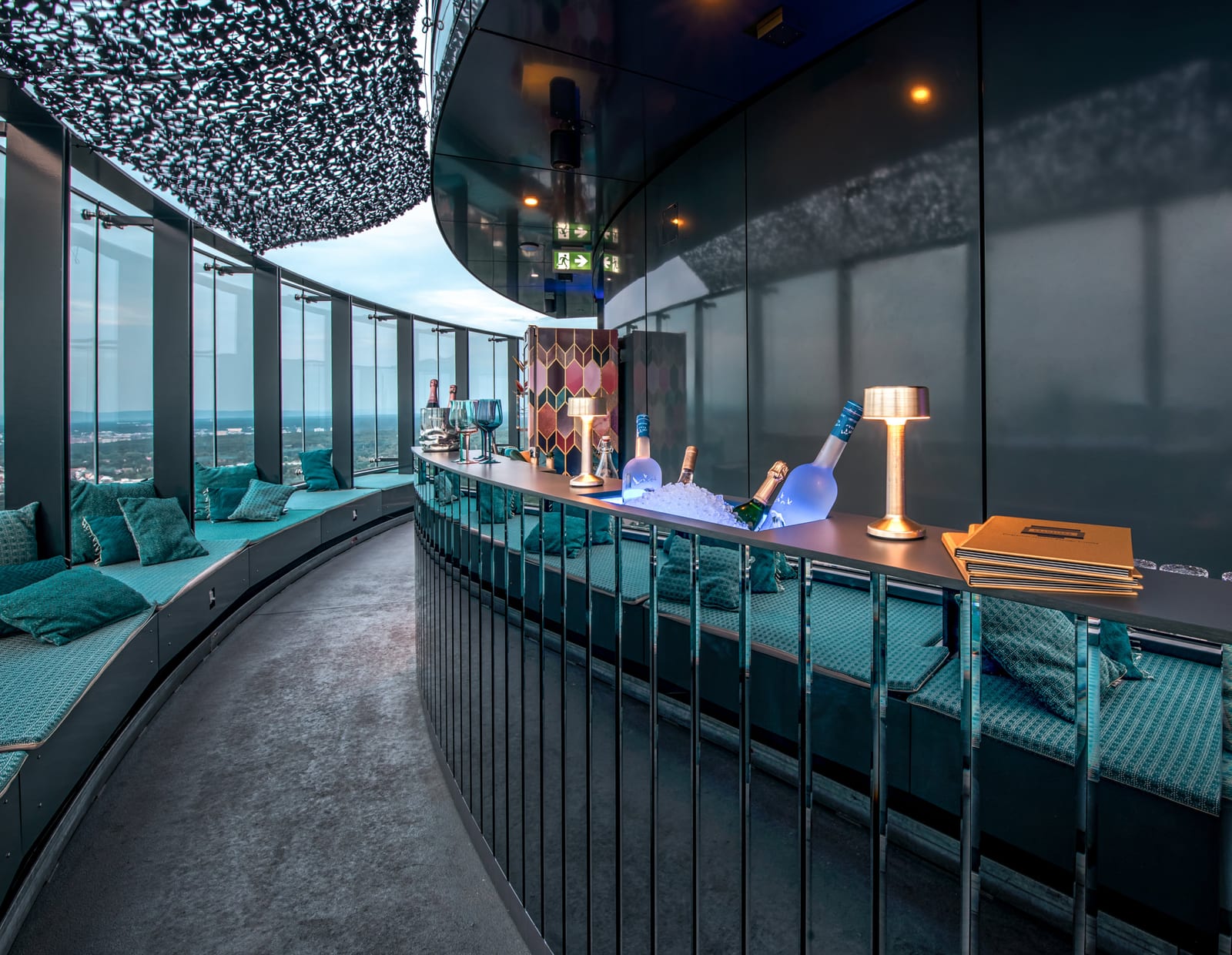
In practice that means very little added light, standpoints that take in the height of the building, and food pictures that are deliberately quiet against it. The contrast between the hall and one white plate is stronger than any further wide-angle frame.
Is your restaurant due for new photographs?
Scope and price are fixed before anything is photographed or filmed. The inquiry commits you to nothing.
Recurring colors for social media
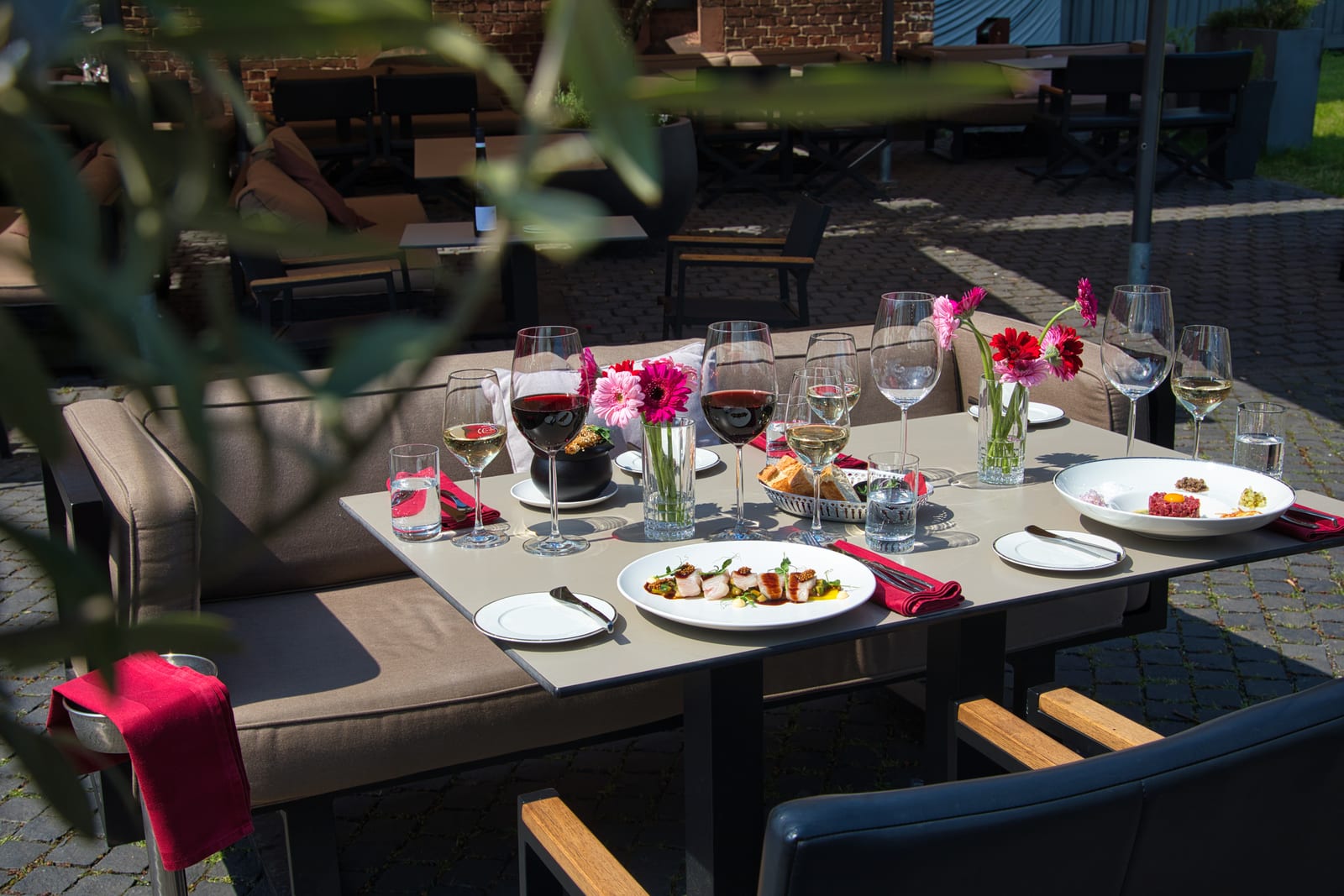
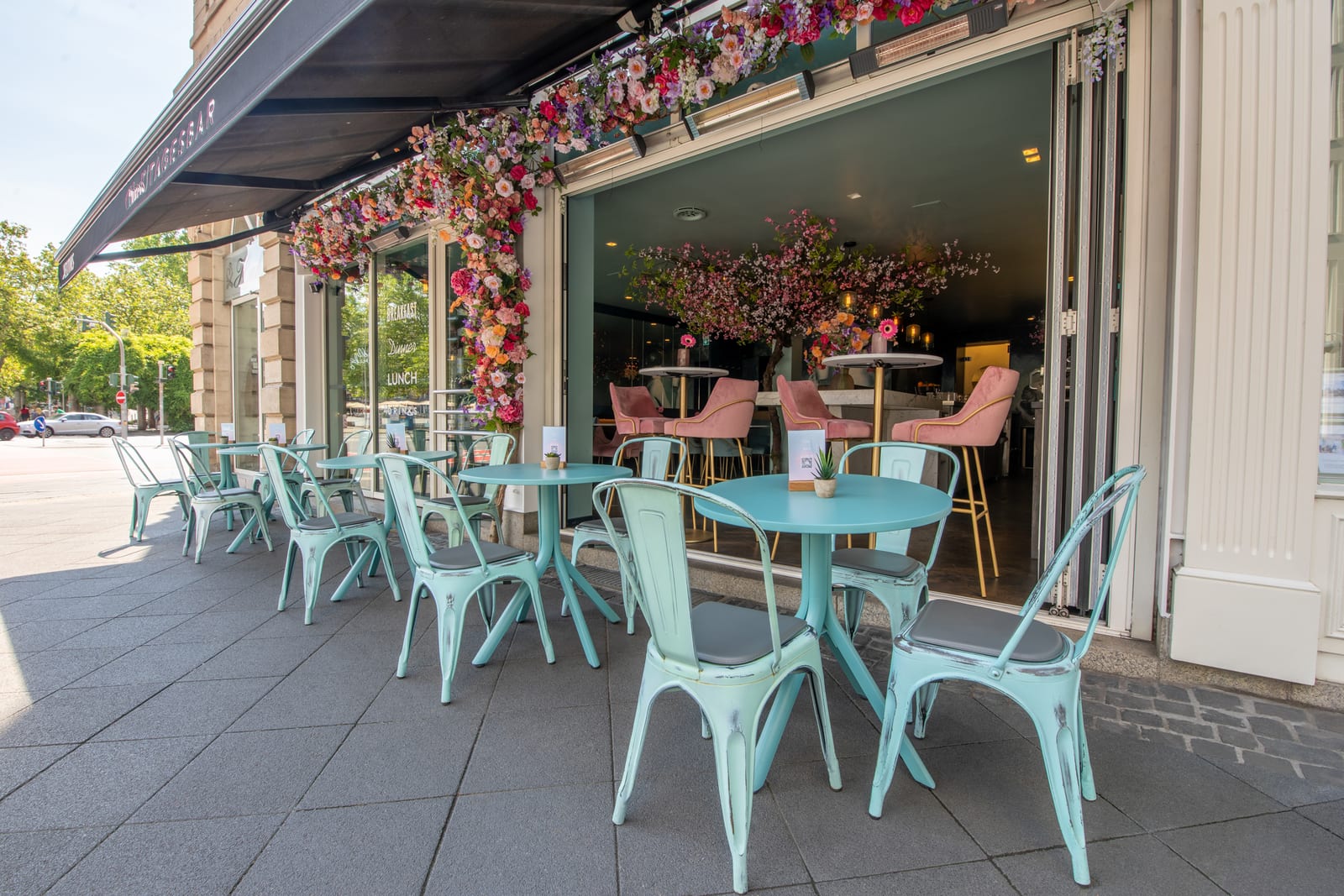
The third set was made for day-to-day use and works with one simple device: red or pink appears in every frame — as a napkin, as a gerbera on the table, as an accent on a plate.
A profile that has to be filled for months is not held together by a subject but by a repetition. A color that turns up everywhere is the most durable kind: it survives every change of menu and every season.
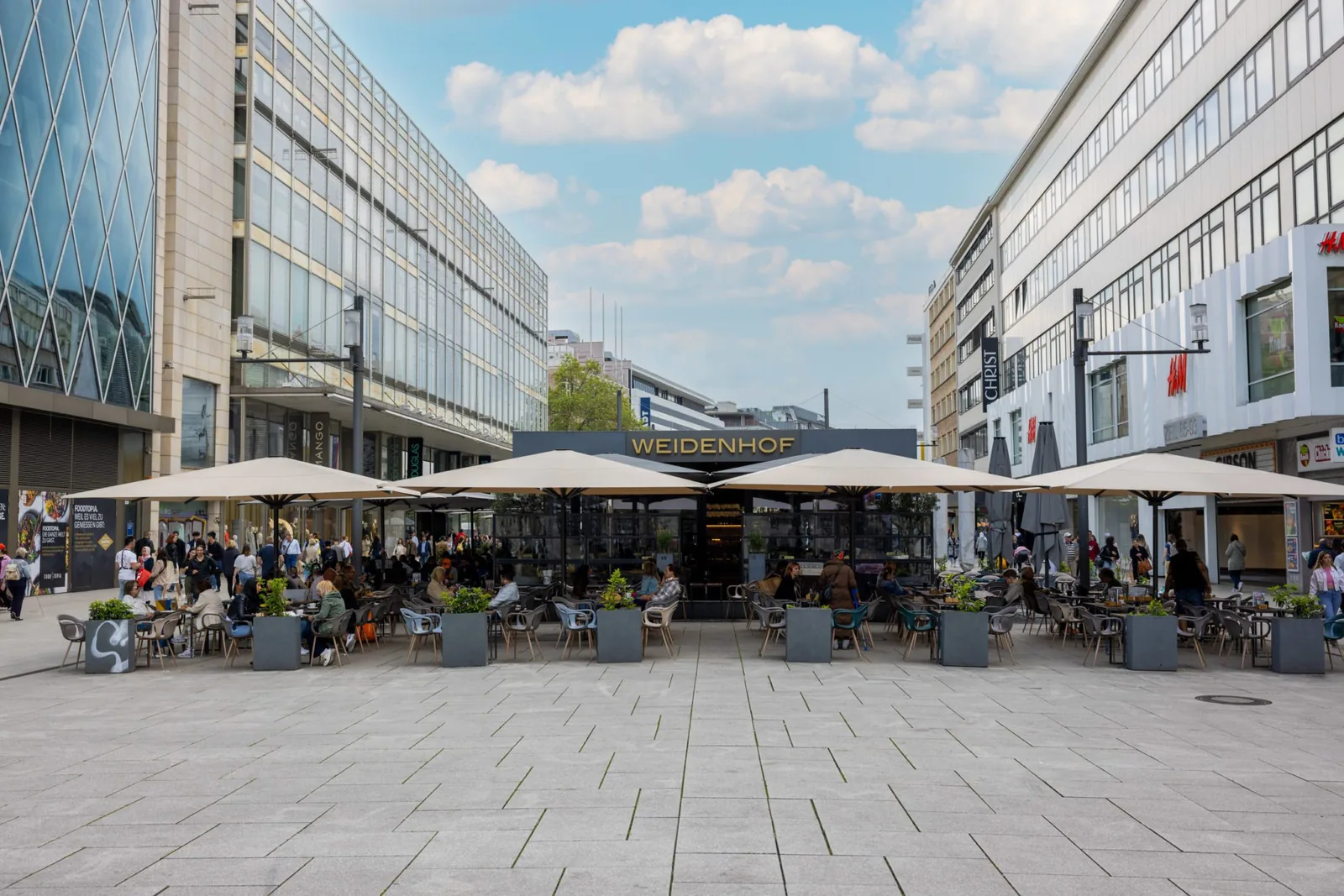
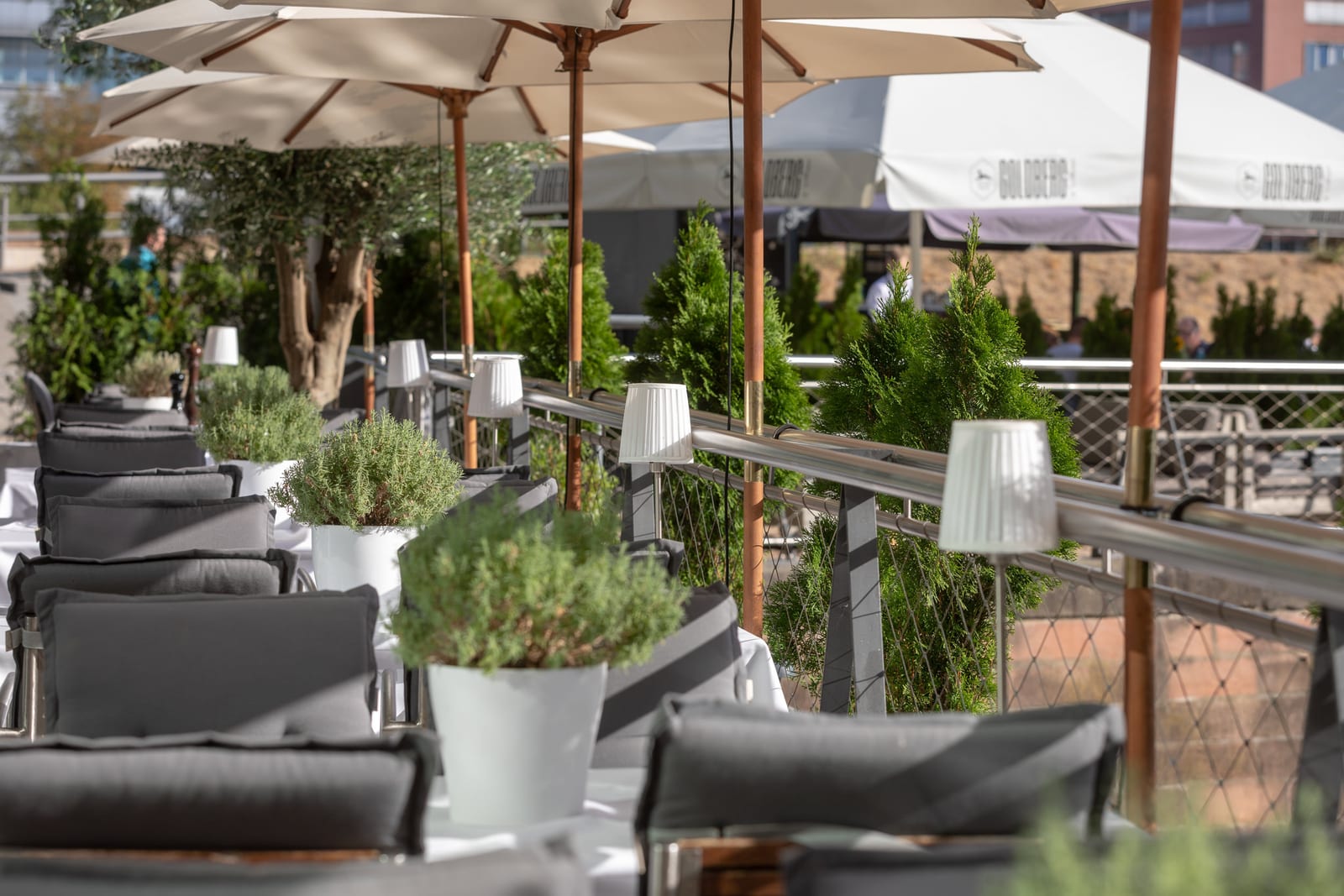
Terrace frames carry the same thread, so the summer months can be served from the same stock of pictures.