Chinaski Frankfurt: from daylight café to bar at night
Published
Chinaski has two faces over the course of a day. In the morning and at lunch it is daylight, coffee, bowls and the open window front. In the evening it is cocktails, neon and the backlit bottle wall.
So several sets of pictures exist for the house: the day bar with its terrace and guests, a food series on pale marble, and a cocktail series shot against the light of the bar. Three occasions, three lighting situations — and still one body of images that reads as one.
The day bar: color that is already in the room
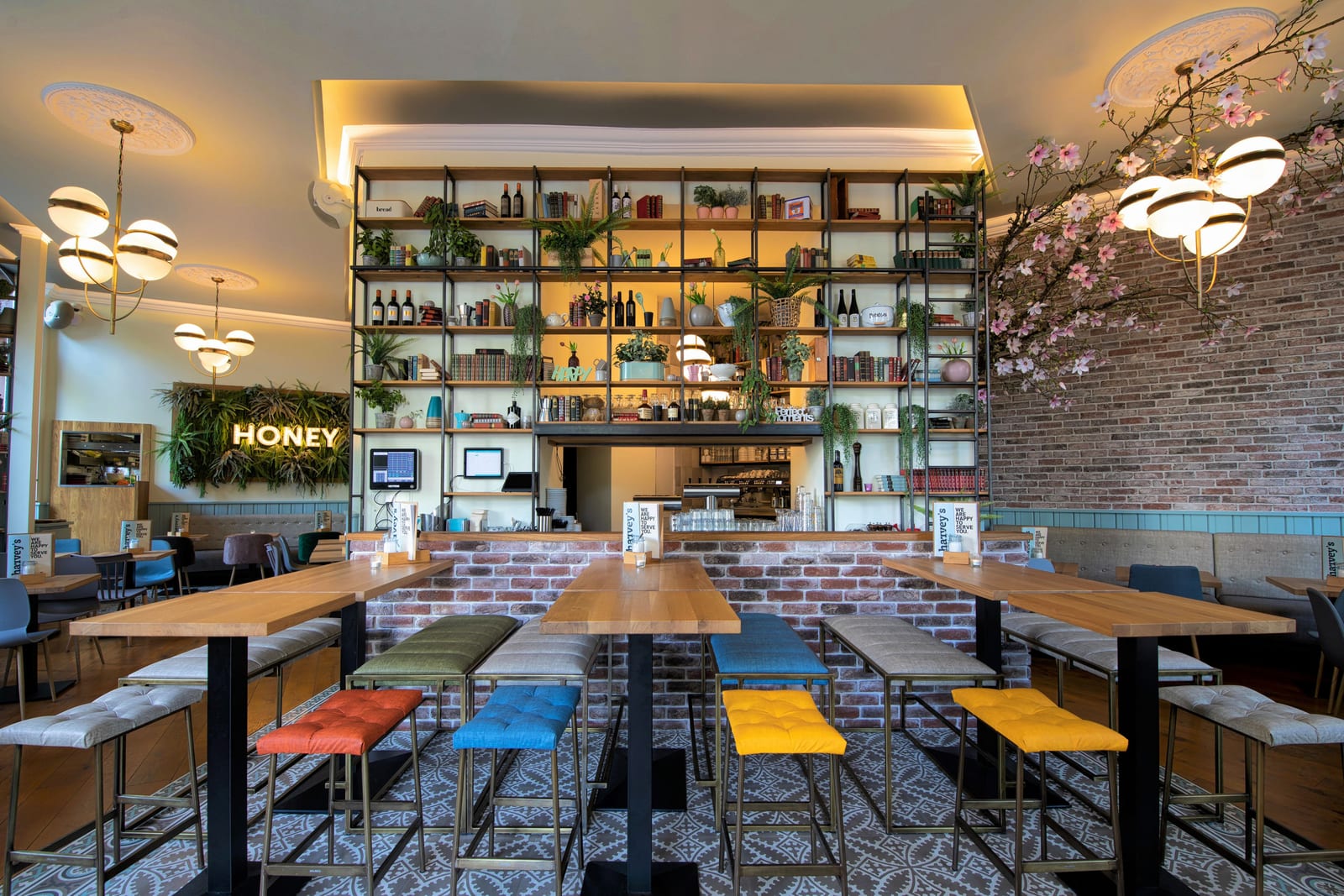
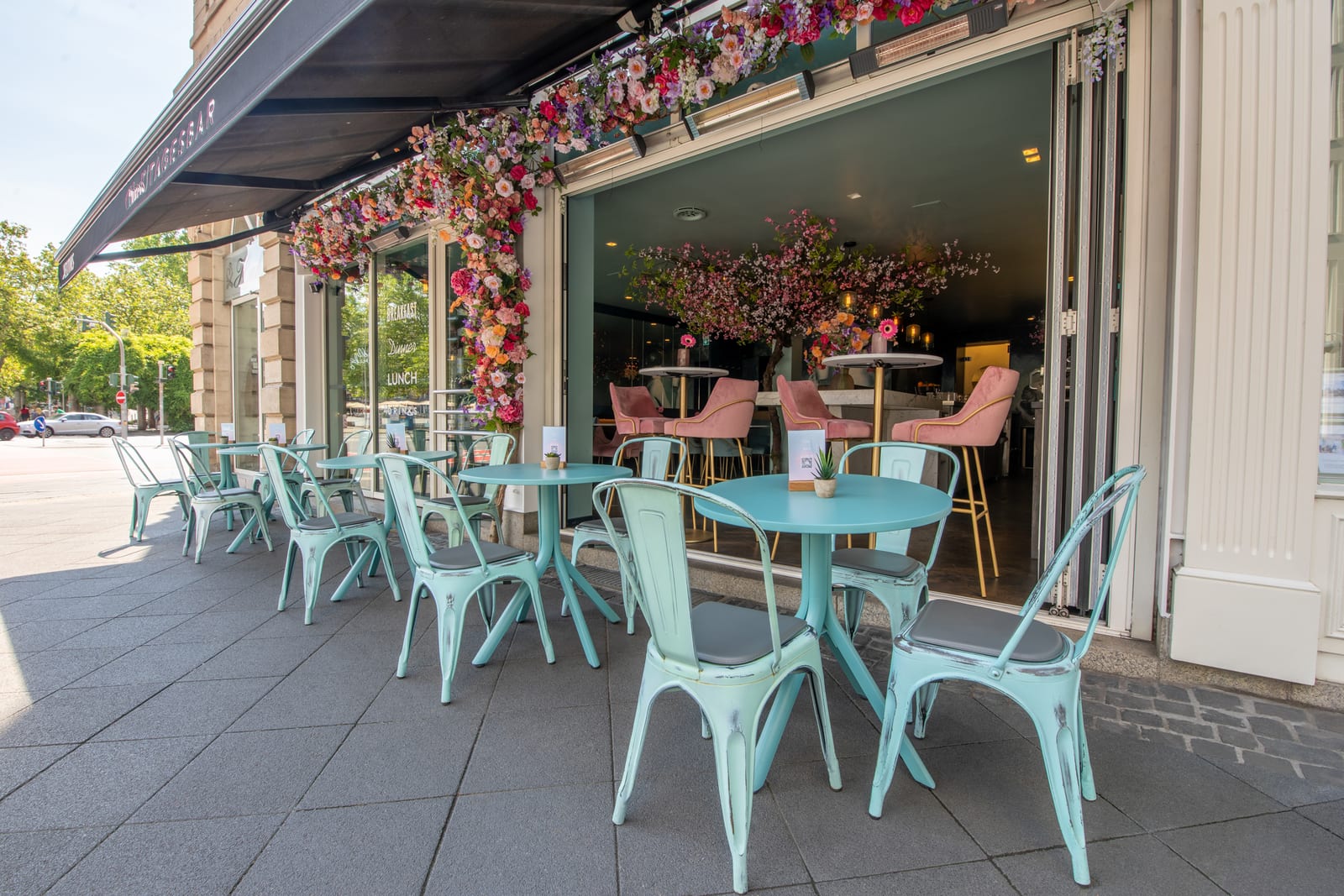
Turquoise outdoor chairs, pink upholstery, a façade grown over with flowers and a window front that opens fully — the palette here does not have to be built, it is installed.
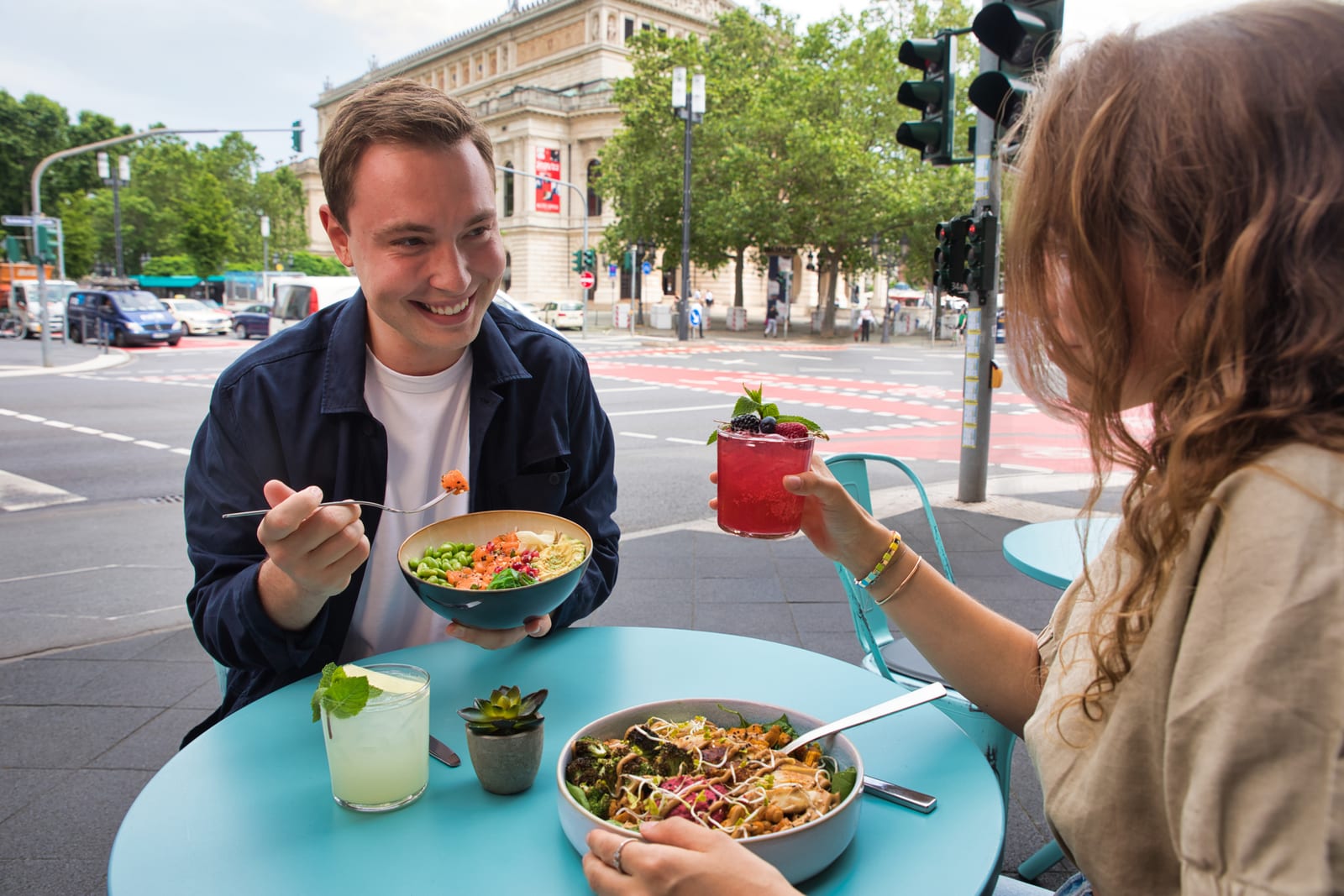
The pictures take it up rather than calming it down. A turquoise table carries a bowl, a pink armchair stands beside green leaves, and the street runs on in the background. Guests are in the frame on purpose: a terrace without people looks closed.
Food on pale marble
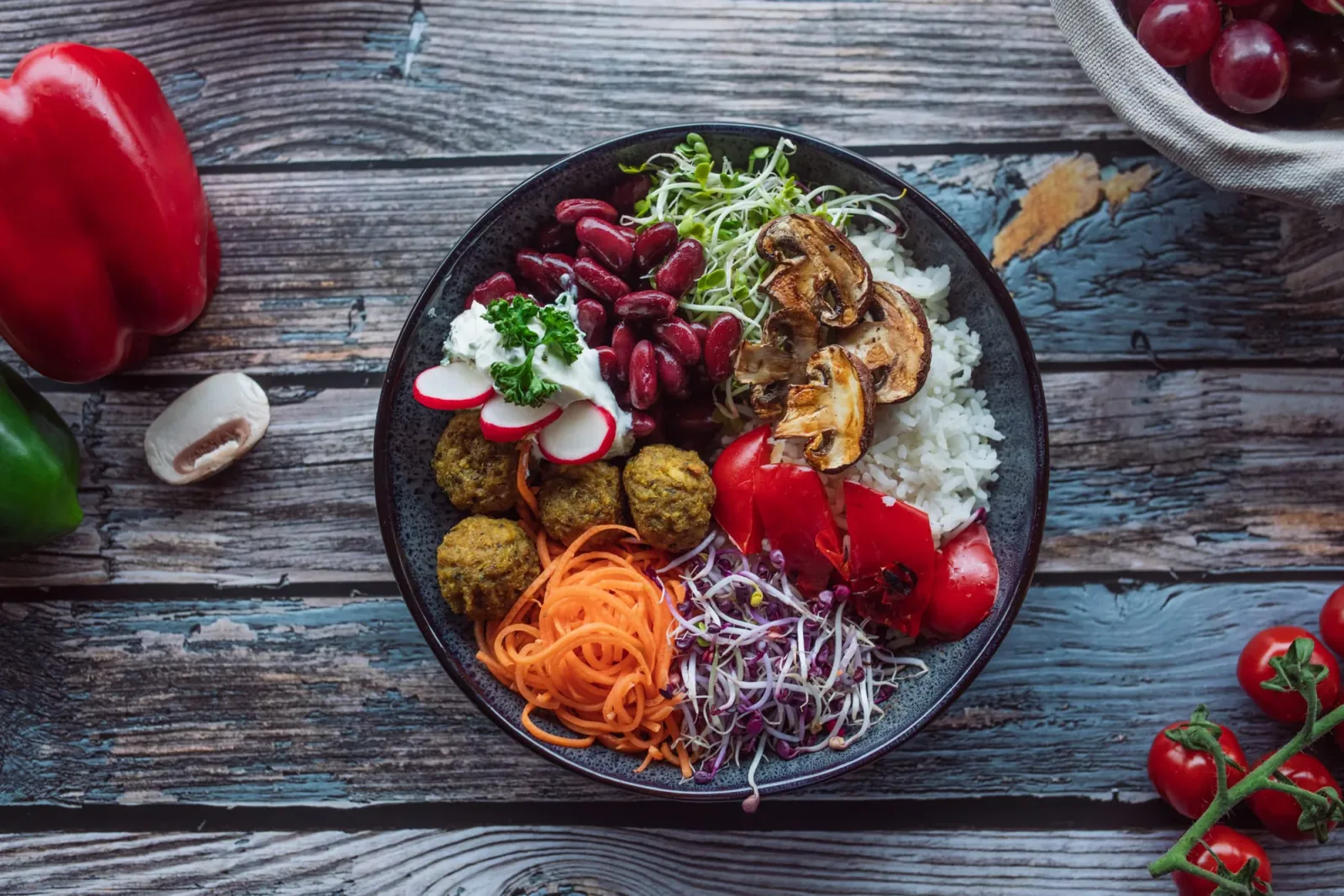
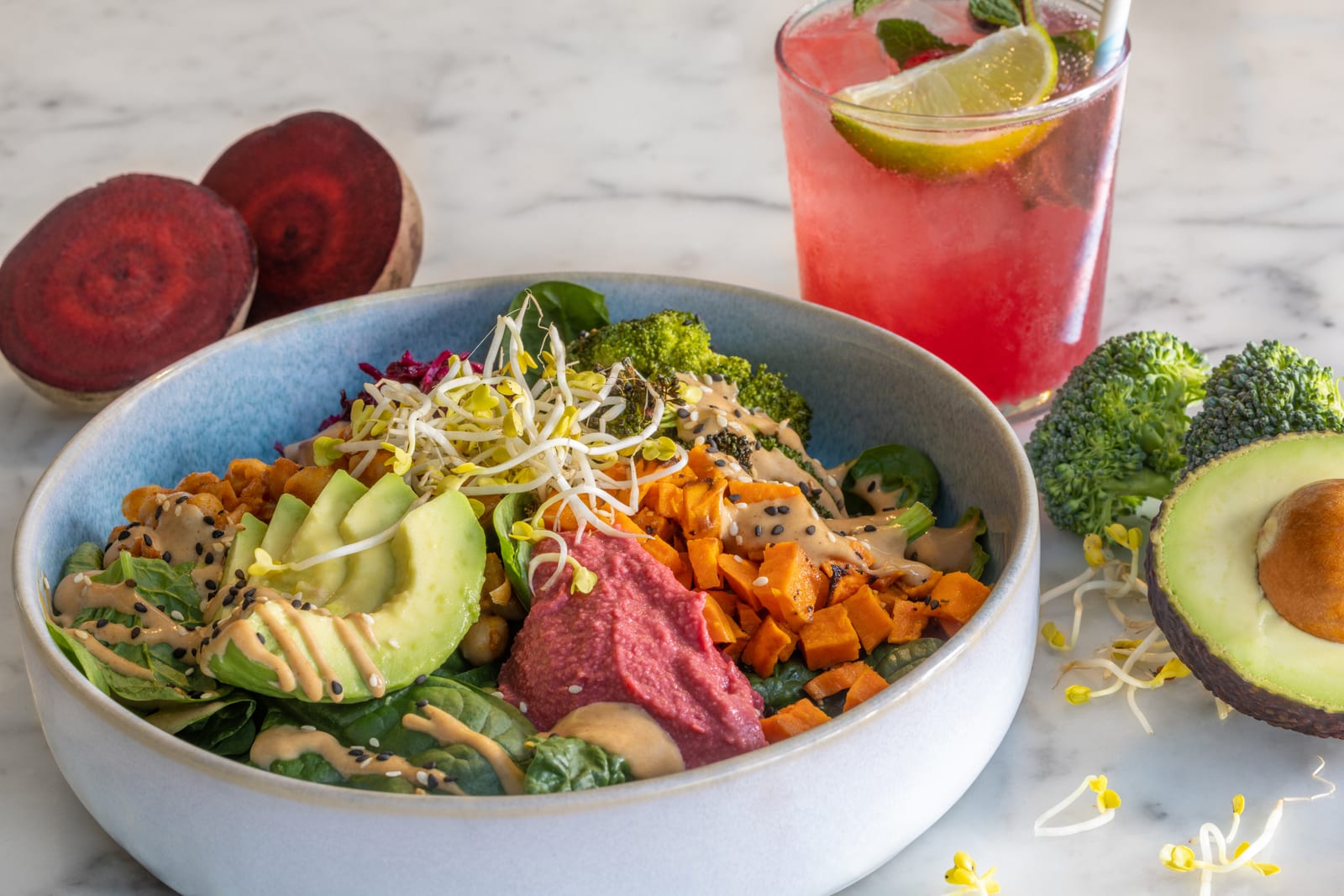
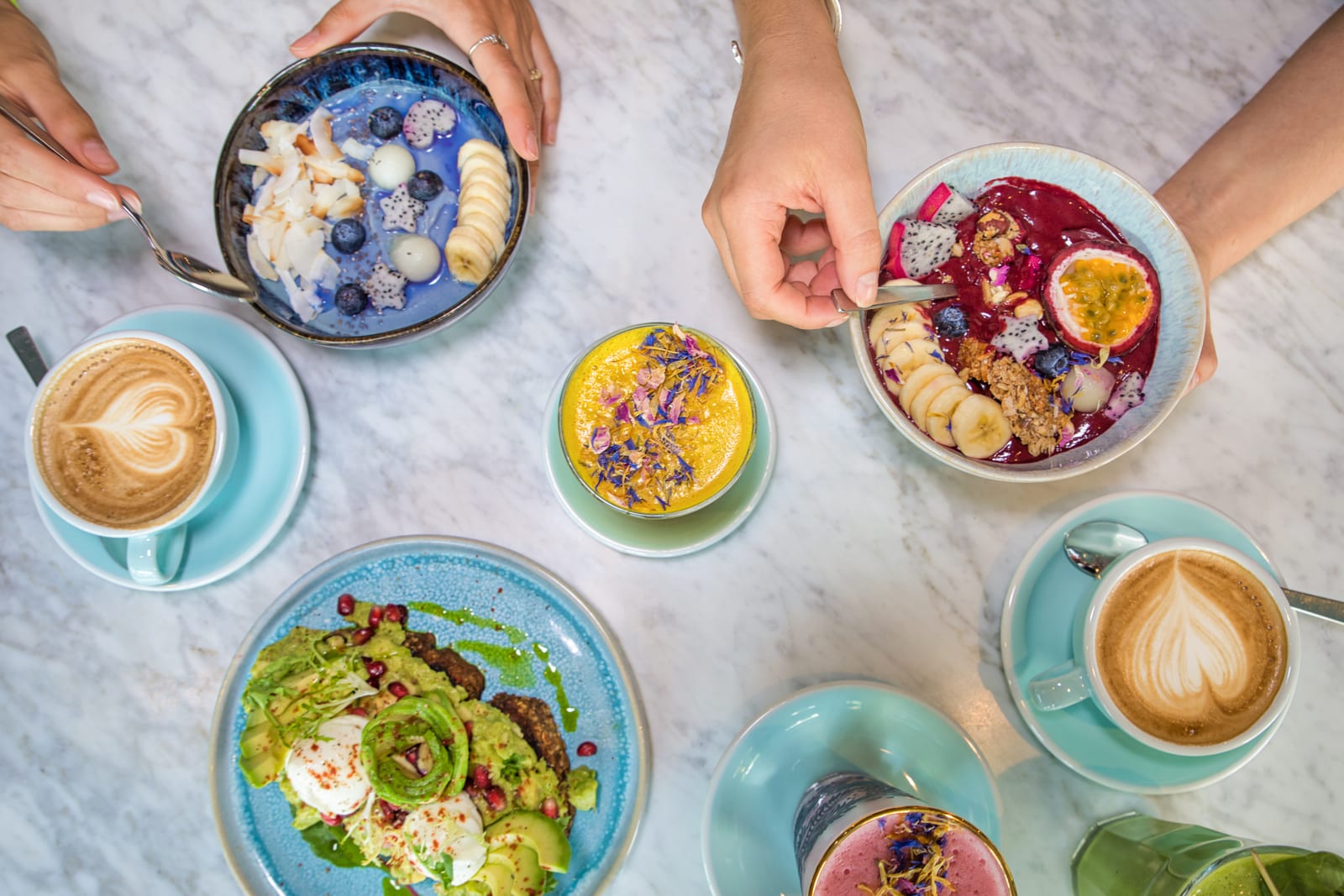
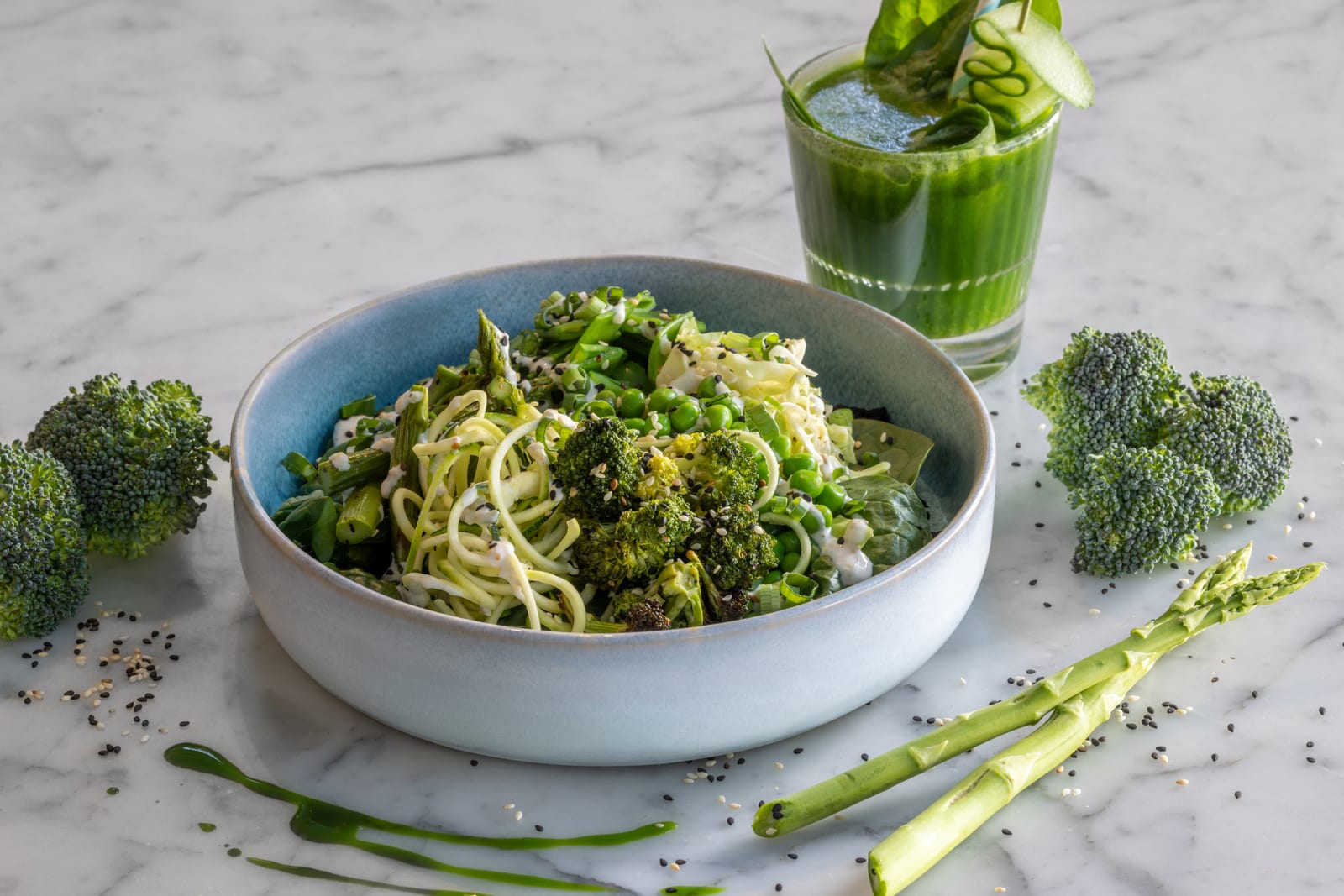
The kitchen works in color: avocado, beetroot hummus, sweet potato, sprouts, berries, flowers. On a dark surface little of that would have survived. Pale marble gives each of those colors its own place.
Ingredients sit beside the plate on purpose — half an avocado, a raw beetroot, a sprig of herbs. They explain the dish without a sentence, and they give the frame a second layer that is allowed to fall out of focus.
Most of it was photographed from slightly above and to the side. That angle shows the contents of a bowl and still keeps the height of what is piled on a toast.
Cocktails against the light
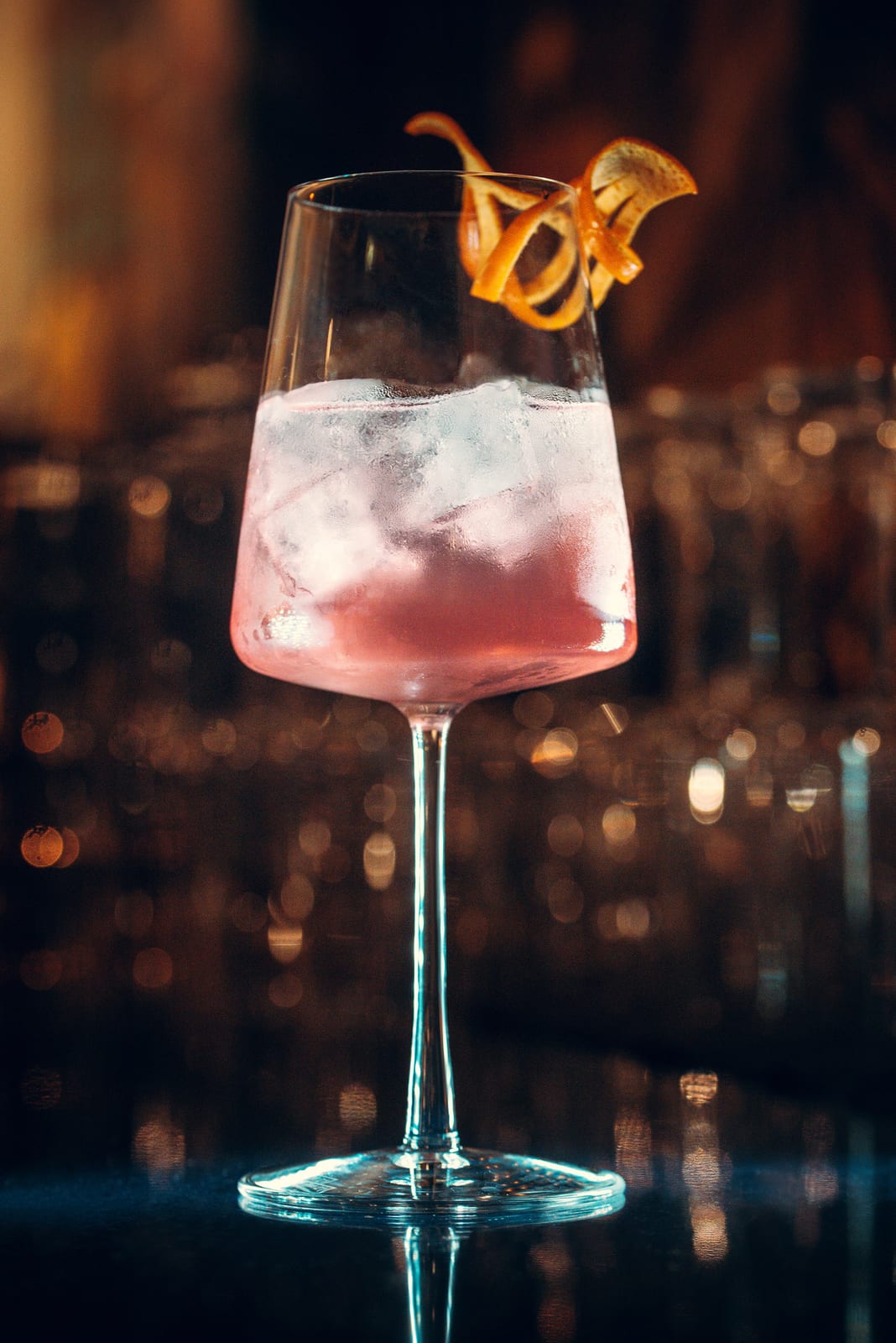
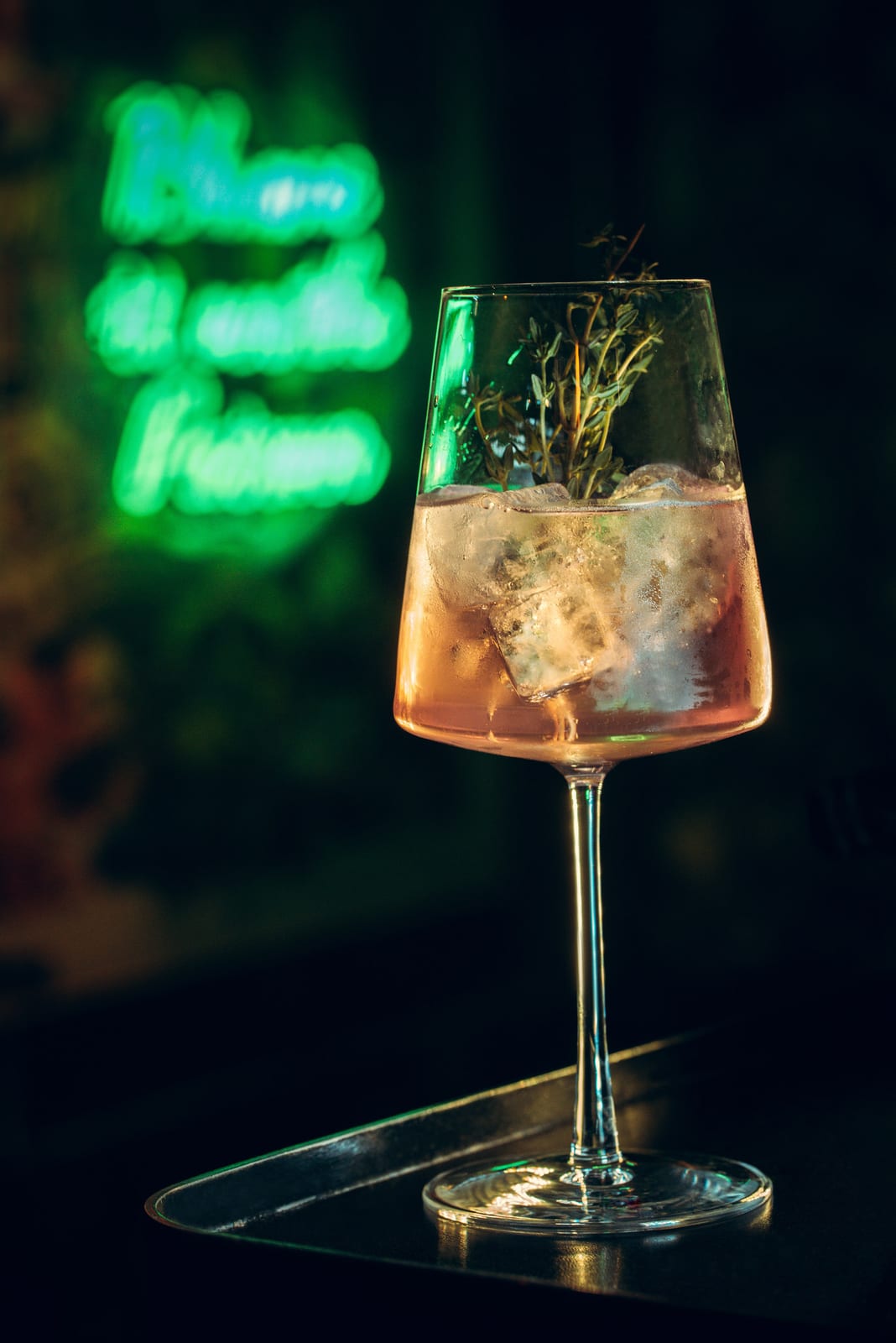
For the drinks the principle turns around. The light now comes from behind rather than from the side: ice, citrus slices and colored liquid go translucent instead of solid, and the lamps of the bar dissolve into soft circles behind them.
A cocktail lit from the front looks like a colored block. Lit from behind it looks like a drink.
The bar itself stays in the picture — as bokeh, as a neon sign, as a reflection on the counter. So the glass never stands in a void, but always visibly in this house.
Formats that fit the channel
The subjects exist in landscape, portrait and square versions. That is not tidying up afterwards but a decision on set: crop a portrait out of a landscape frame and you lose either the plate or half the room.
For a house with both a day and an evening operation that matters twice over. The drinks list needs different crops from the website, and a story needs different ones again from an advertisement.
From all three shoots
One house, several times of day
Any business running two operations under one name faces the same problem: show only one and you lose the other; show both and you risk a set of pictures that looks like two different places.
The way out is not to even out the light — that would work against the room. It lies in what stays the same across both sets: the colors of the house, the distance to the subject, and the willingness to leave the space around the glass visible.
Is your restaurant due for new photographs?
Scope and price are fixed before anything is photographed or filmed. The inquiry commits you to nothing.