Frankfurter Botschaft: a restaurant right on the water
Published
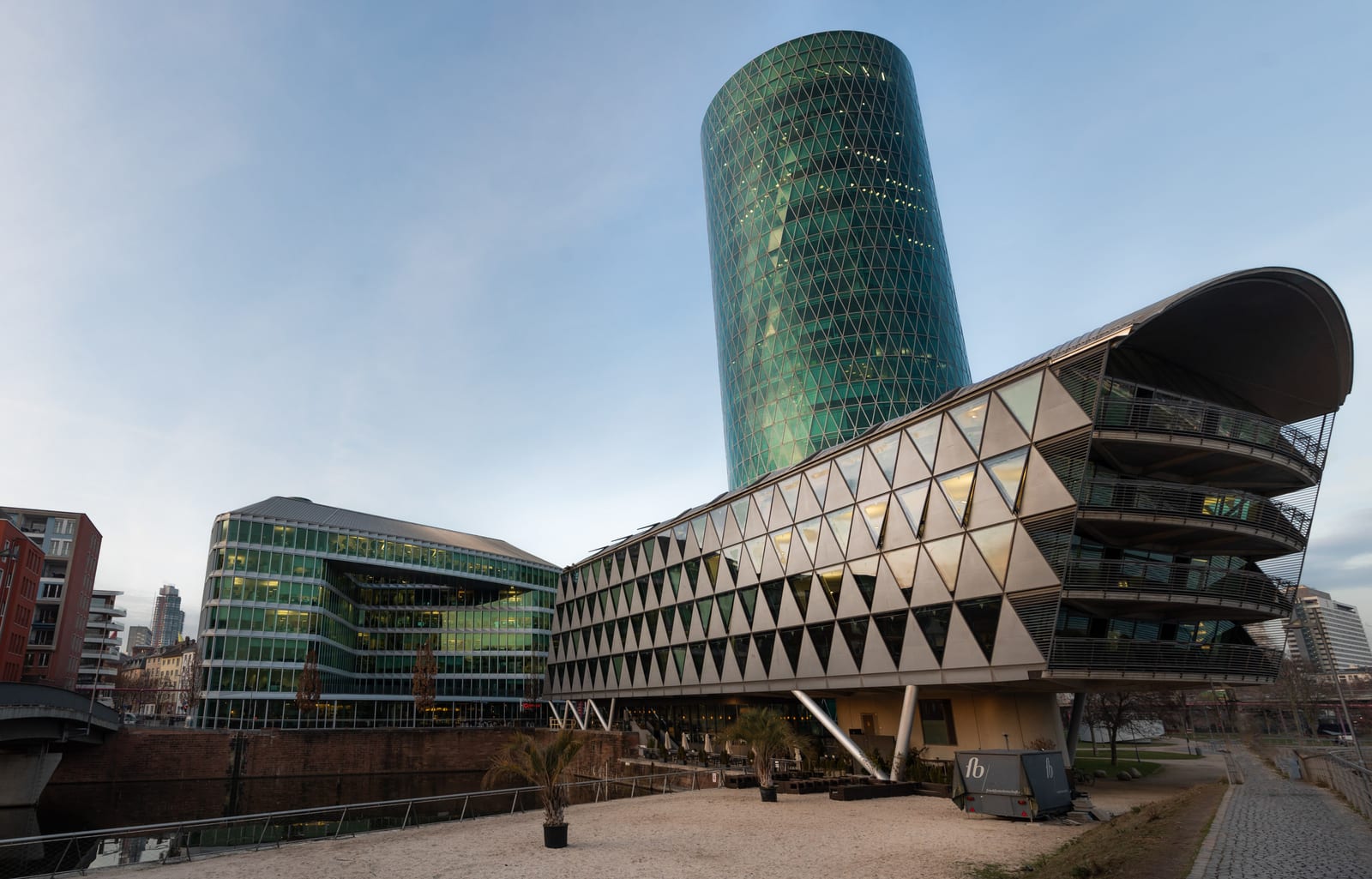
The Frankfurter Botschaft sits at the Westhafen, directly on the water. That position is its strongest argument, and a single panorama does not settle it.
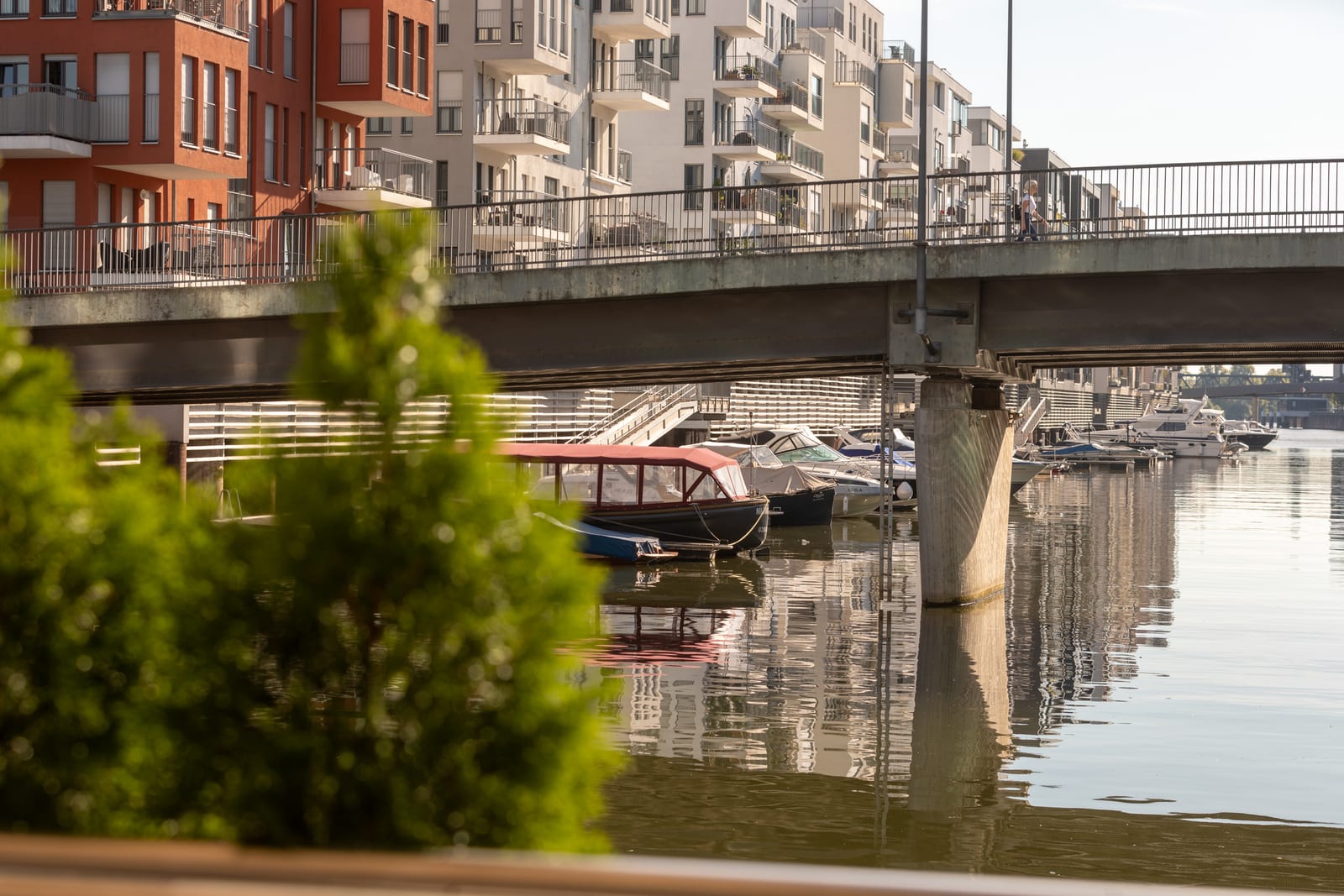
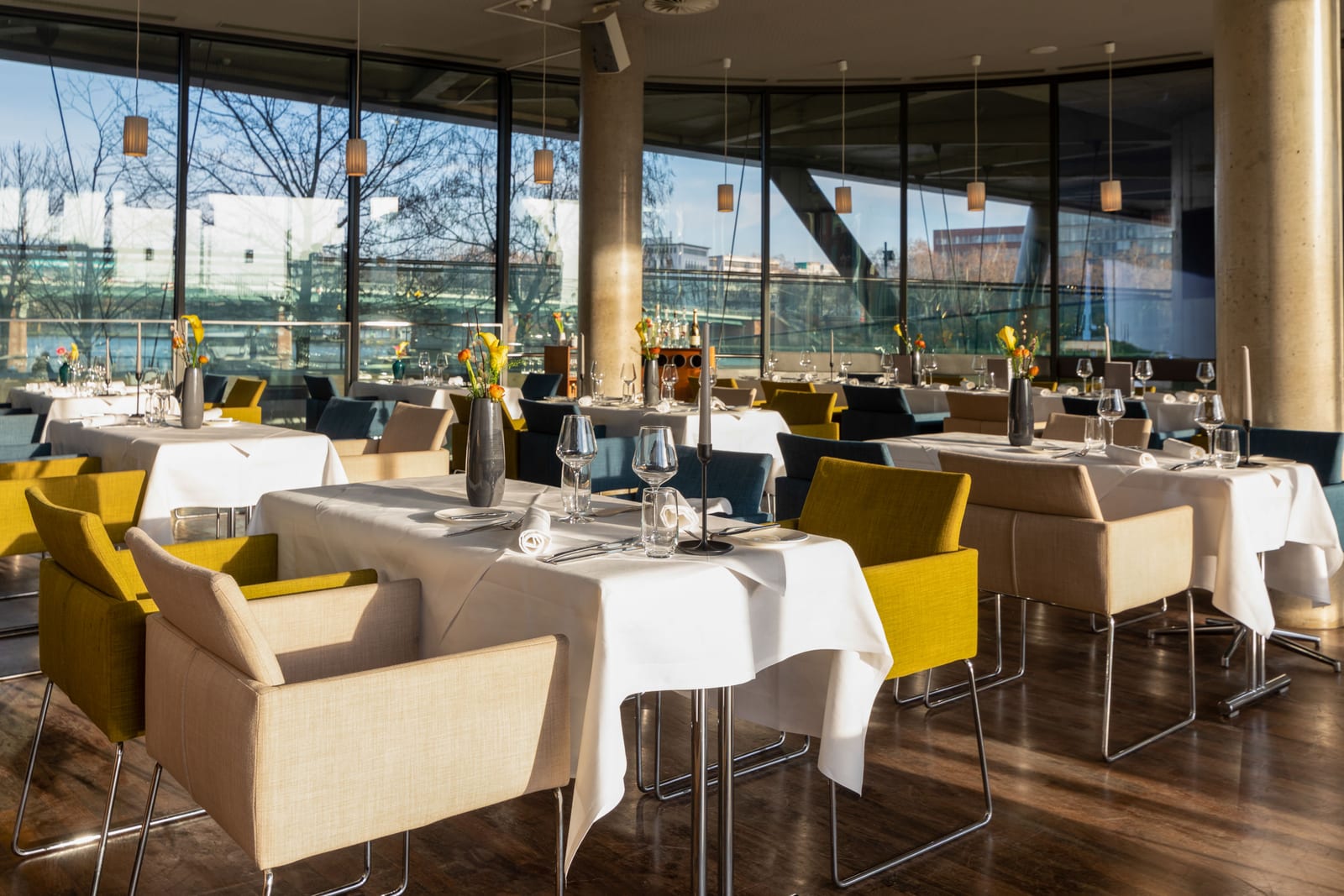
So the water appears again and again in the series, at different distances: as the harbor basin behind the terrace, as a gap between plants, as a surface behind the window front of the dining room. Around it are the interior, the laid tables and the plates.
The water at several distances
A single picture of the view answers one question only: what does it look like from there? The more interesting question is how close you sit to it.
So the harbor basin is photographed once in full width, once as a gap between plants and railing, and once as a bright band behind a laid table. Out of those three distances an idea of a seat on the water assembles itself.
The terrace as a layered space
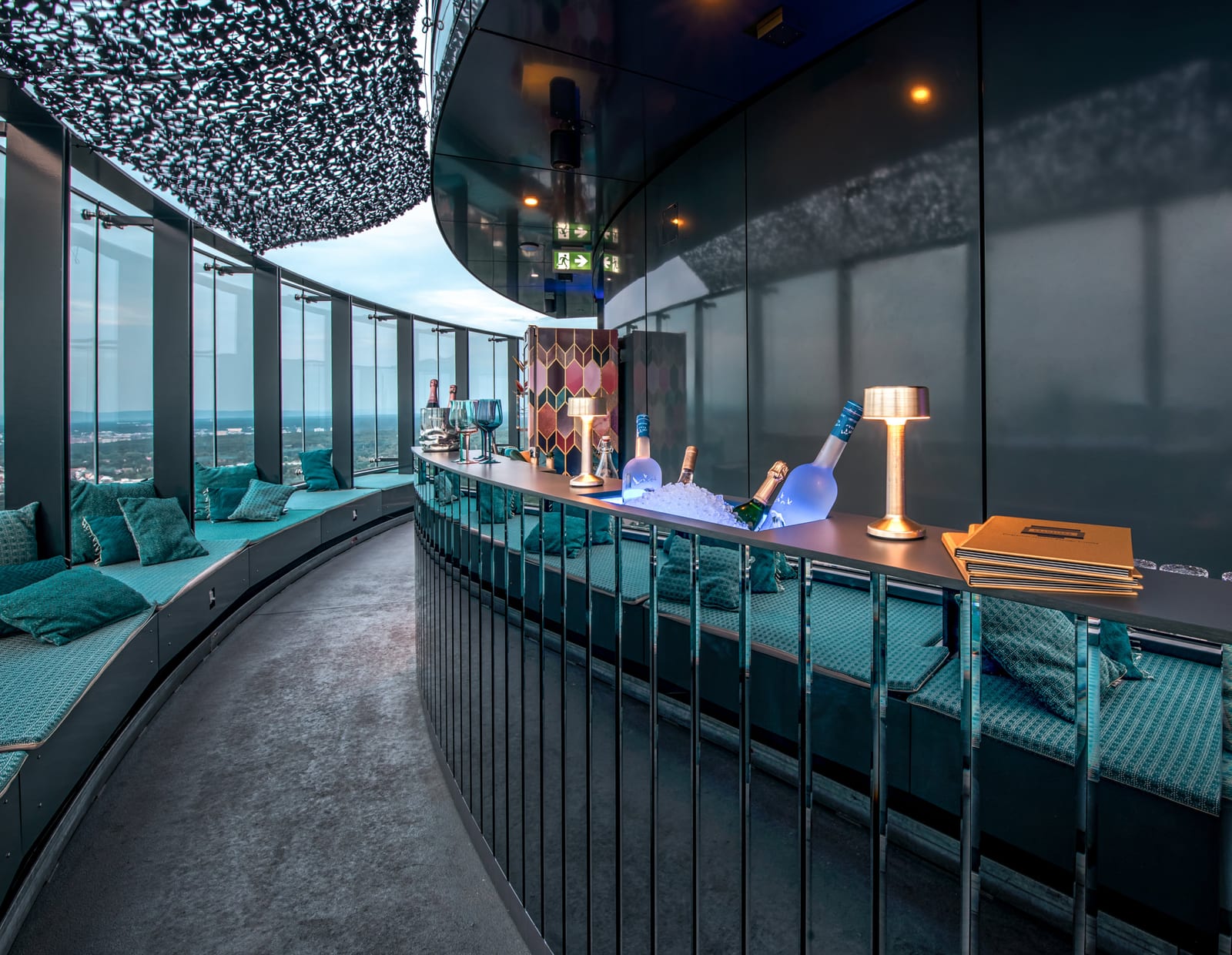
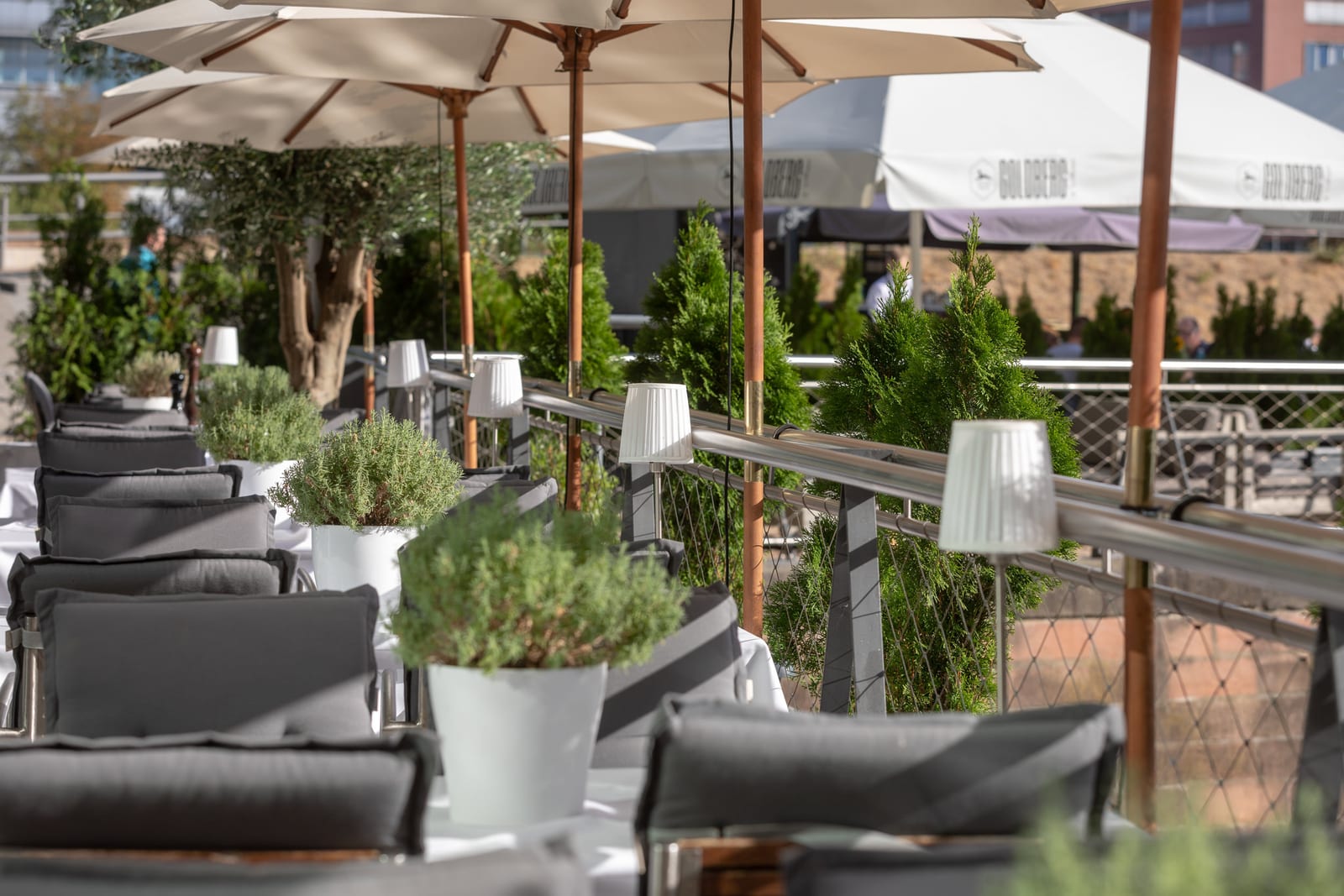
The terrace frames were made from a low position. From there upholstery, table lamps, herb pots, parasols and water stack up behind one another into several planes.
From head height the same thing would have been a row of tables outdoors. The low camera turns it into a place with a foreground, a middle and a background — and only then can you judge how sheltered or open a seat there is.
The planting does the work of walls. Herbs, small trees and tall green tubs divide the area into zones without closing them off.
Empty space on the plate
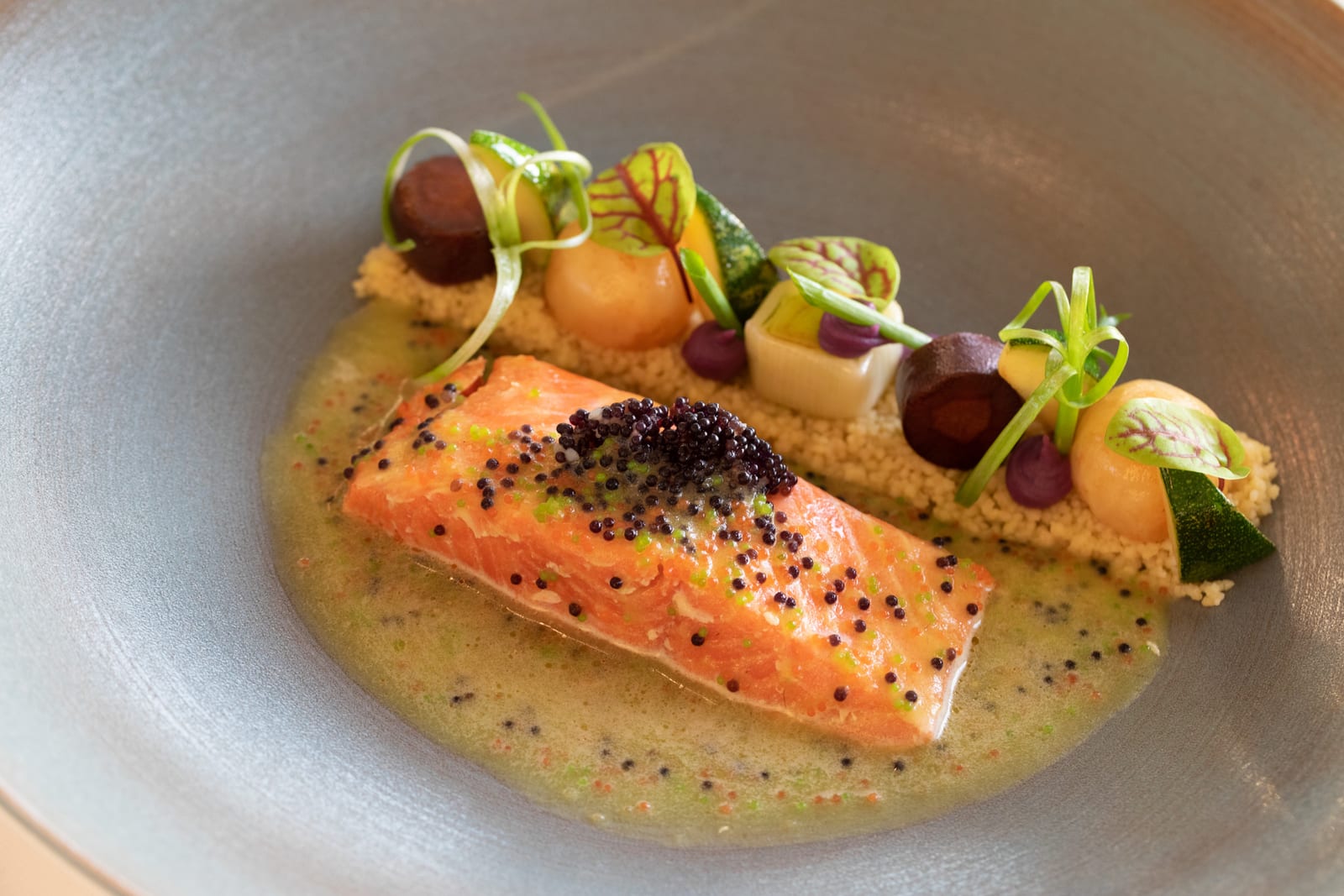
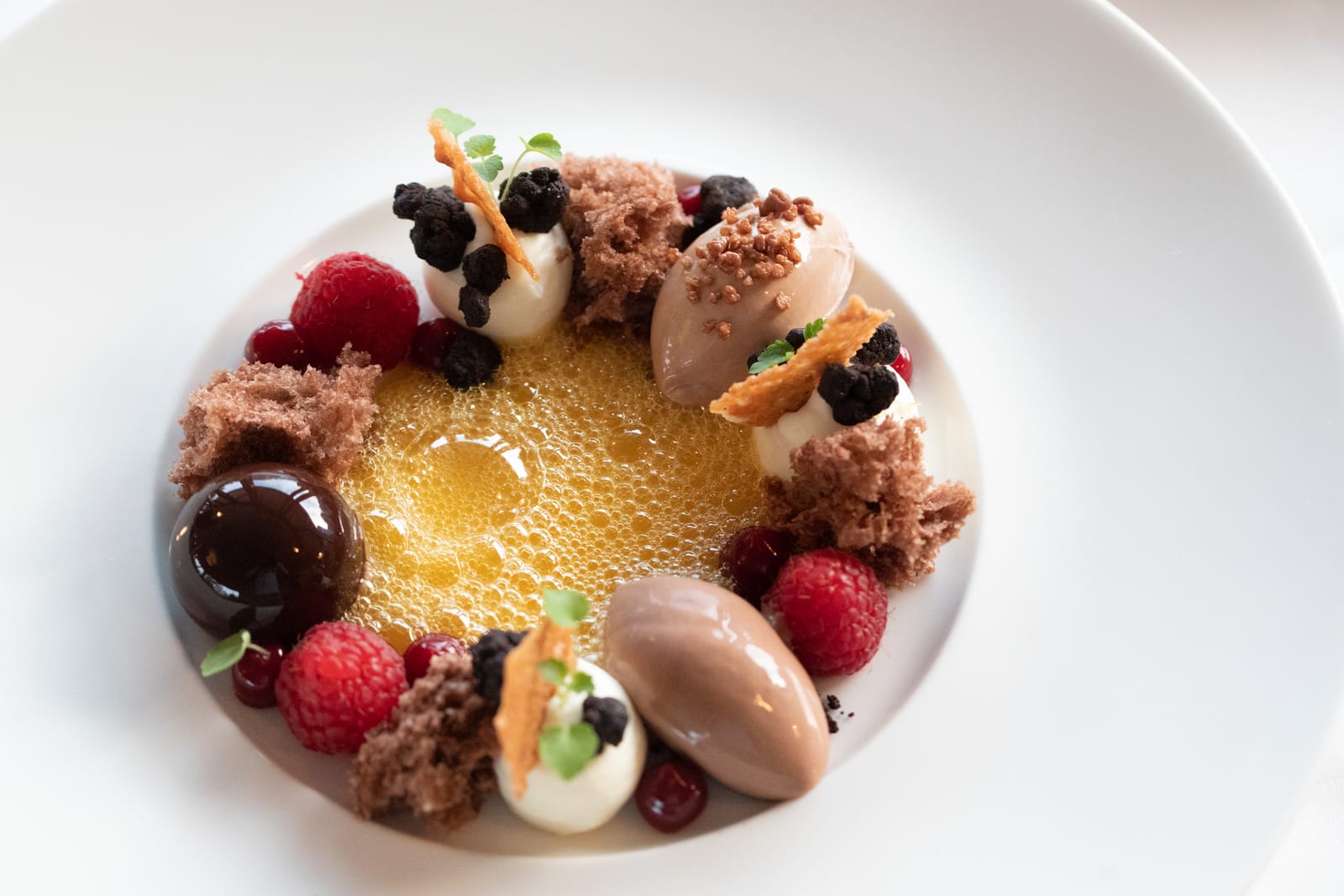
In the food pictures a striking amount of porcelain stays visible. That is not a gap in the composition but the plating itself: in this kitchen the empty rim belongs to the dish.
A tight crop would have cut exactly that away and made the plates look fuller than they are. Photographing careful plating means leaving it the room it asks for.
The light stays correspondingly restrained: a soft source from behind and to the side that draws a pool of sauce without making it glare.
More frames from the house
Position, room and plate in one sequence
A restaurant series that shows the location once treats it like a line in the imprint. When the water turns up in every second frame, it becomes what it actually is here: the reason somebody books a table.
The quiet plate pictures are needed for the opposite reason, so the kitchen does not become an afterthought beside the view. Only both together make a portrait of the house.
Is your restaurant due for new photographs?
Scope and price are fixed before anything is photographed or filmed. The inquiry commits you to nothing.