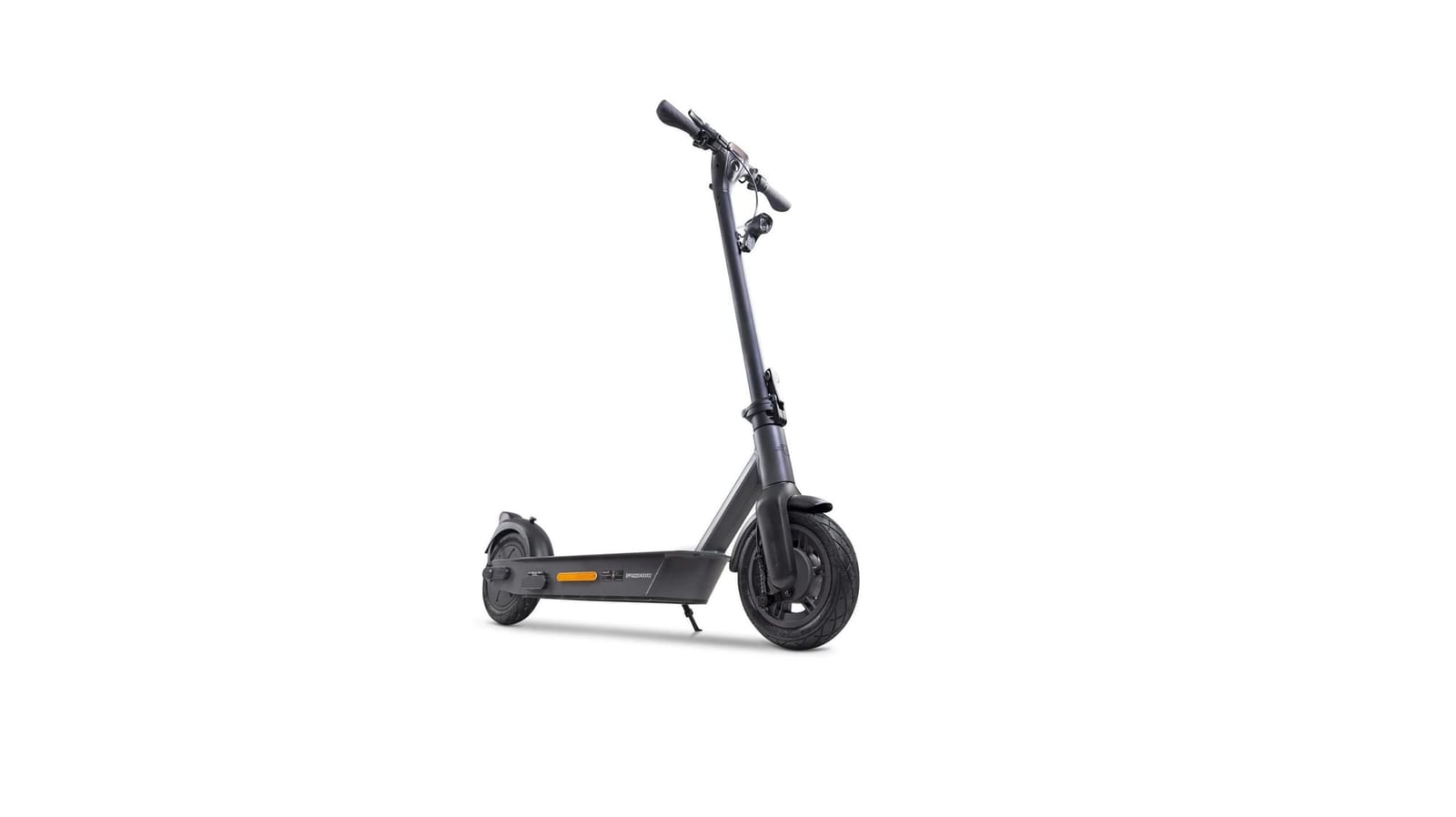
A product shot answers different questions than a campaign does. The cut-out frames of an ePowerFun scooter show shape, proportion and the folded state. Consistent viewpoints create clarity for the shop and the product page.
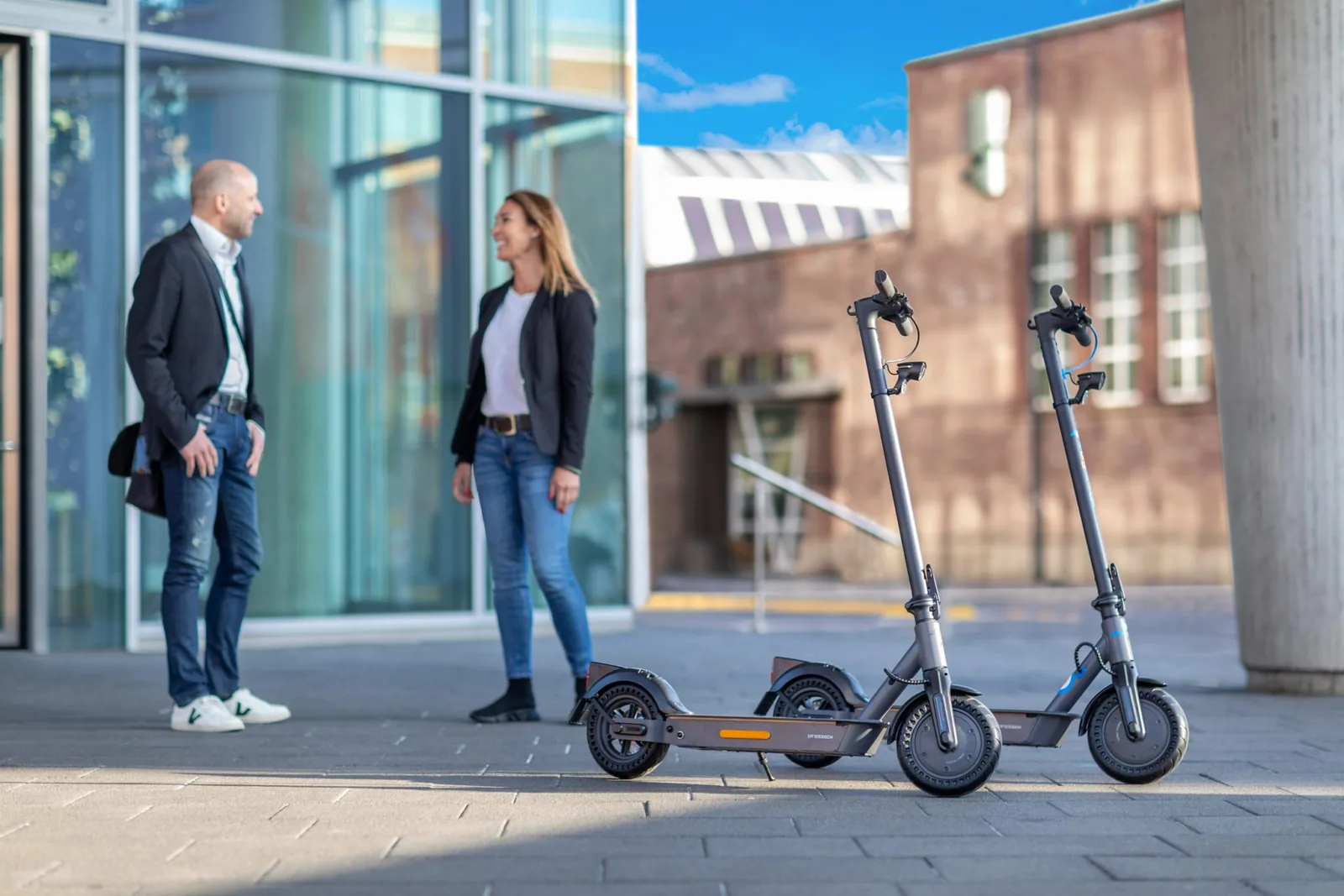
The lifestyle productions tell a different story: how the machine fits into a daily routine.
What the cut-out frame delivers
Against a white background there is nothing to interpret. A buyer sees how long the deck is, how high the handlebar stands and what happens to the stem when it folds. The same focal length, the same angle and the same distance across all variants make two models comparable.
Pictures like these age slowly and can be used identically across the shop, the data sheet, dealer material and advertising.
What the situation delivers
People ride to work, meet up, take a call or carry the scooter up a flight of stairs. Architecture, clothing and surroundings convey the audience and the use without either being spelled out.
A staircase answers more than a data sheet does: it shows weight and handling in a situation everybody recognizes.
Why both are needed
Both sets are necessary. Without product shots the technical properties stay unclear. Without situations there is no picture of why the product might be useful in a life of your own.
Complete brand communication therefore comes from joining precise information with a credible situation. Both parts can be planned into one production. More on this under product photography.
Want your products photographed?
Scope and price are fixed before anything is photographed or filmed. The inquiry commits you to nothing.