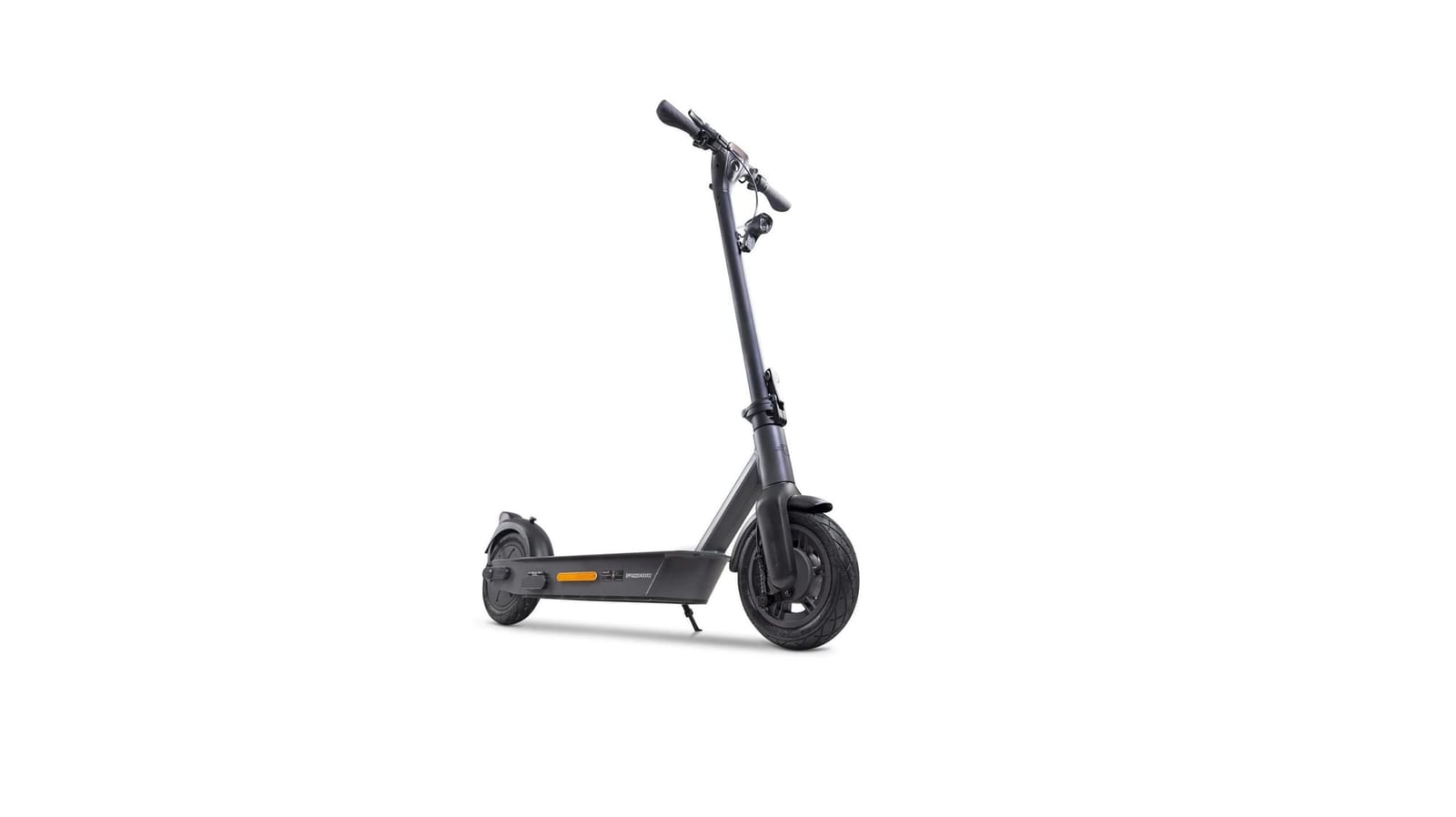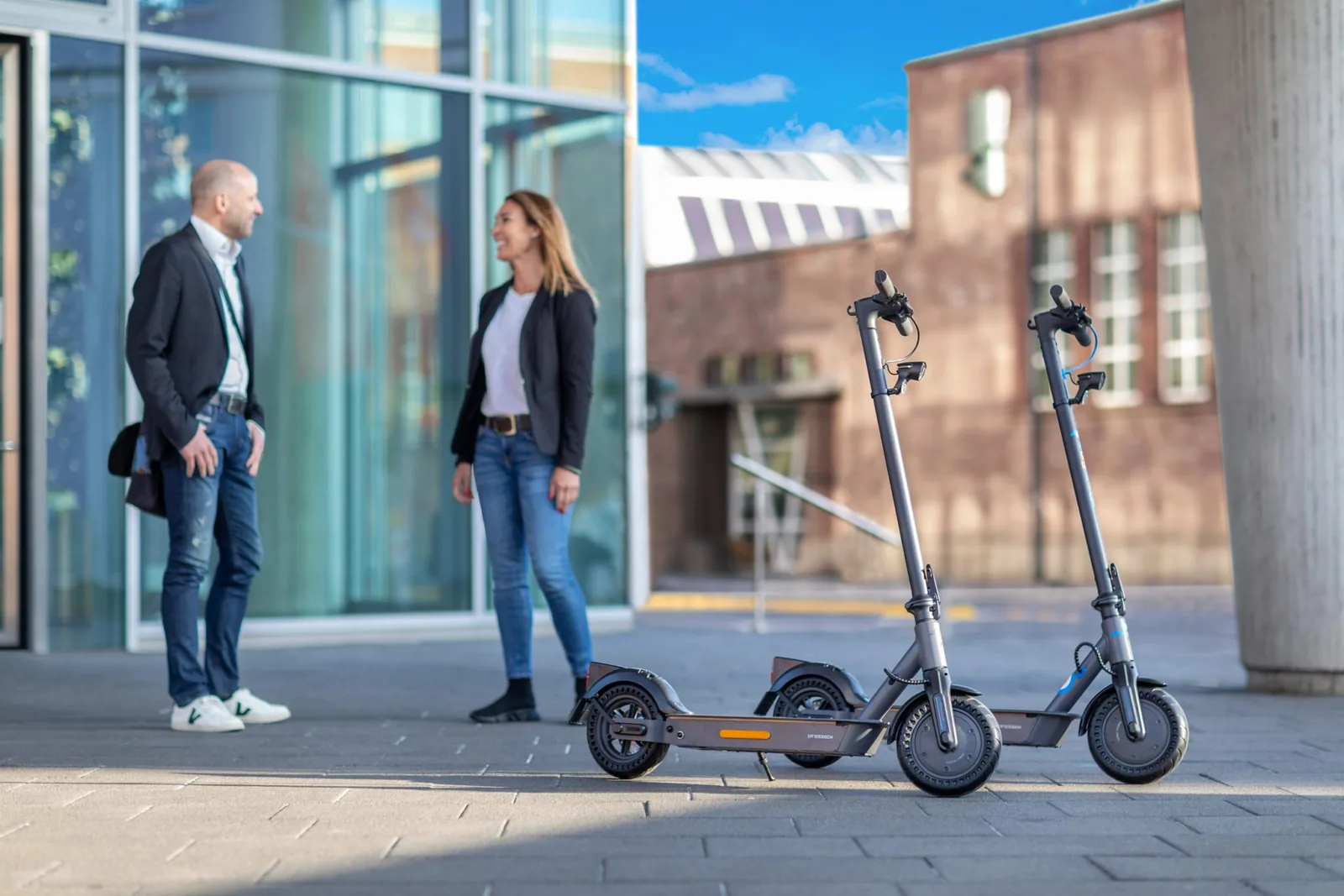
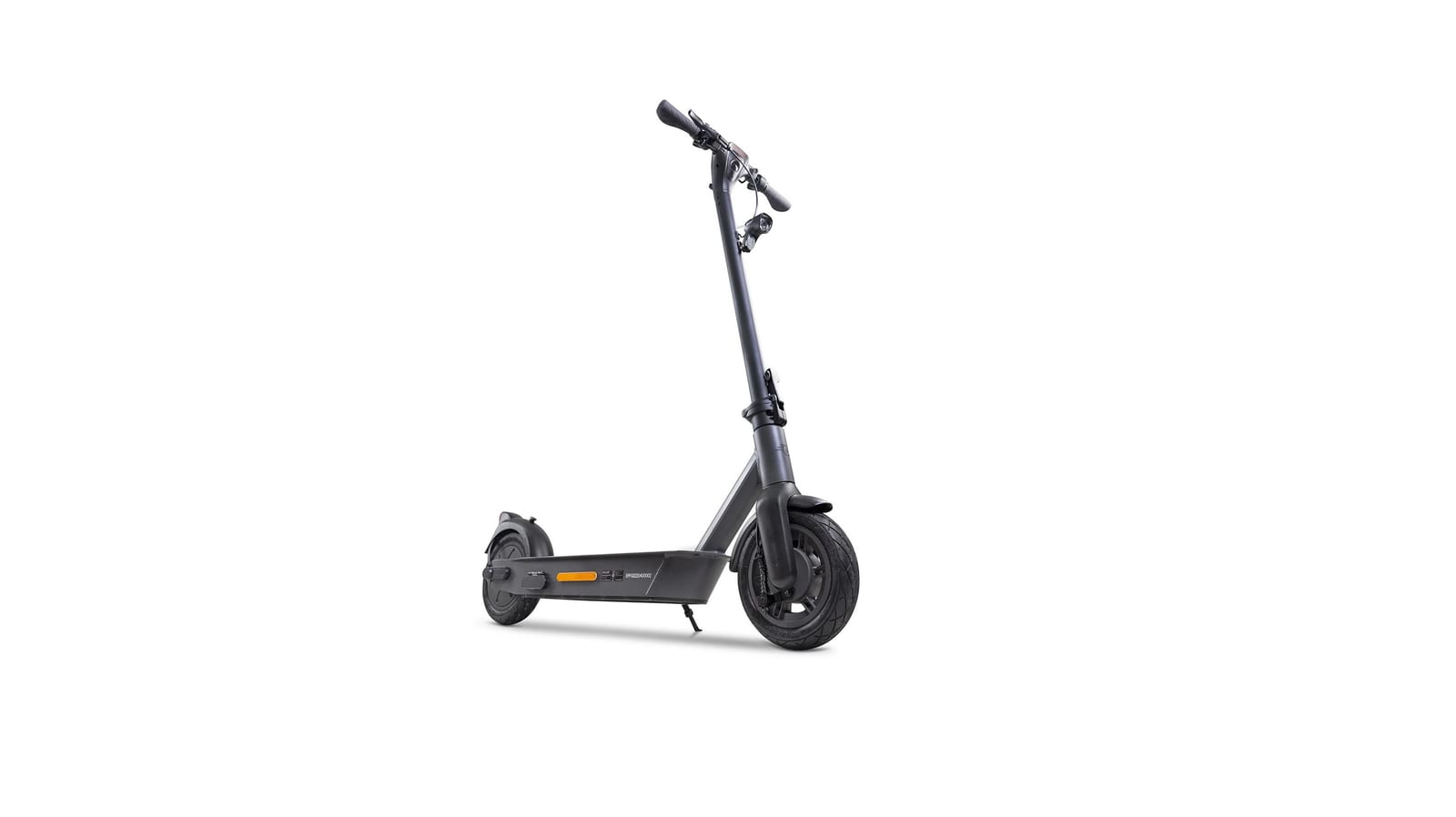
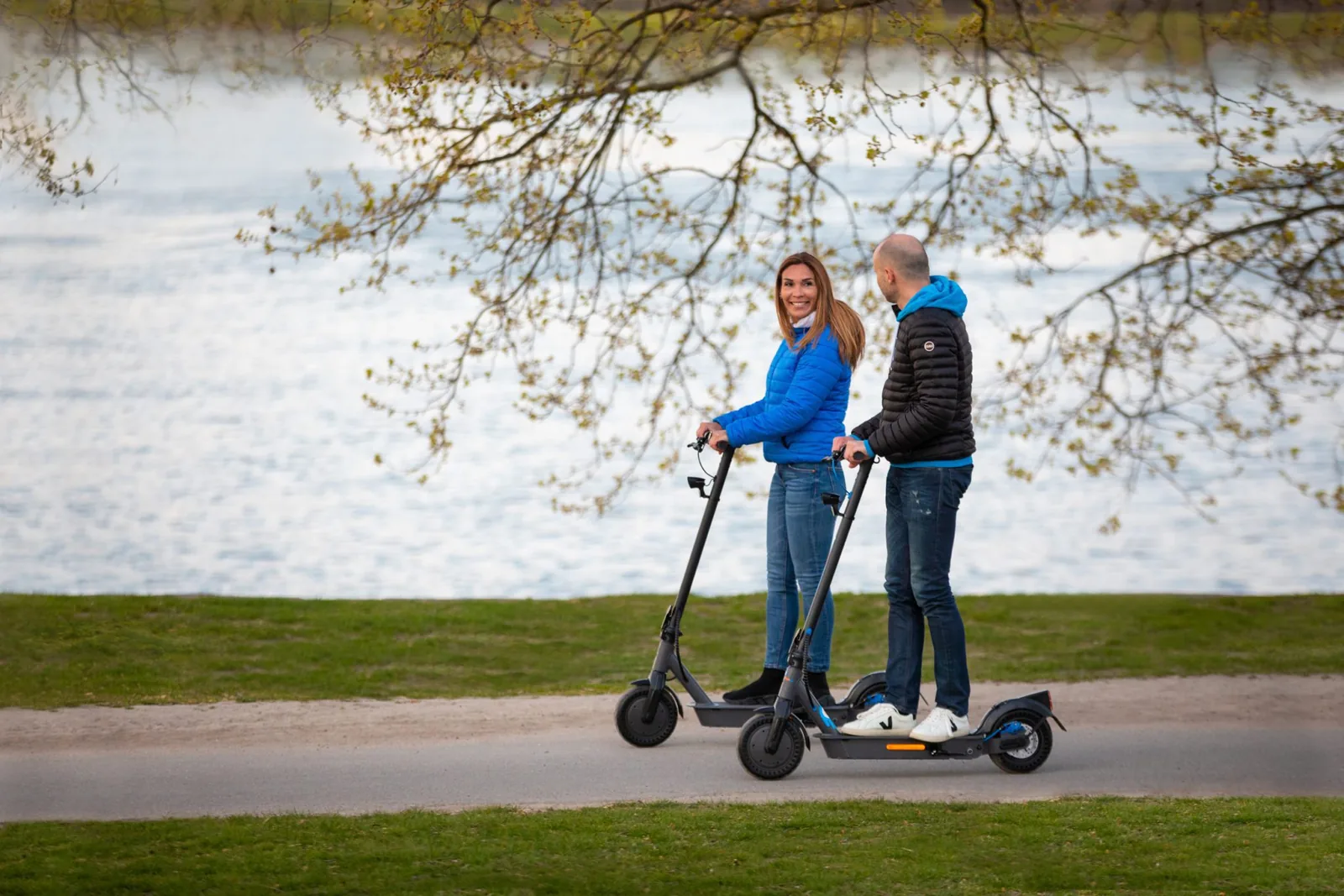
Several productions for ePowerFun show e-scooters in different communication situations. They include precise product frames on a white background, urban lifestyle pictures and campaign frames in Wiesbaden and in a modern harbour district.
The two kinds of picture answer different questions, and both are needed. One says what the device is. The other says what it is for.
Cut out: the questions about the device
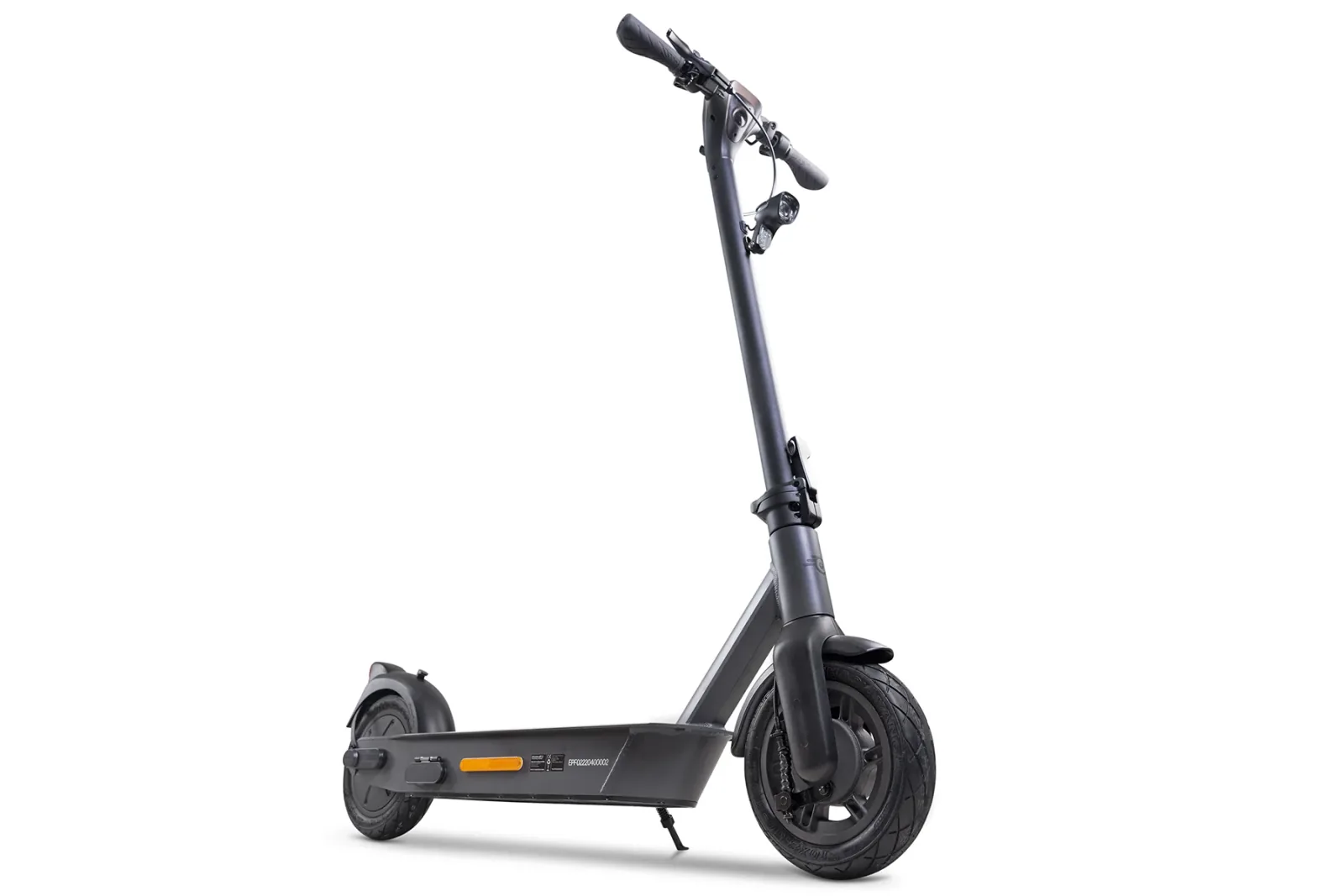
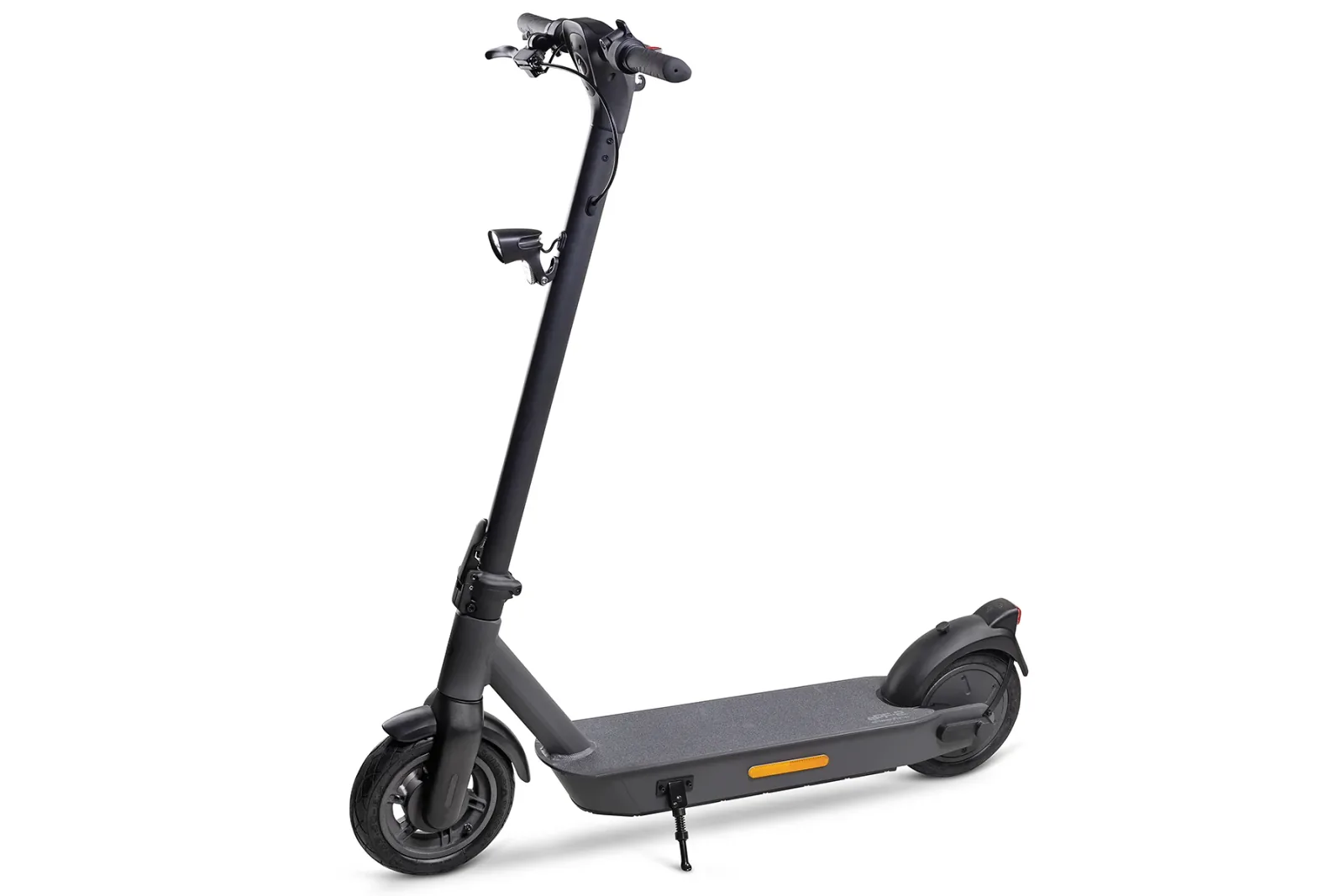
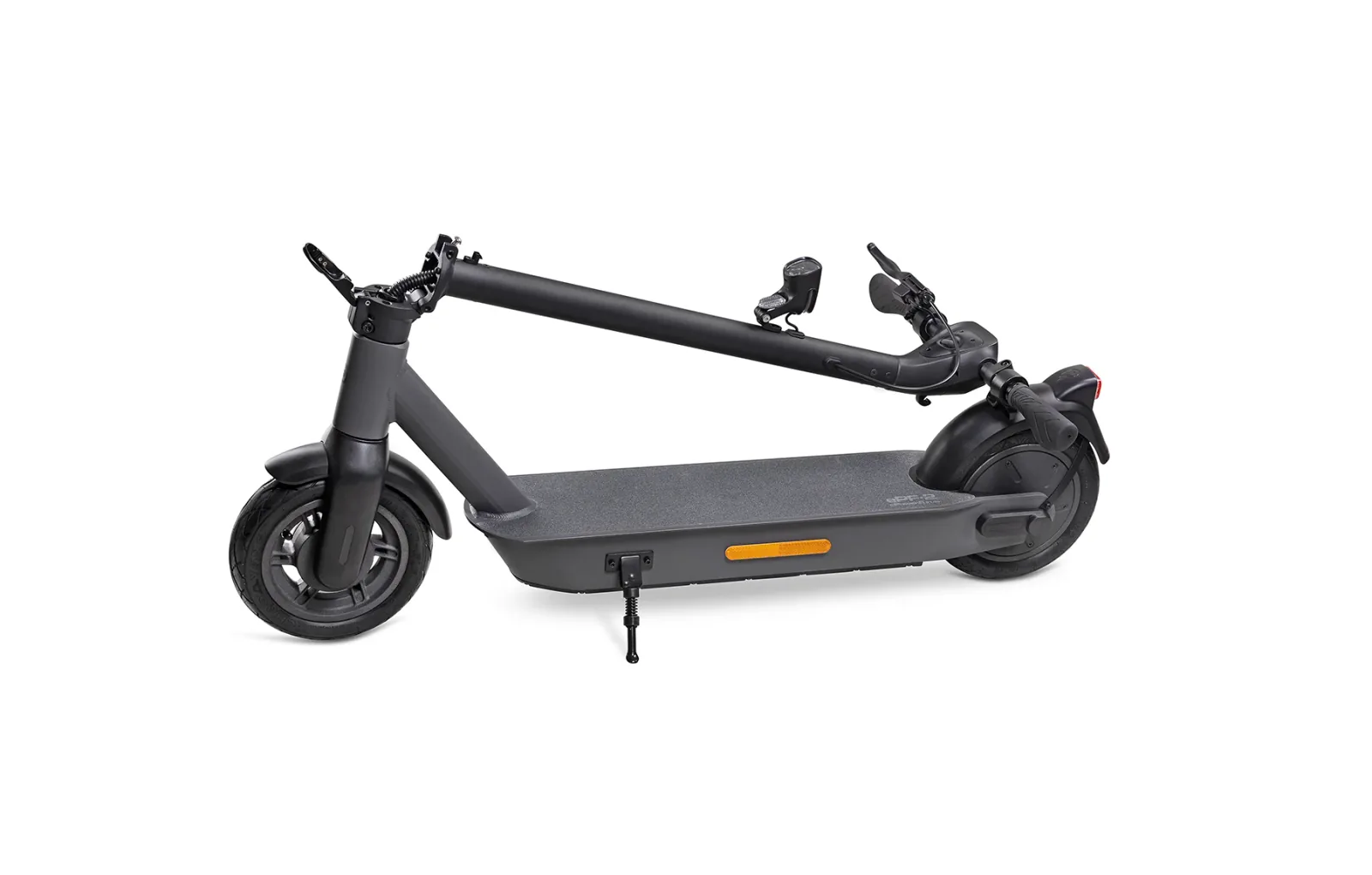
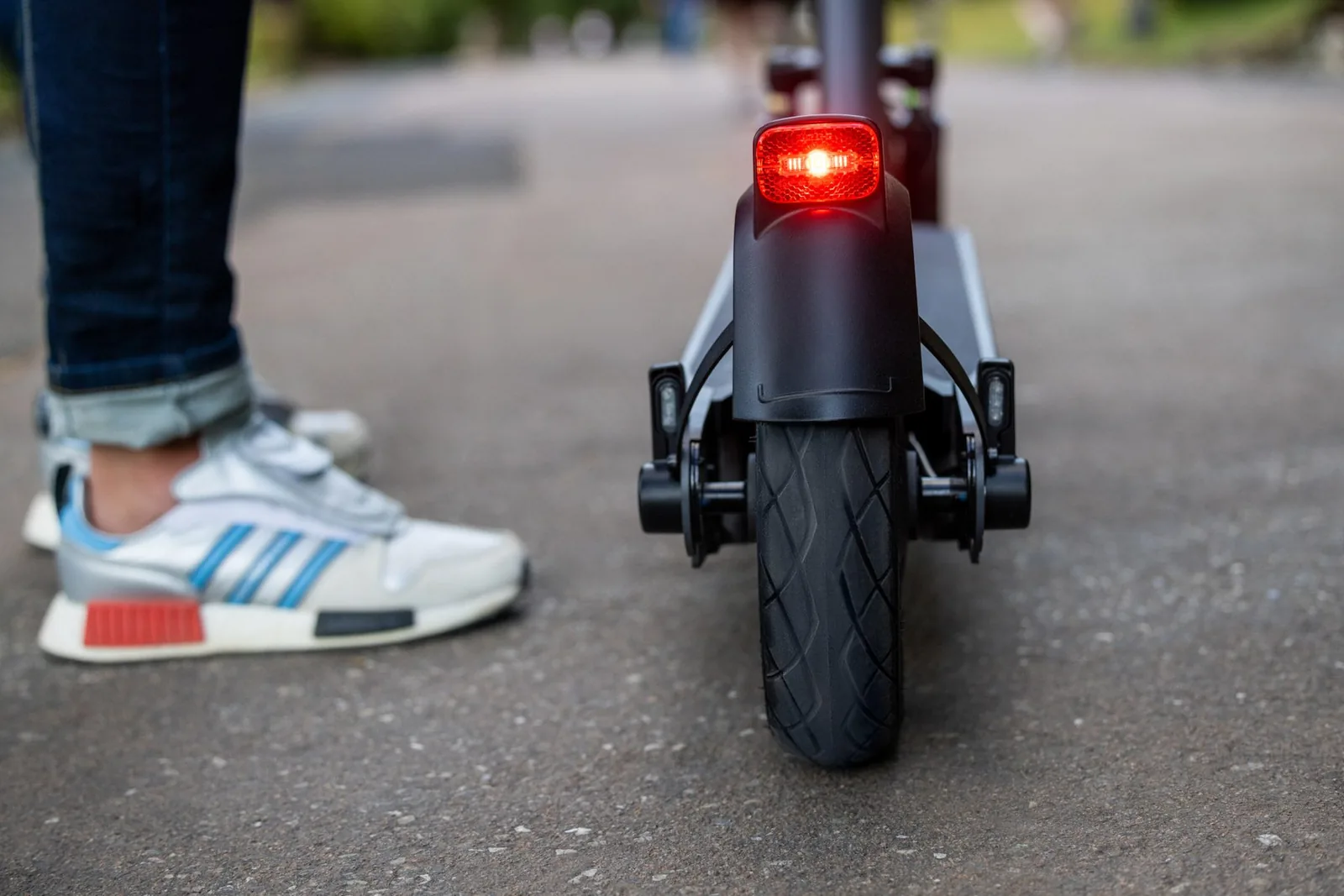
The cut-out product series answers concrete questions about the device. The side view, the views from front and back and the folded state show proportion, construction and how easily it travels.
One camera height and identical distances make the views sit calmly beside each other in a shop gallery. If the height shifts between two frames, the product jumps as the customer clicks through, and the catalog looks careless even though every single frame is correct.
It is in the project ePowerFun – Roller.
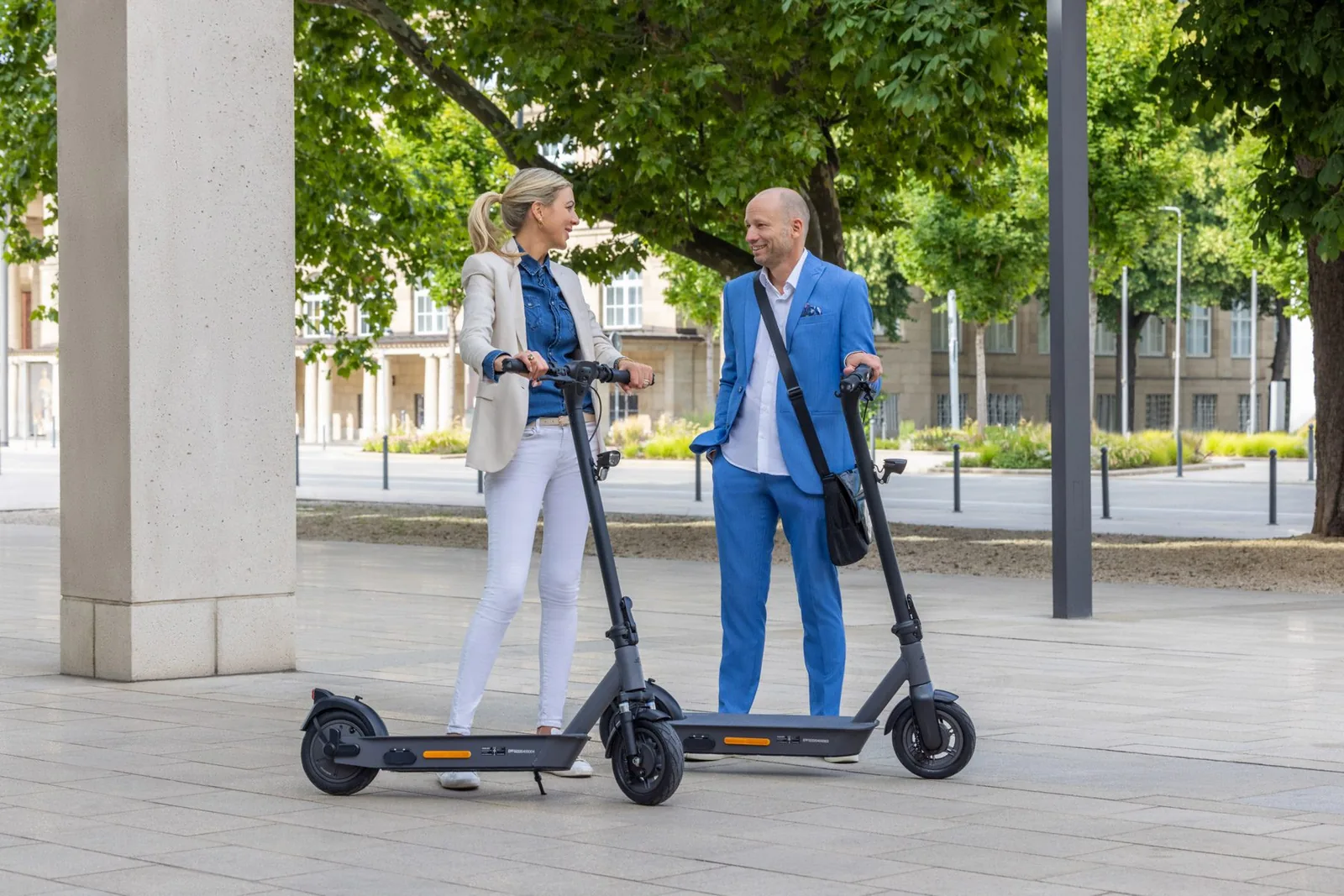
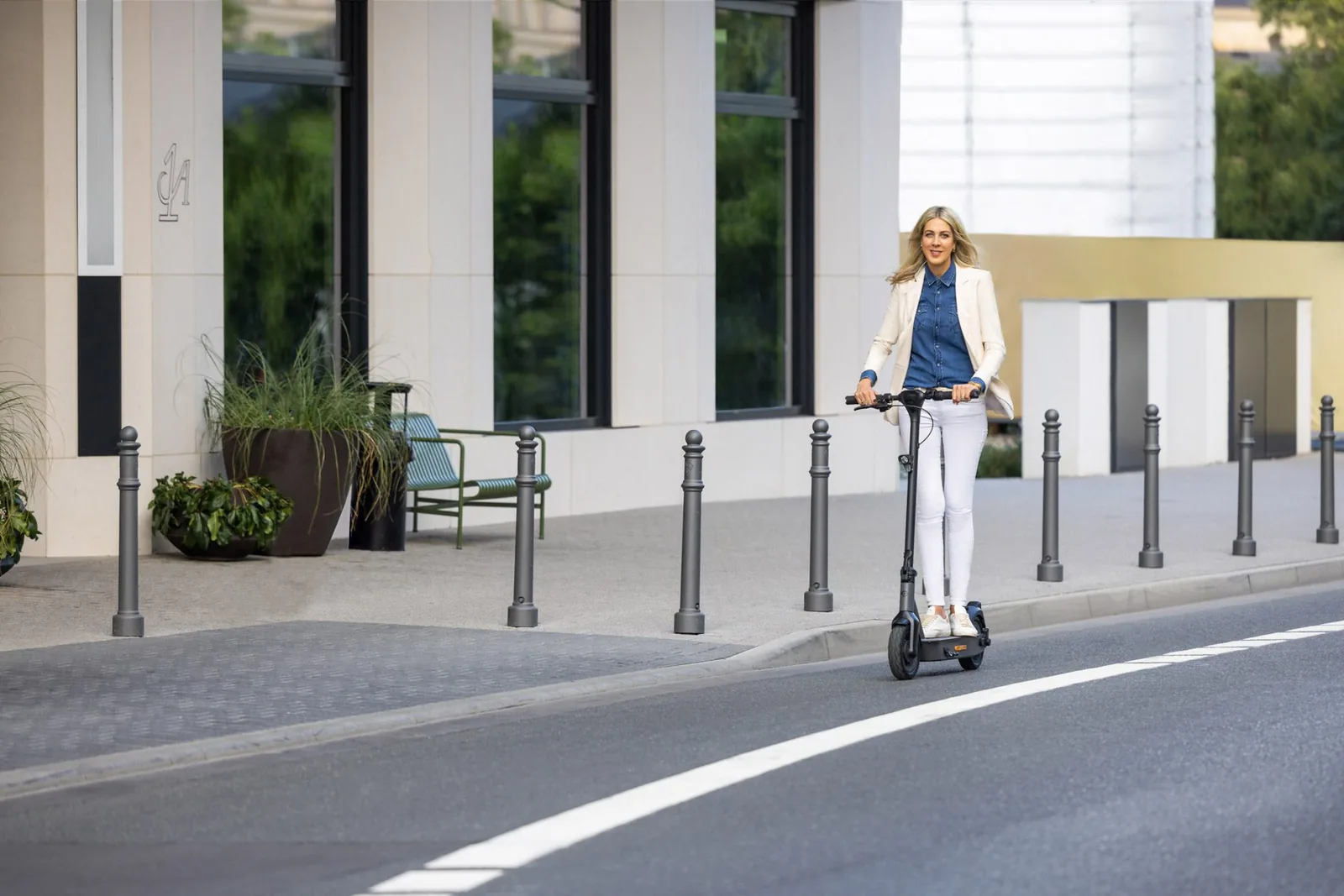
Wiesbaden: the scooter on the way to work
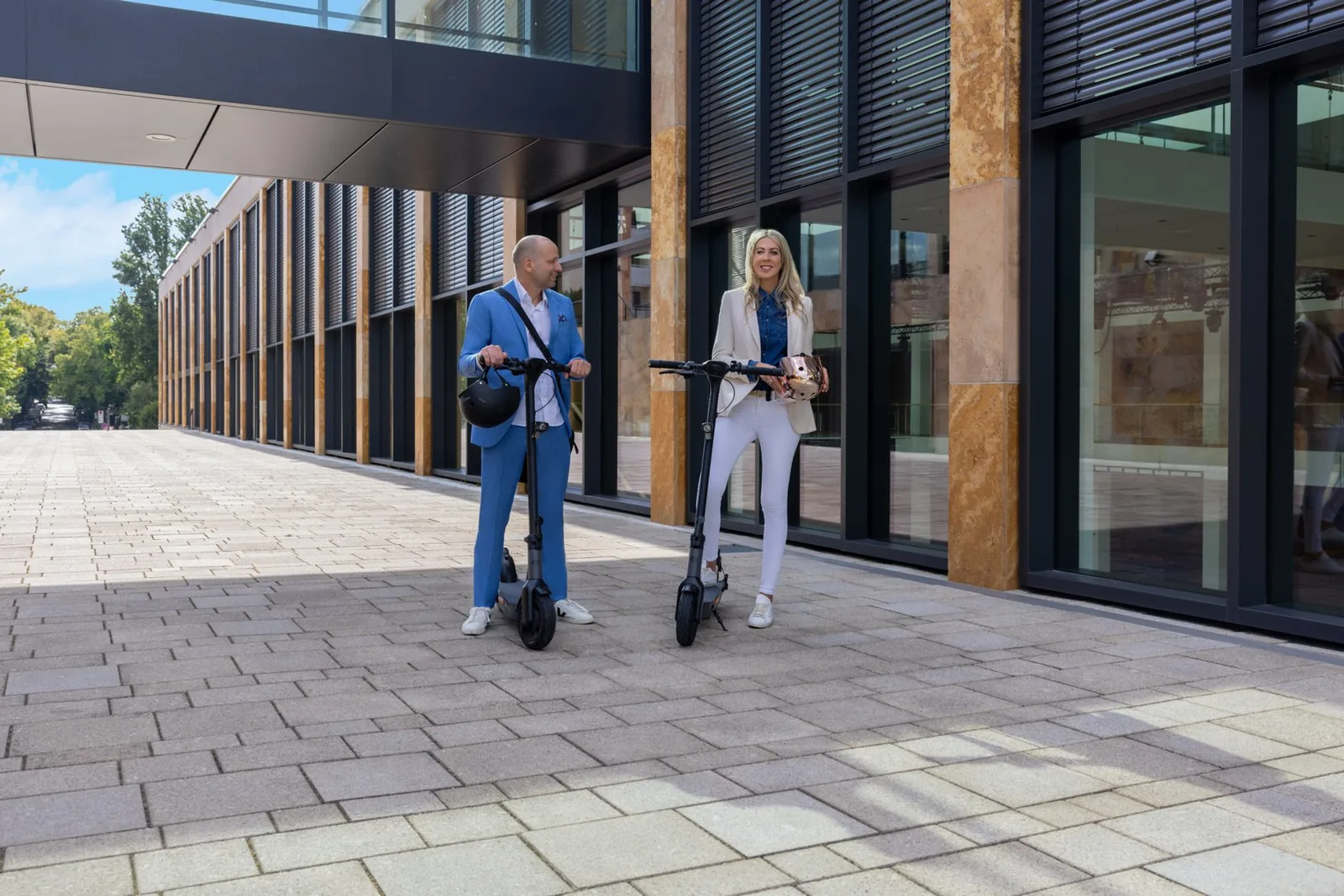
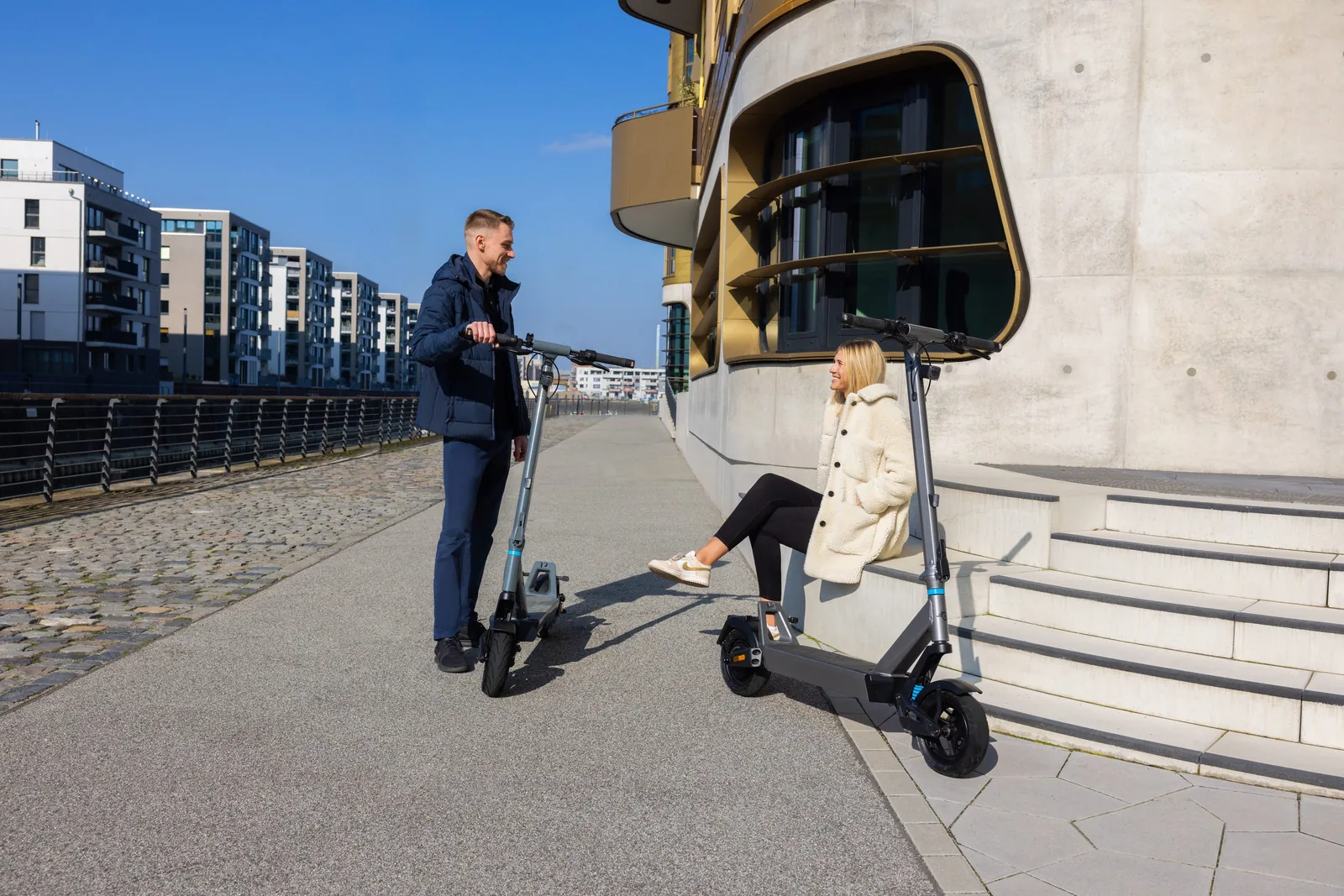
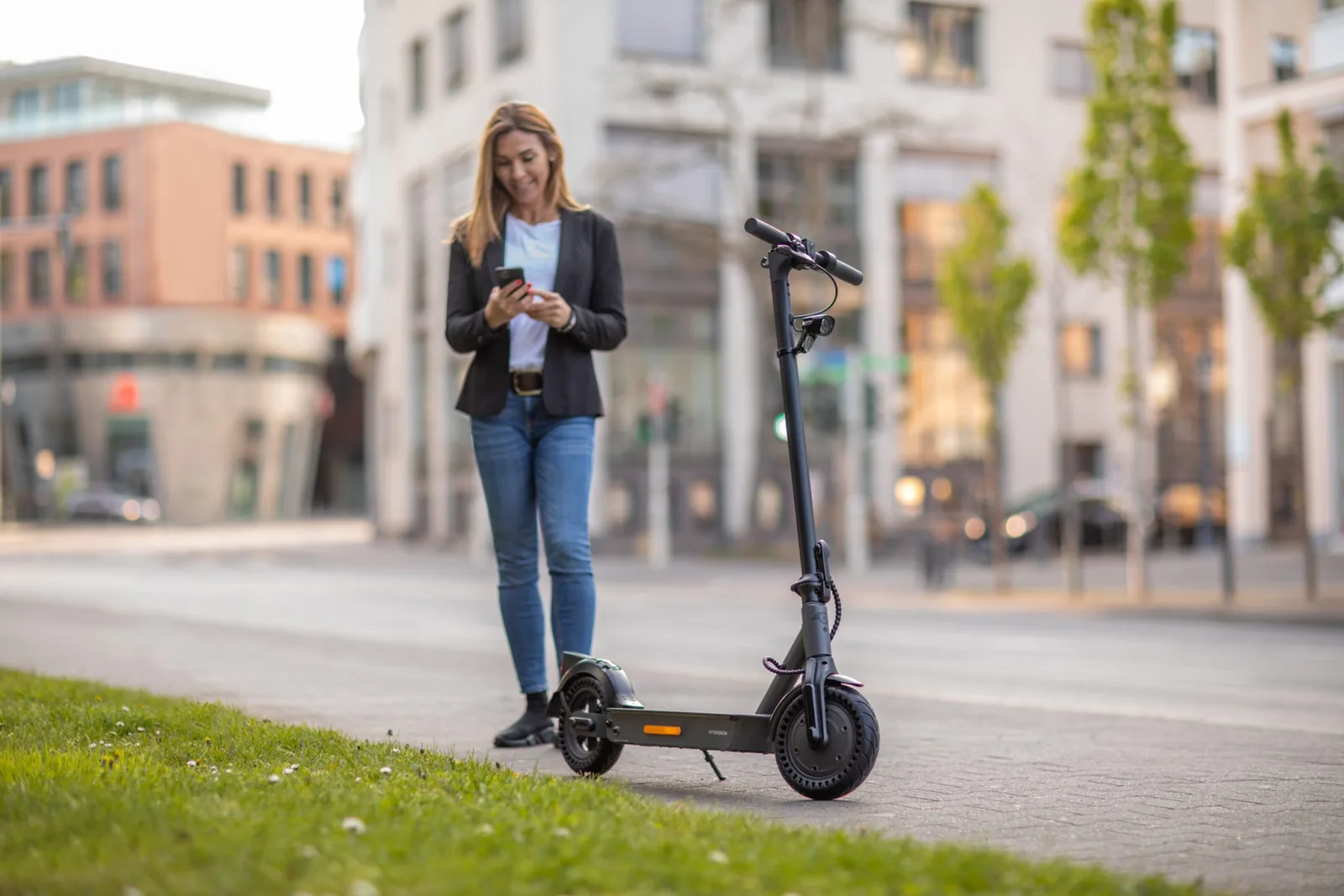
The lifestyle series moves the emphasis onto use. People ride to work, take a call on the way, meet by the water or carry the folded scooter up a flight of stairs.
Business clothing and urban architecture position the e-scooter as everyday transport rather than purely as a leisure product. That is a positioning decision made inside the picture: showing the scooter in suit trousers sells something different from showing it in a park.
The series is in the project Action Campaign Wiesbaden.
Harbour district and city: same brand, other place
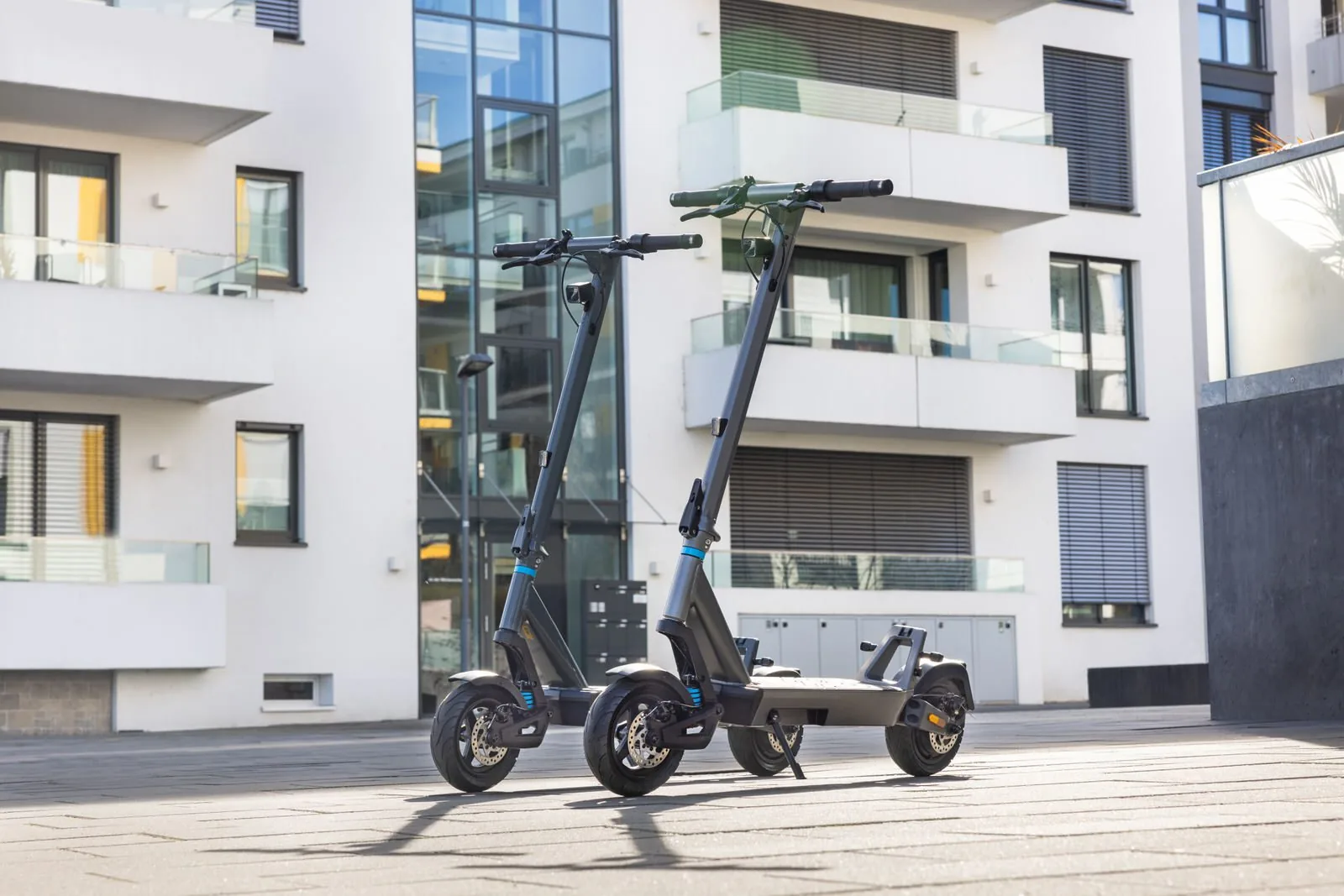
A further series was made in a modern harbour district. Water, open space and new architecture give a brighter and wider visual language than the tight city center does.
For a brand, changing the location is a simple way to make the same statement more than once without the campaign repeating itself. The product stays recognizable while the surroundings renew the picture.
You can see it in ePowerFun and in the brand campaign.
Why both kinds are needed
Product and campaign pictures complete each other. The studio frames show what the device is; the everyday scenes explain what it can be used for.
Without the first kind a customer cannot judge the product. Without the second they do not know whether it suits them. A shop needs both, and ideally from the same production, so that color and feel match.
Related work is under photo production.
Want your products photographed?
Scope and price are fixed before anything is photographed or filmed. The inquiry commits you to nothing.