Hattersheim animal shelter — Photo production
Animal photography for the Hattersheim shelter: a volunteer project for animal welfare. A voluntary photography project for the Hattersheim animal shelter.
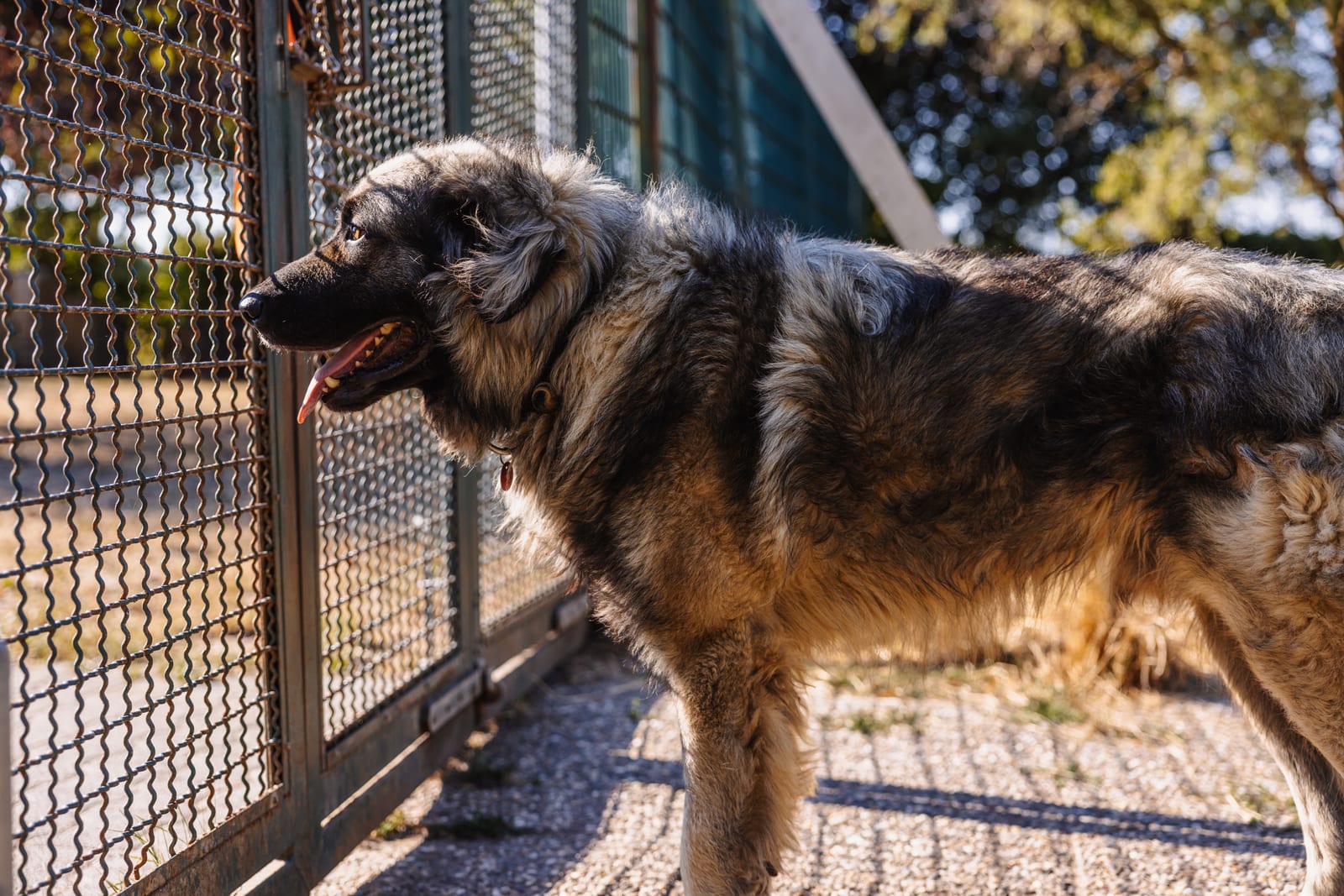
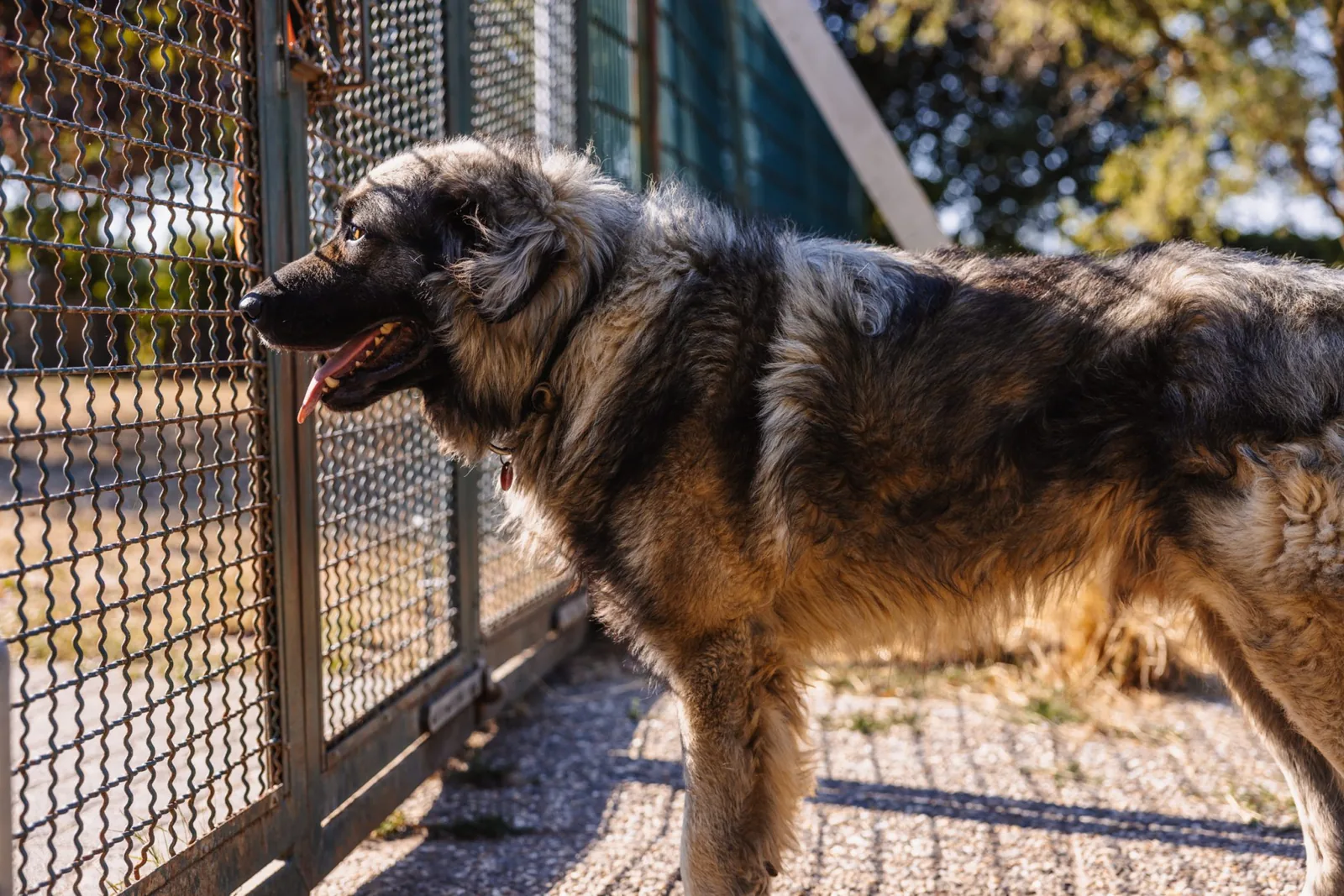
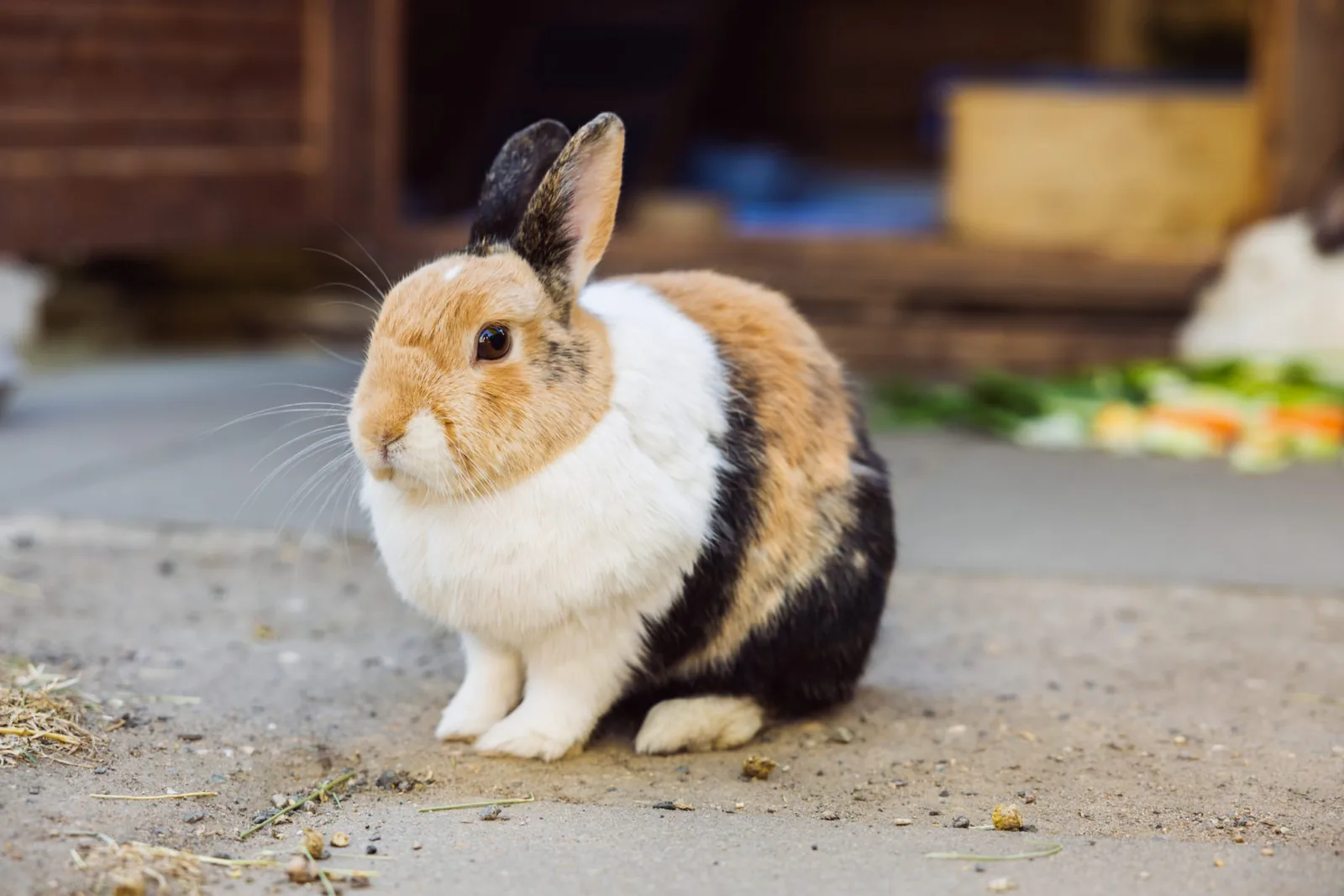
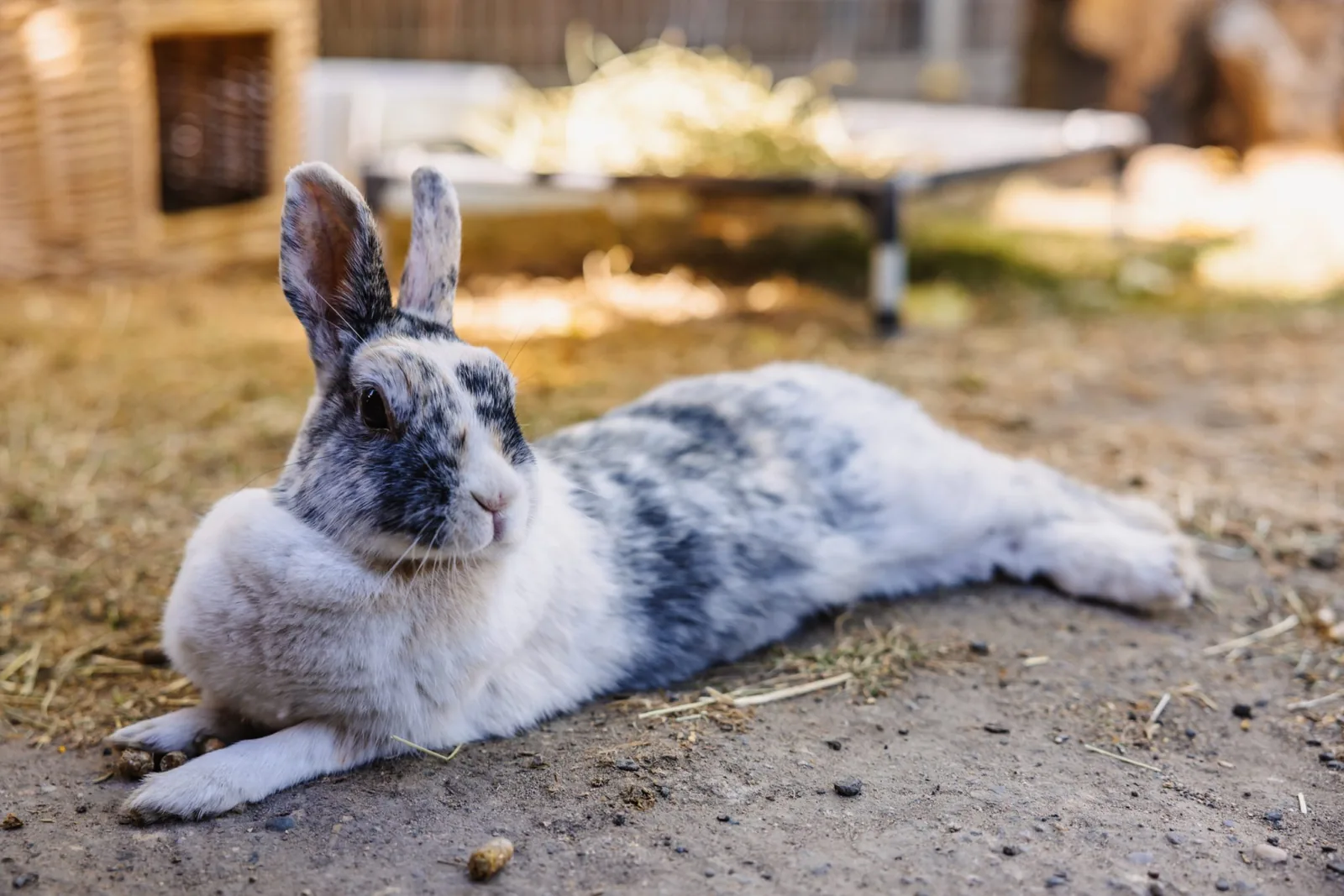
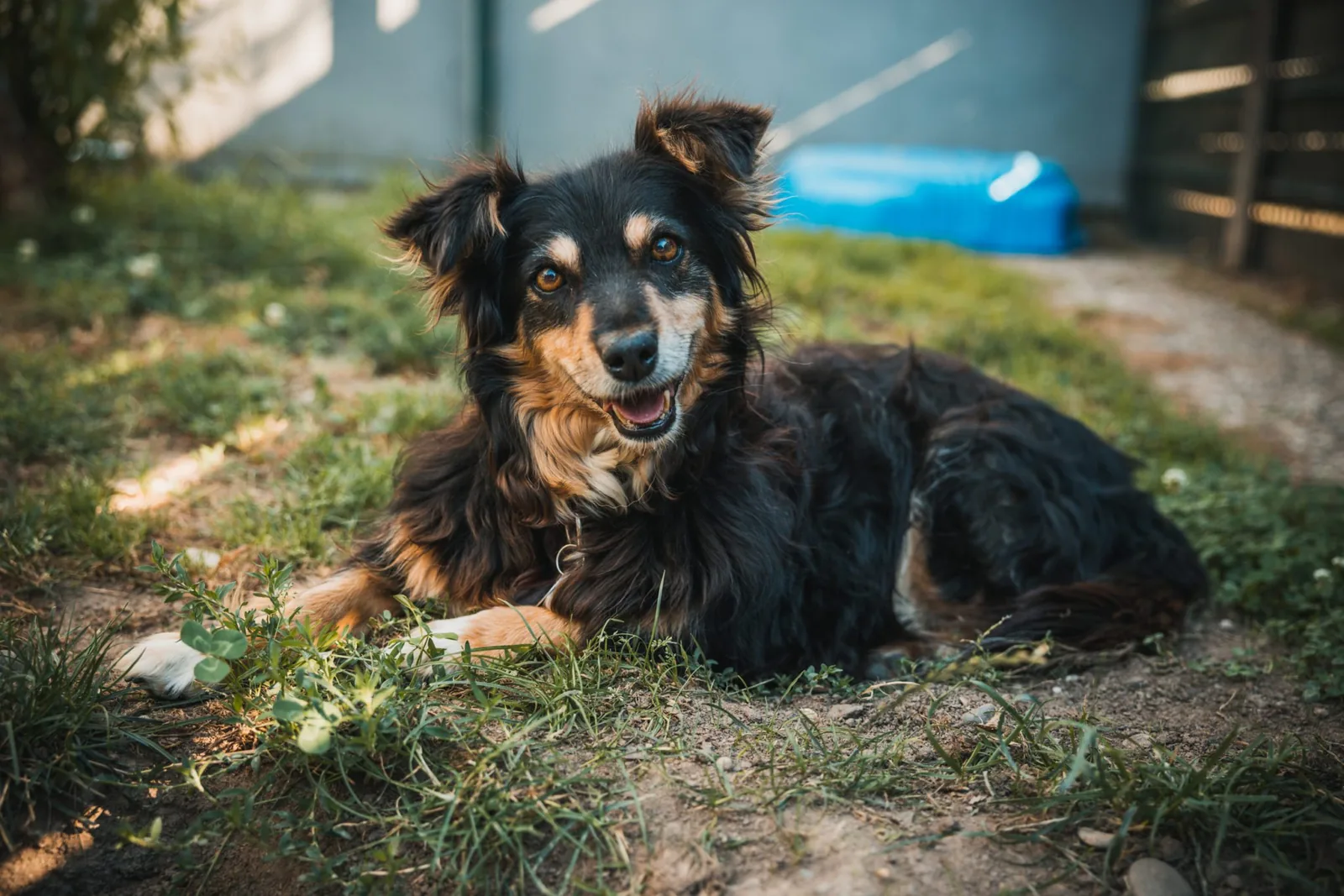
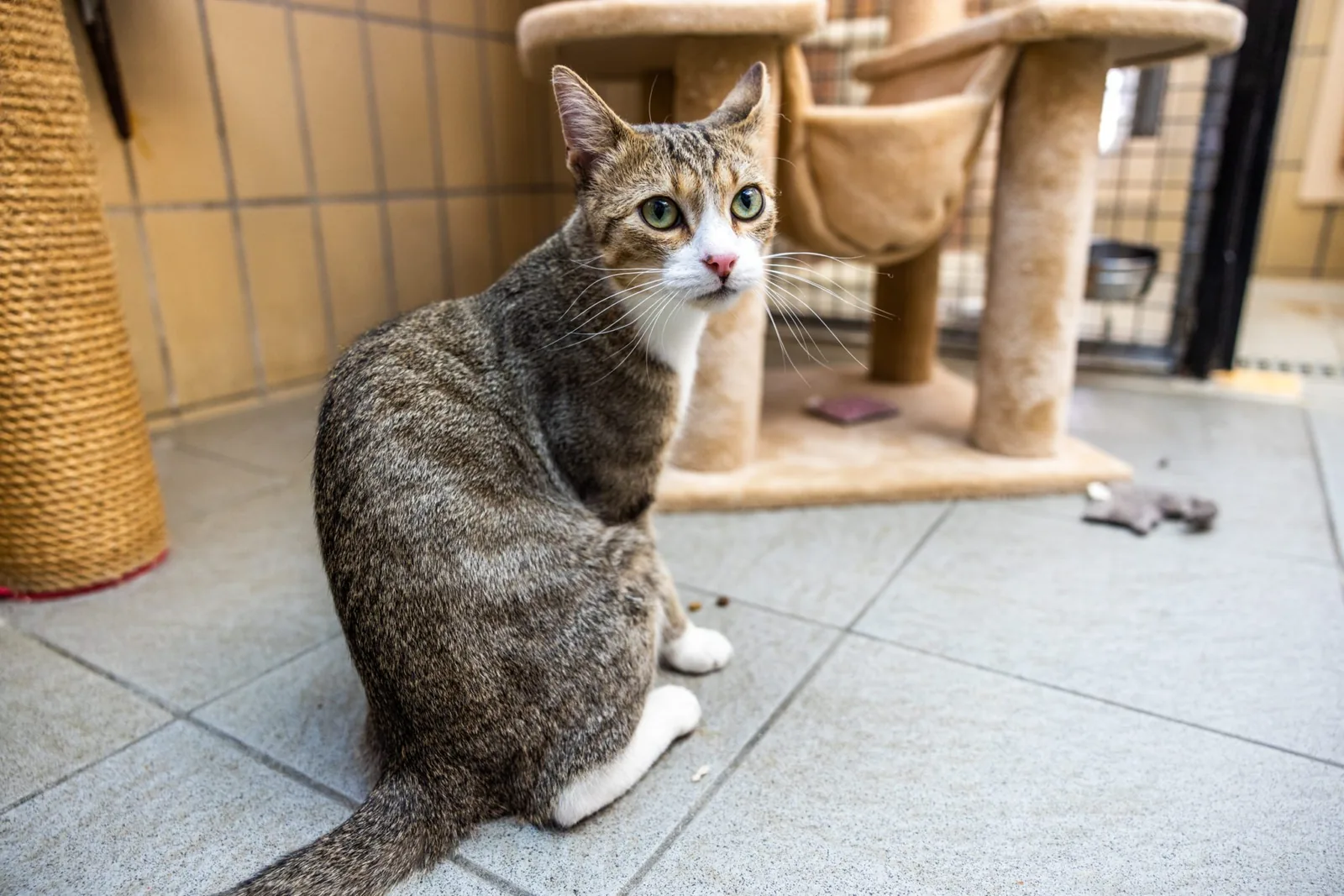
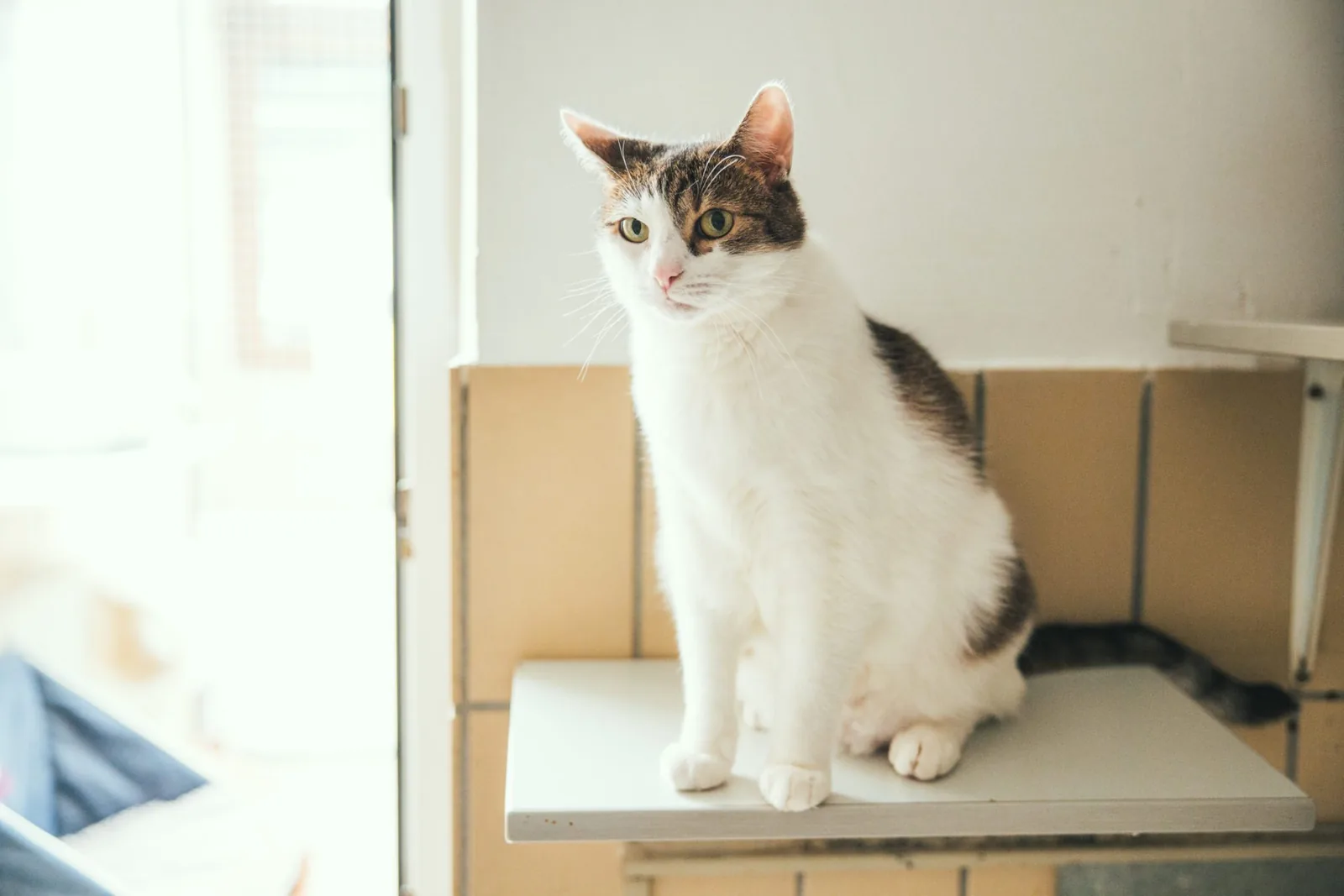
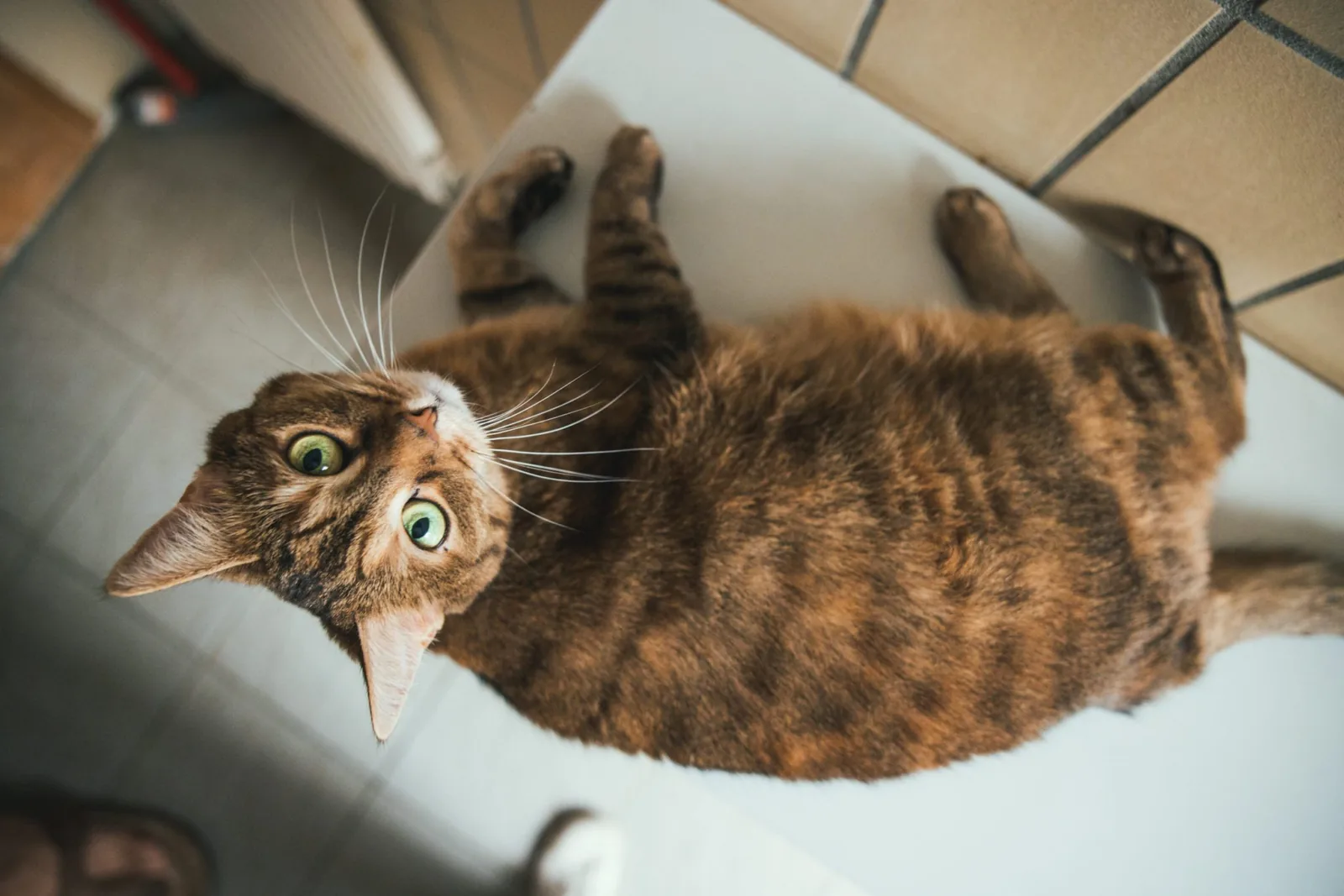
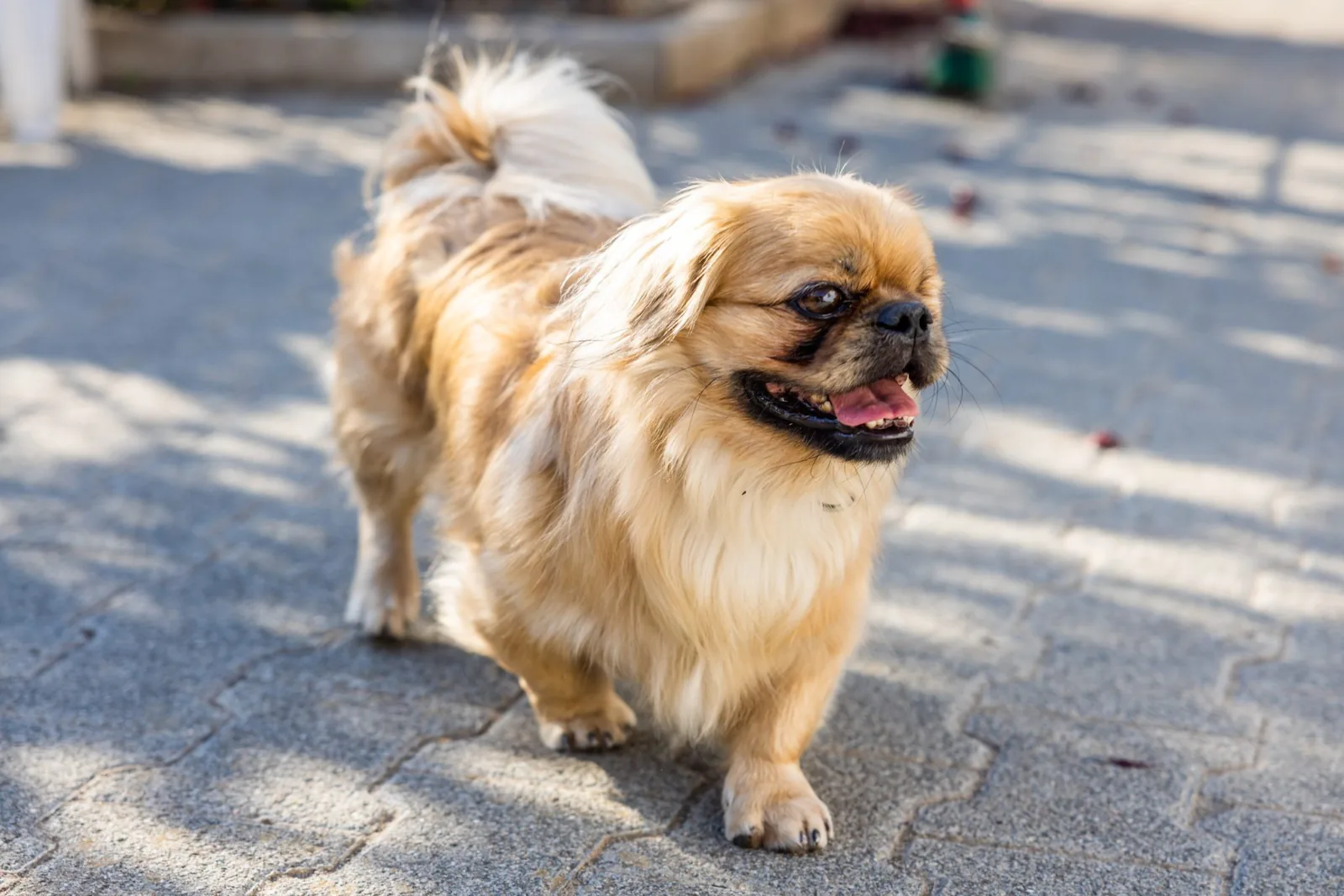
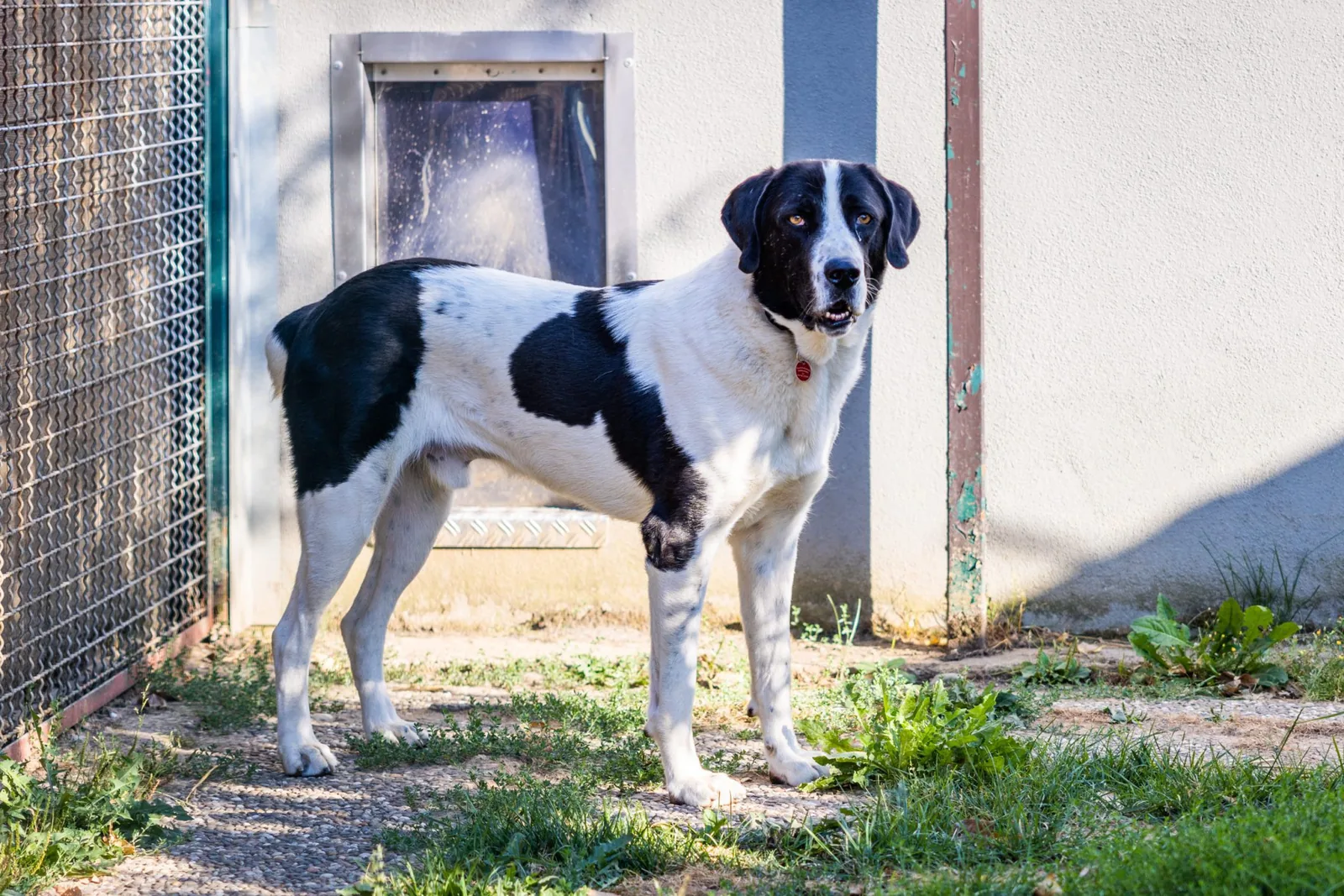
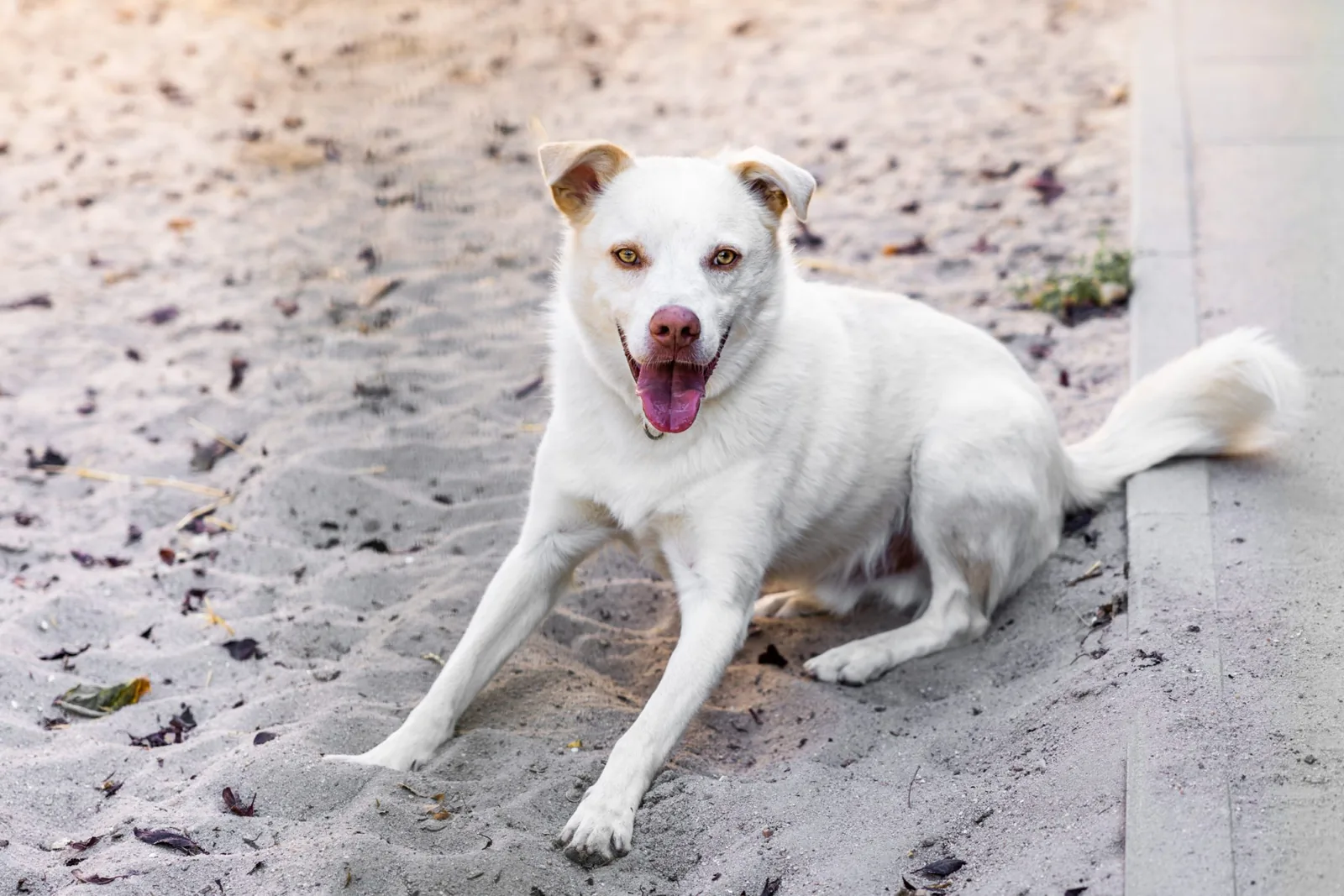
A voluntary photography project for the Hattersheim animal shelter. What came out of it is a set of rehoming pictures: an old German shepherd cross in the run, a black-and-white dog stretched out on the grass, rabbits in the outdoor enclosure, tabby cats on the scratching post, on a shelf and rolled on their backs on the floor, a small Pekingese in the sun.
A frightened animal behind wire is the hardest portrait subject there is — it takes time, distance and the moment it looks up of its own accord. That moment decides whether it finds a home, because the picture will later stand alone in a listing next to twenty others.
The mesh is the first technical problem. You do not photograph against it, you photograph through it: the lens right up against the wire, the aperture wide open, and the mesh dissolves completely. Two steps back and every animal has a grid across it — exactly the picture nobody clicks on.
The second rule is height. Photograph at the animal’s eye level, which means kneeling or lying down. A dog shot from standing looks like a dog being looked at by a stranger; at its own height it looks like it is looking back.
With cats there is no second attempt. A cat looks into a camera for about a second and never again in quite the same way. So exposure and focus are set for the room before entering it, not once the animal is already looking.
And one decision that comes with the job: nothing is prettified. The mesh stays at the edge of the frame, the tiles stay tiles, the concrete stays concrete. A shelter that looks like a studio creates expectations no shelter can meet. What the picture has to do is something else: to make an old gray-coated dog in backlight recognizable as what he is — an animal looking for someone, rather than a case on a list.
- Purpose
- Tierschutz