Drei Streifen in Frankfurt: food photography without a set
Published
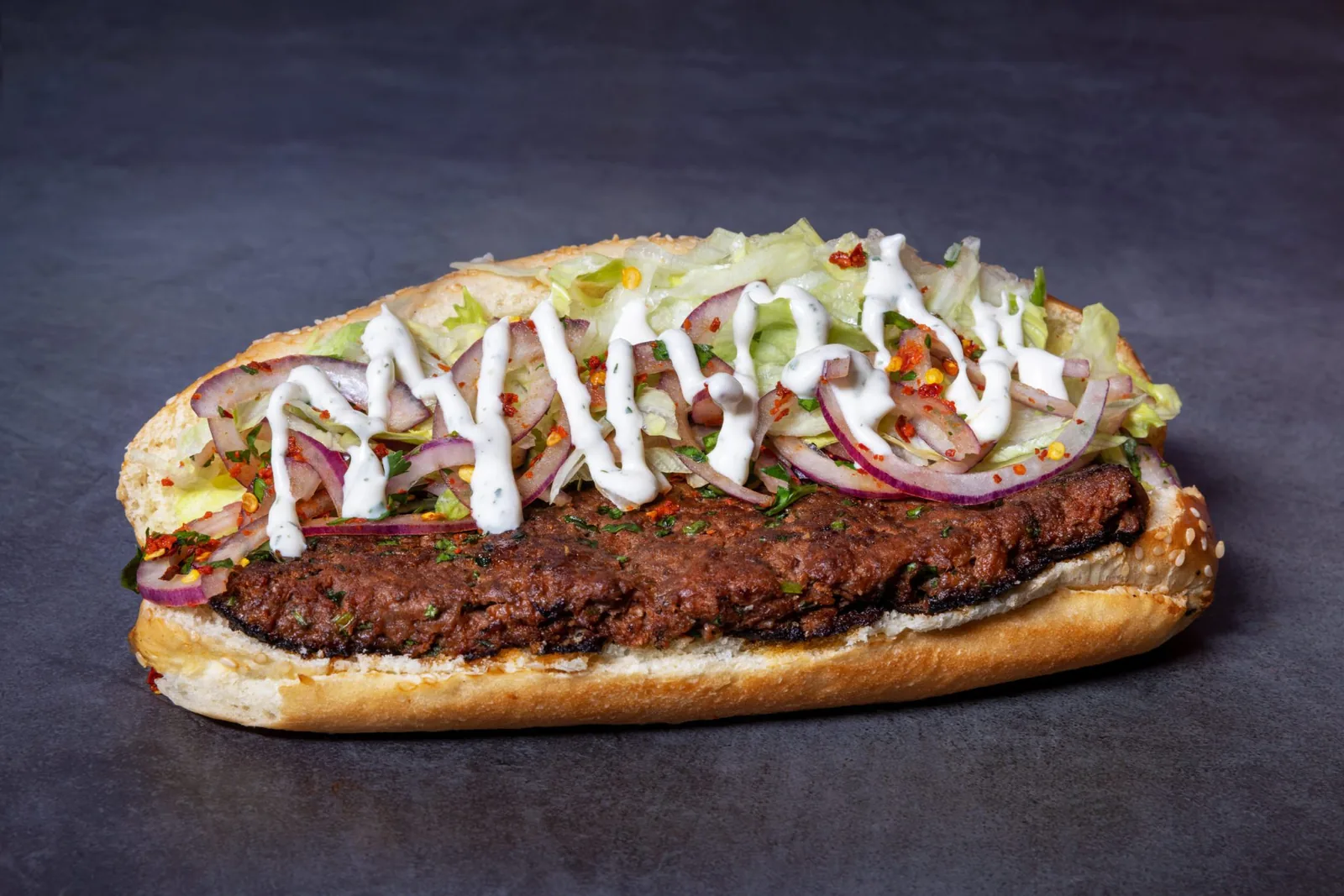
In the shoot for Drei Streifen the food stands alone in the frame. No laid table, no dining room, no props — just the dish on a dark gray, lightly textured surface.
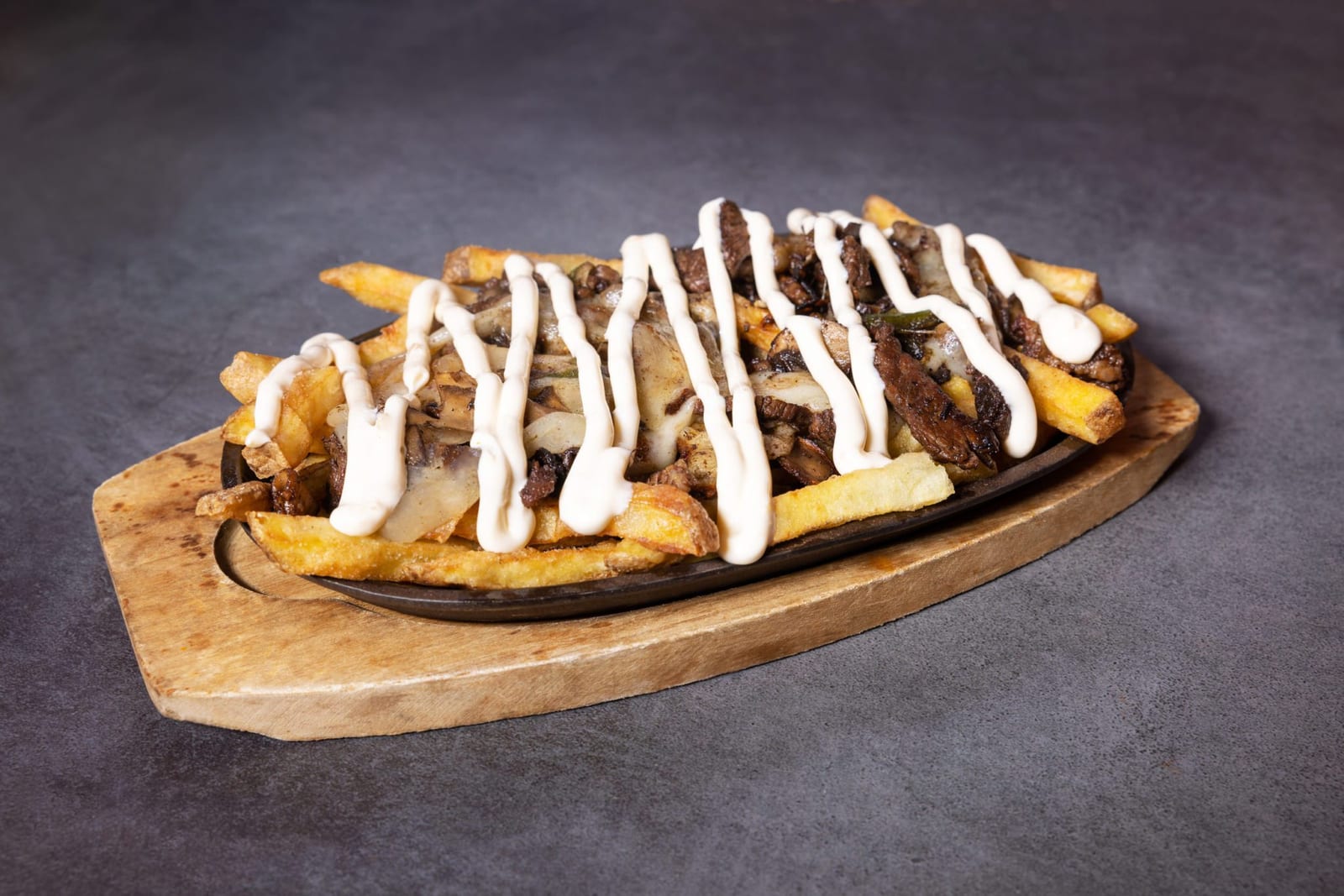
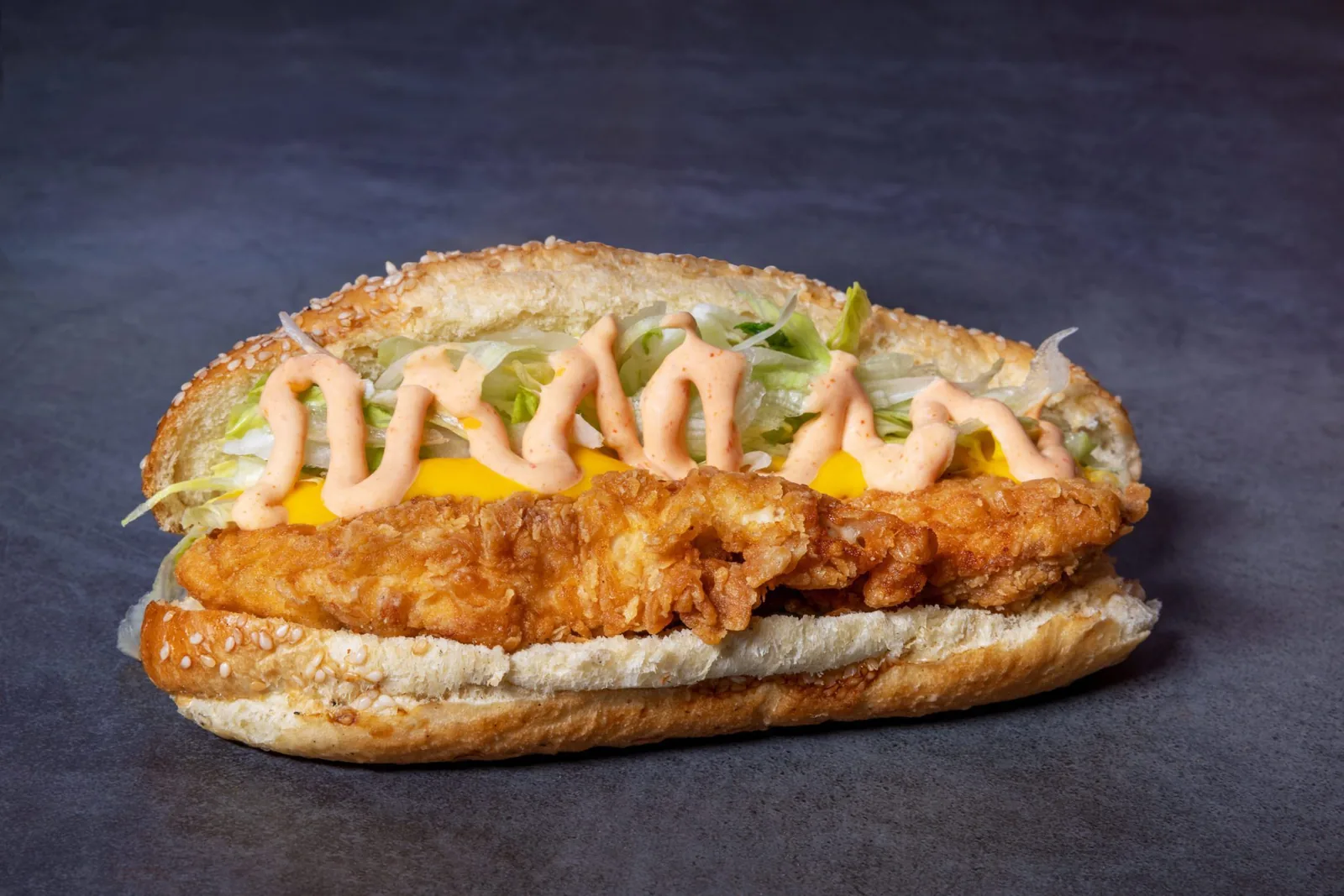
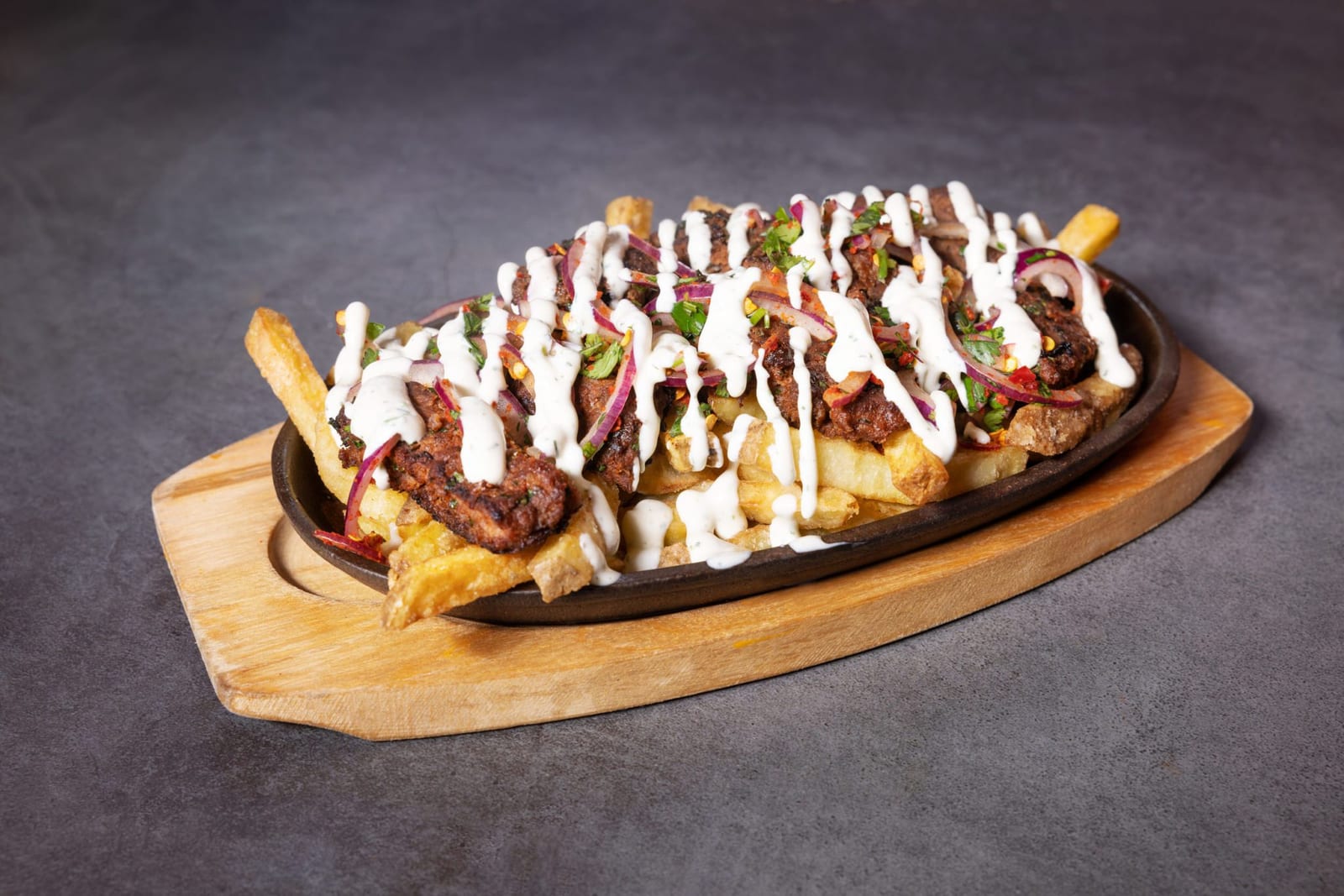
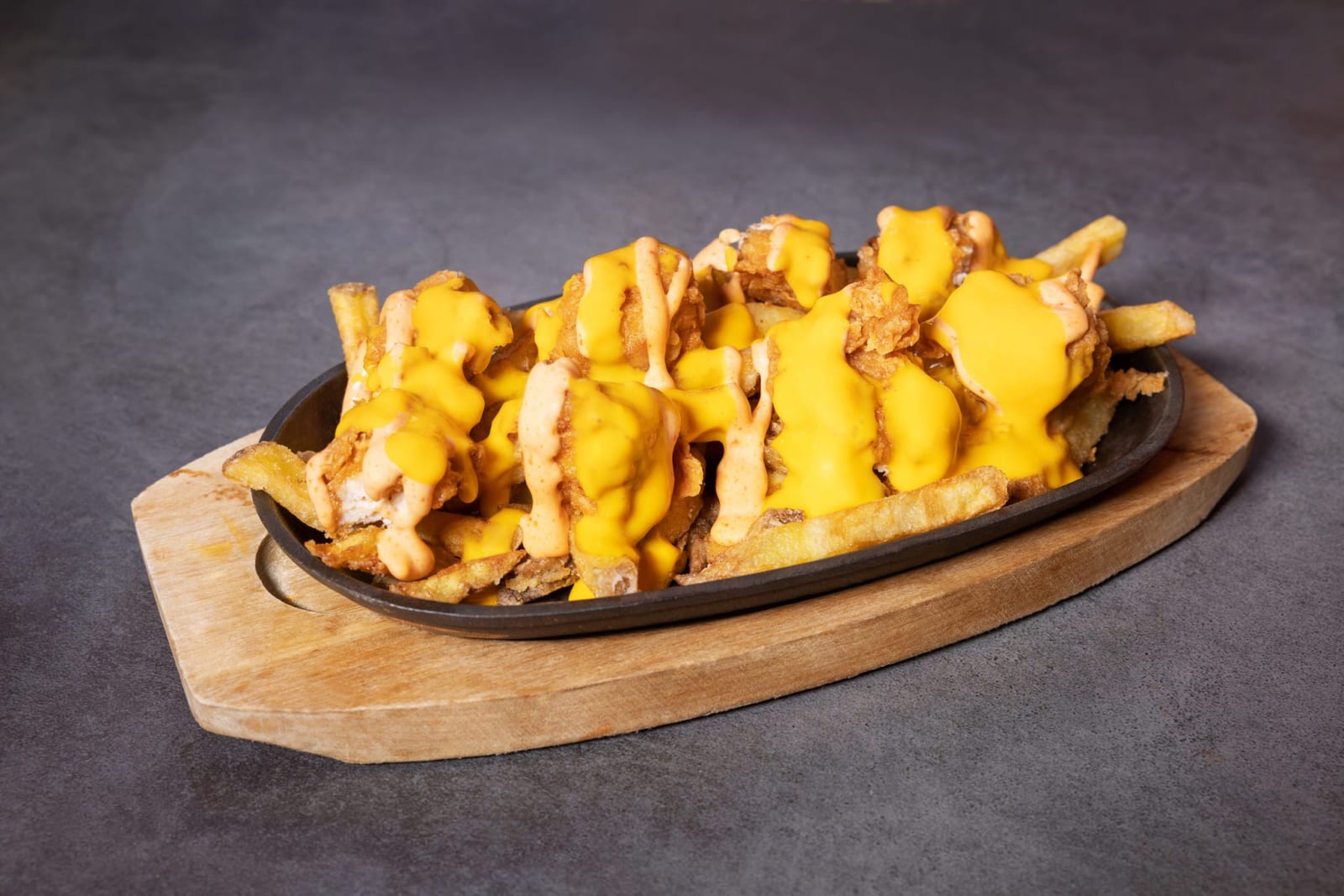
The subjects were filled sandwiches and loaded fries with meat, cheese and sauce, served in cast iron pans on wooden boards. What holds the series together is not a motif but a decision: the same surface every time, the same direction of light, the same eye level.
The dark surface as a counterweight to the color
Hearty food moves within a narrow band of color: bread, meat, cheese and fried potato are all warm browns and golds. On a light surface they run into one another and lose their shape.
The dark gray stone this series stands on keeps them apart. It takes none of the light the food itself needs, and its faint texture stays visible without competing with the plate. The salad, the red onion and the white sauce are the only cool accents in the frame — and they are what makes the brown beneath them readable.
Low side light is what shows texture
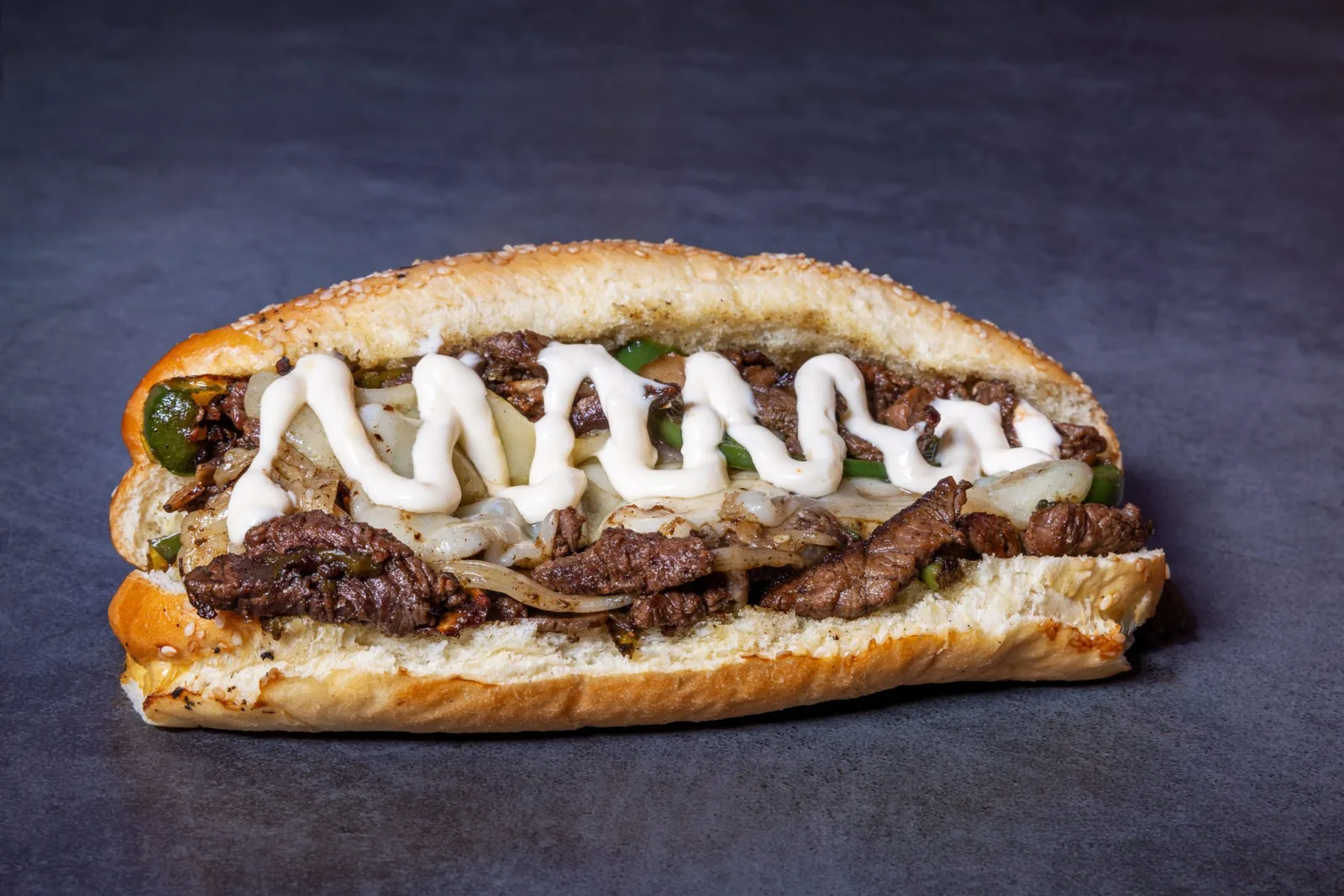
Whether a dish looks appetizing is decided on its surface. A crust, the coating on a fillet, the edges of the fries, the shine on a bun: all of it is texture, and texture only appears when the light runs flat across it.
So the light in this series sits to the side and low, not above the plate. Every irregularity throws a short shadow, and out of those shadows the eye assembles how the food would feel. Lighting it from the front would have left the same dishes looking flat and damp.
The camera sits slightly below the height of the plate. From there you can see how high a sandwich is built and how much is actually in the pan — from above, both would have turned into a flat shape.
One set of pictures for the menu, the site and delivery
The frames are deliberately tight, with enough clear surface around the dish to crop into without losing anything that matters — landscape for the website, square for Instagram, upright for a story.
That is why a series without a set does more for a place like this one than an elaborate still life would: it works on a menu, on a poster, on a delivery platform and in an advertisement, without a second shoot.
For delivery platforms the separation from the background helps twice over. There each dish sits in a tile among other people’s pictures, often small and on a white page. A dark, quiet frame holds its own in that company.
More frames from the shoot
What a reduced set of pictures does
A series like this claims nothing about the place it comes from. It shows the product the way it reaches the table. For a concept built on a few strong dishes, that is the more honest advertisement than a staged dining room.
What makes it recognizable is the repetition: the same surface, the same light, the same angle. By the third picture the hand behind it is visible, and by the tenth it belongs to the brand.
Want your dishes photographed?
Scope and price are fixed before anything is photographed or filmed. The inquiry commits you to nothing.