Soulmate Café Frankfurt: a portrait in three details
Published
The Soulmate Café is set up as a family-run place with domestic furnishing: a room different kinds of guests can settle into without effort, with coffee, breakfast and small dishes.
The pictures from this shoot are close-ups. No wide view of the room, no dining area end to end — three details that together say a surprising amount about what the place looks like.
A visible bulb as the light in the frame
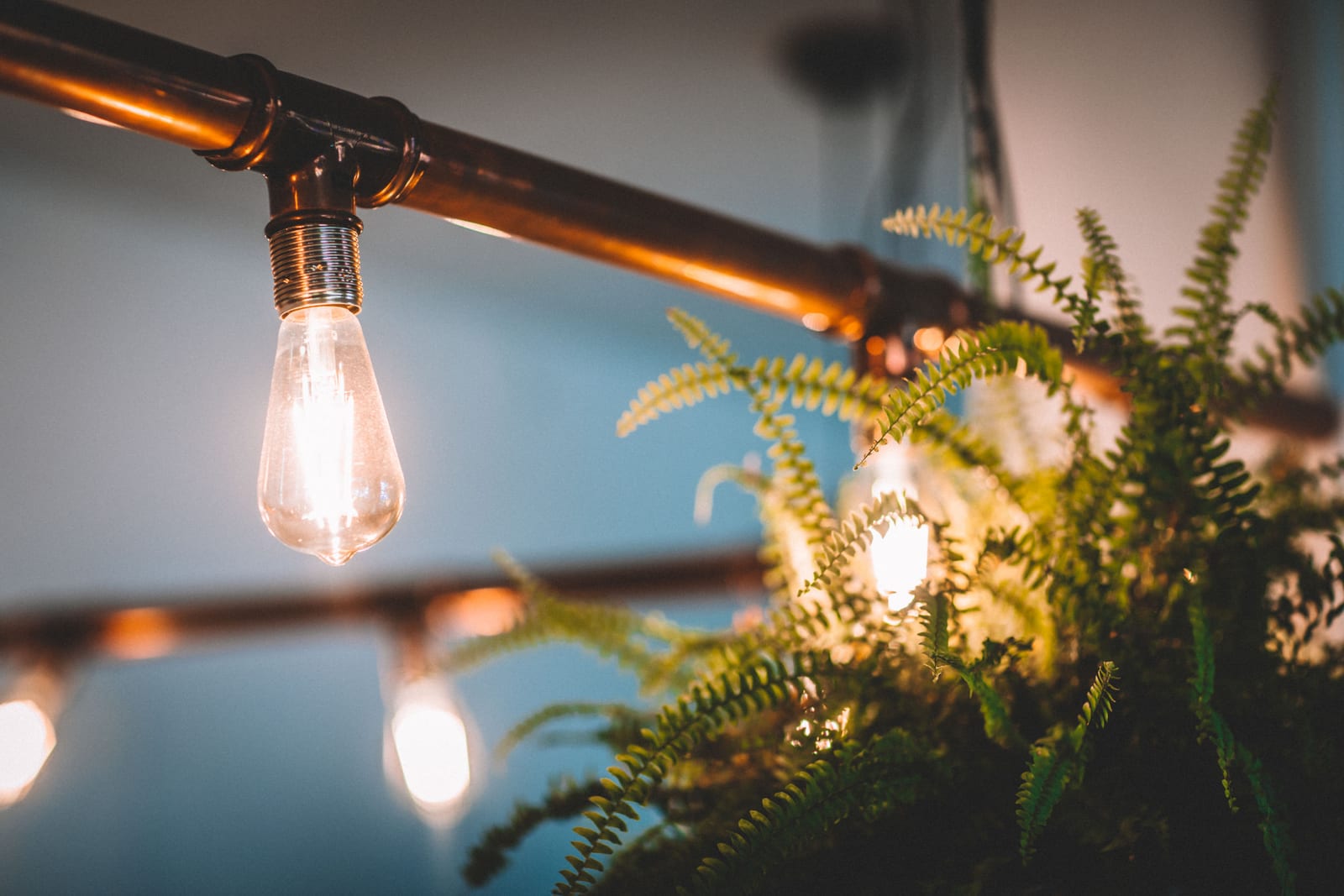
The first frame shows bare bulbs on a pipe fixture, a fern in front, a turquoise wall behind. Here the lamp is not the lighting for the subject; it is the subject.
It works because a bulb with a visible filament glows warm and unevenly. It speaks of a room where not everything is equally bright — which is a statement about the furnishing, not about the lamp.
Technically such a frame requires that the bulb itself does not blow out. The exposure is set on the filament, and everything else stays darker than the eye perceives it in the room.
The tool says what the standard is
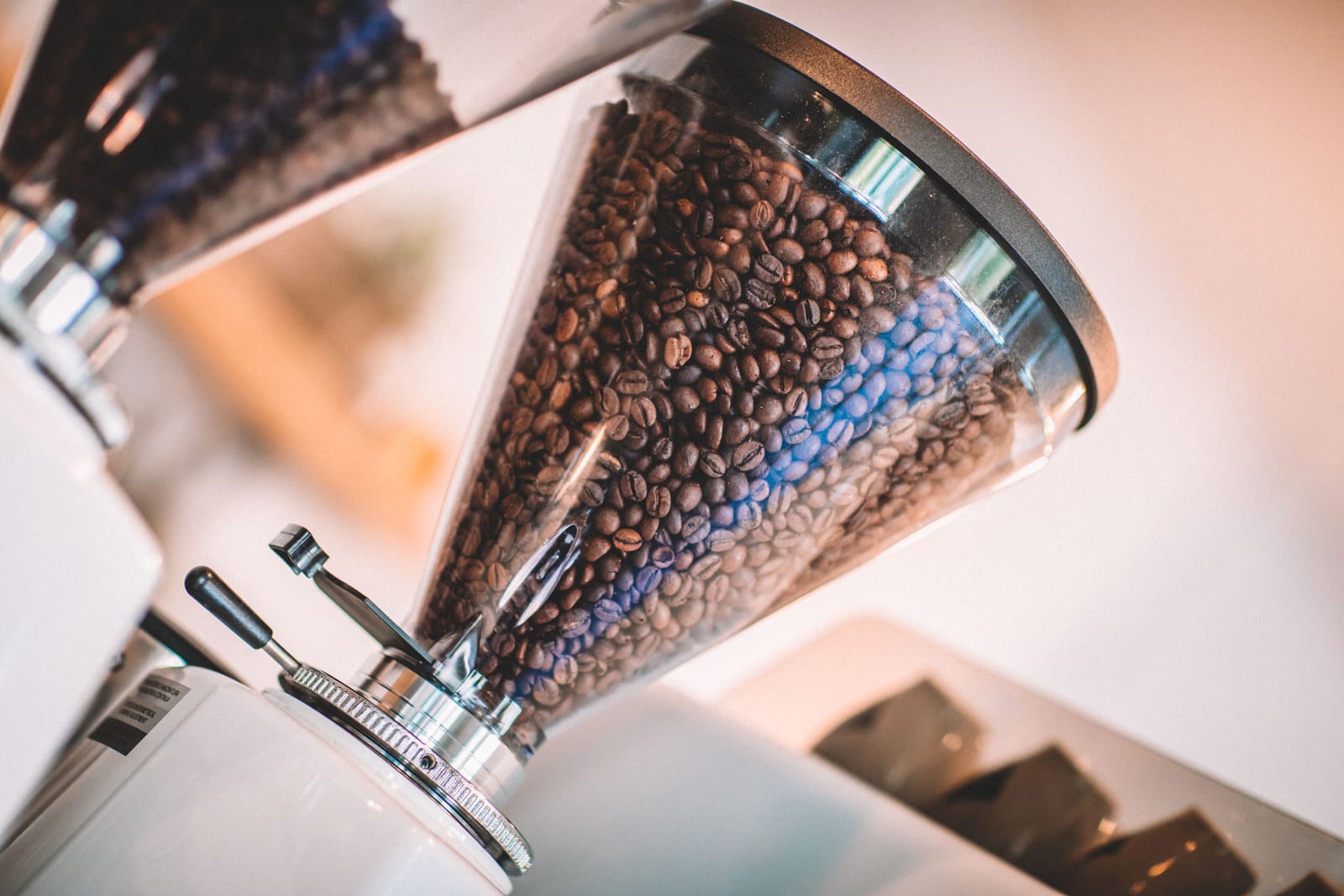
The second frame shows the grinder with two full hoppers of beans. Two varieties side by side mean a choice is being made here, rather than everything coming out of the same bag.
For a café such pictures are worth more than another cup with a pattern in the foam. Anyone can do latte art; a look at the machine behind it answers whether the coffee is taken seriously.
The grinder is photographed from below at an angle, so the hoppers reach into the frame. From eye level it would have turned into a product shot.
A still life made of what is already there
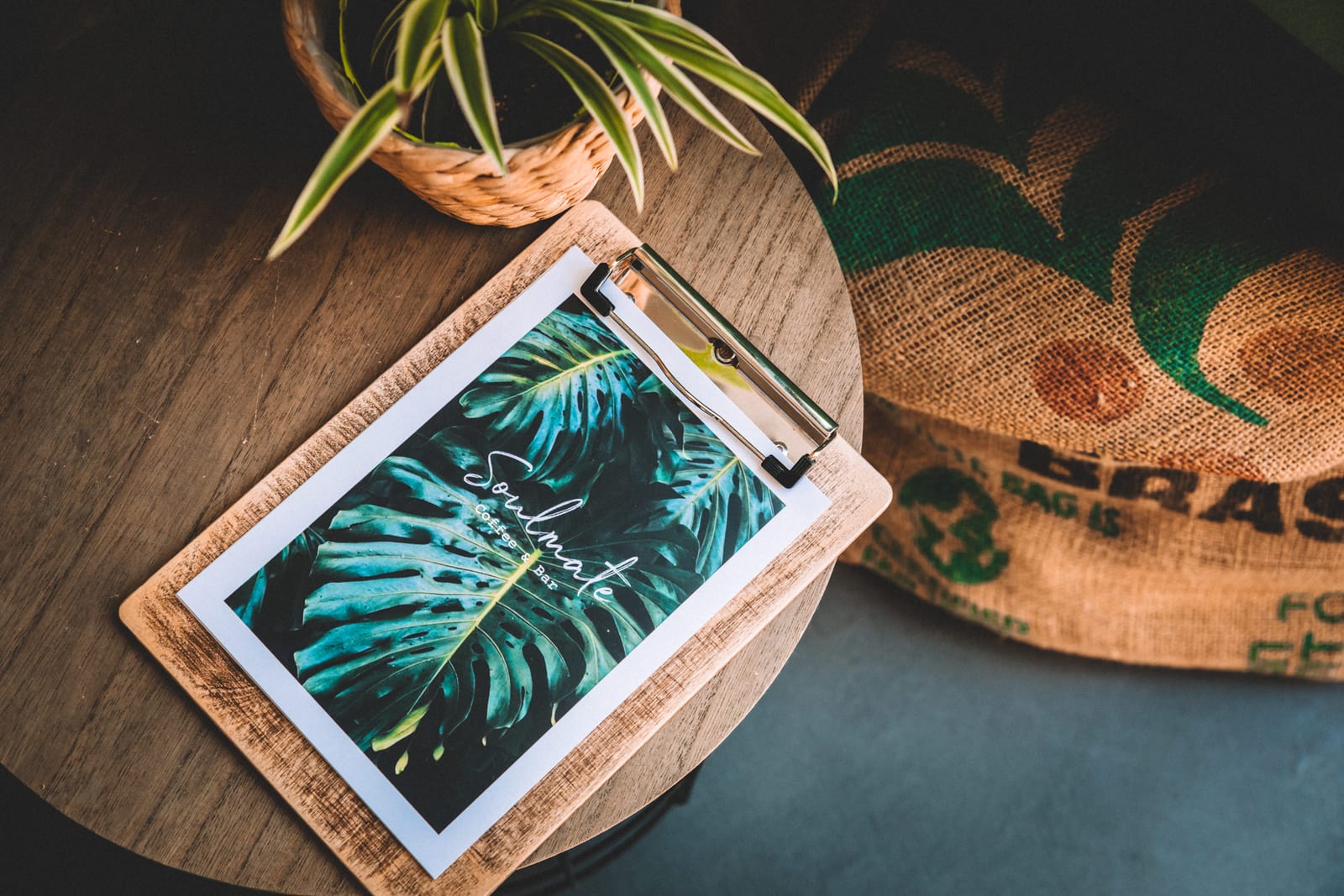
The third frame is an overhead: a framed print with a monstera motif on a wooden board, a plant beside it and a coffee sack from Brazil.
None of it was brought in. The sack is in the room anyway, so is the plant, and the print hangs on the wall. Laid together they make a picture that shows the hand behind the place, without a guest or a dish appearing in it.
For cafés with personal furnishing that is a rewarding exercise: the stock of subjects is already in the room and only has to be arranged and put into good light.
How far a detail carries
Three close-ups do not replace a complete set of pictures. For a café website the frames that carry a decision are then missing: the room in full width, an occupied table, the counter, the view from the door.
What they do is something else: they give a place a register. Anyone who meets them in an article or a profile knows what kind of café they are walking into — which is more than an average overview shot conveys.
Is your restaurant due for new photographs?
Scope and price are fixed before anything is photographed or filmed. The inquiry commits you to nothing.